malvernmugadzikwa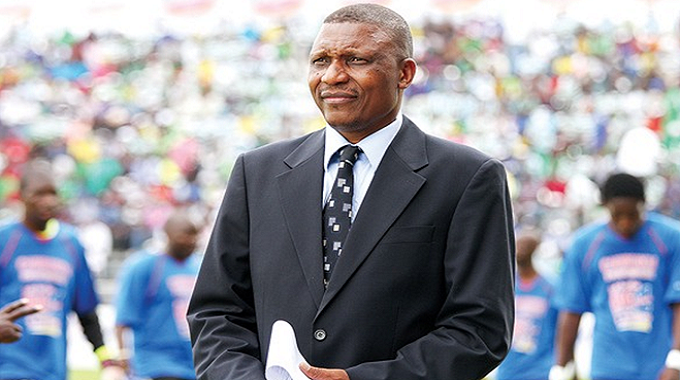
. . . Tangawarima shines for country at AFCON
Petros Kausiyo
Sports Editor
WHEN the 34th edition of the Africa Cup of Nations (AFCON) burst into life at the Alassane Ouattara Stadium in Abidjan, Cote d’Ivoire, yesterday, a familiar figure that has been a true Zimbabwean football ambassador was part of the proceedings.
For over three decades, Felix Tangawarima has been a shining beacon for the country, first as a match official on continental football assignments and now as a Confederation of African Football (CAF) senior referees’ instructor. He has been to a number of AFCON tournaments since taking charge of games at the competition for the first time at the 2000 tourney co-hosted by Ghana and Nigeria.
Despite it being his debut AFCON final, Tangawarima underlined his no-nonsense attitude.
He most famously stunned the home crowd after sending off then-Nigerian talisman Austin “Jay Jay’’ Okocha in the Super Eagles 2-1 quarter-final win over Senegal. He did not let the intimidating Nigerian home crowd influence his decisions and sent Okocha for an early shower for elbowing Senegal’s Mbaye Badji, in what turned out to be the only time the iconic midfielder was sent off in his Super Eagles career.
Twenty-four years after that incident, he is still in the trenches, albeit in a different role.
The long road
“For me being at this year’s AFCON is like the final stage of what we have been working on behind the scenes, preparing the referees for this very important tournament,” Tangawarima told The Sunday Mail Sport from his AFCON base in Cote d’Ivoire last week.
“I continue to dedicate my services to the continent, and the organisation (CAF) is very appreciative of what I have done, and continue doing, for their member associations.
“Before one goes to the main AFCON, one starts with the junior tournaments, and that is where I started before I then went to the 2000 AFCON hosted by Ghana and Nigeria.” He rates his debut tournament as his best.
“The 2000 AFCON was one of my best, although the other subsequent ones were also memorable.
“This is the tournament in which I showed Austin ‘Jay Jay’ Okocha his first and only red card for the Super Eagles.
“This is the tournament which opened the door for me to go to the Sydney Olympics later that year.
“During the Olympics, there was also one game which I would always remember, and it was Spain versus Chile.
“What really was memorable was that the stadium was full, with over 60 000 spectators, and the two teams with all-white players.
“My assistant referees were white and the only black person on the field of play was me — the referee from Zimbabwe,” he reminisced.
And just like in the Okocha case, Tangawarima needed to stamp his authority in that volatile game.
“In that game I showed a yellow card to the Chilean legend, Iván Zamorano.
“It was memorable and emotional to see the Zimbabwean flag flying and me representing the Zimbabweans.”
His commitment, dedication and proficiency saw him winning the Zimbabwe Referee of the Year accolade a record eight times.
“Football, and in particular refereeing and the development of referees, has been my passion and I have always done whatever I do to the best of my ability.
“I don’t compromise on anything.
“I actually have more pressure on me as an instructor than when I was a referee, because if referees don’t perform well, I have to explain and be accountable for their failures,” Tangawarima added.
“All the referees you see officiating in the continent and some who have already retired, I have had a hand in their development working as a FIFA instructor and as the senior instructor at CAF.”
Prophet with no honour
Like the proverbial prophet who has no honour in his home, Tangawarima, together with some of the local refereeing greats, have not been given the recognition and appreciation they deserve, as local football remains mired in controversy and toxicity.
The long list of referees who have previously excelled include Brighton Mudzamiri, Frank Valdemarca, Sabelo Sibindi-Maphosa, Kuda Majo, Wilfred Mukuna, Kenny Marange, Gladmore Muzambi and Thabani Mkantjo. Although he often downplays the muted appreciation the retired officials get, Tangawarima has ironically been a revered figure at FIFA, CAF and COSAFA.
The Southern African football body appointed him their referees’ manager.
“I am very humbled by the respect given to me by these football organisations from FIFA, CAF and COSAFA. They are very appreciative of what I have done and continue to do,” he adds.
“Zimbabweans from different of walks of life have given me and showed their respect and honour, and I am honestly very appreciative and humbled with the respect they have shown to me.
“I want to take this opportunity to say, ‘thank you, Zimbabweans, for the support given to me’. Yes, generally the refereeing fraternity feels that sometimes we probably do not get the recognition we deserve, especially in other fora.
“For example, you don’t hear of any legends from the referees being given mileage as other legends . . . Some retired colleagues and myself feel if there was something called sports ambassadors, surely, we would fall in that category.
“I went onto the FIFA panel as a referee representing Zimbabwe in 1988, retiring in 2003 after refereeing at all levels and became a CAF instructor the following year.” Four years later, Tangawarima scaled new heights in his career, joining FIFA as a referees’ instructor responsible of the development of match officials in Africa.
Zim referees absence at AFCON
He also explained the absence of Zimbabwean officials at the AFCON tournament in Cote d’Ivoire.
“The selection of AFCON referees was done at a time when Zimbabwe didn’t have referees on the FIFA panel because of the FIFA suspension.
“It’s always painful not having your own referees at these tournaments, but I think we will be getting there soon.”
He also shed some light on the evolution that has taken place in match officiating, with goaline technology and the Video Assistant Referee (VAR) among the innovations.
“The way refereeing is being taken is so different from what it was before.
“Refereeing is now a career. For example, in CAF we have professional referees being paid monthly salaries for being a referee.
“So, we need to change our mindset on how we view the referees,” added Tangawarima.
He called for greater investment developing referees.
“We also have to look at developing younger referees with the prospect of reaching the highest level . . . We also need to pay them well and invest in their development, unlike what is happening now . . .
“VAR has come and it’s here to stay, as it is incorporated into the laws of the game.
“In FIFA and CAF, we are encouraging football associations to start working on VAR being operative in their games.
“If the referees are not licensed to officiate with VAR, they will not be selected for these CAF tournaments. For example, at this year’s AFCON, we are using VAR from game number one. We want our referees to be there, yet they cannot be used.”
During the many courses he has conducted as an instructor, including the latest he held for local officials at ZIFA Village in November last year, Tangawarima has been crusading against corruption.
“I am a FIFA-trained integrity officer. Even before, as a referee, I never compromised on integrity issues. If you remember way back, as a referee I reported some football officials from some country who had tried to bribe me . . . that is what I strive to see in all the referees we train.”
The Warriors and their band of supporters might be conspicuous by their absence at the five AFCON venues in Abidjan, Bouake, Yamassoukro, Korhogo and San Pedro, but the tournament will still have a Zimbabwean flair with Tangawarima looking over the match officials
X: @petrospablo1


 Online Reporter