

 admin
admin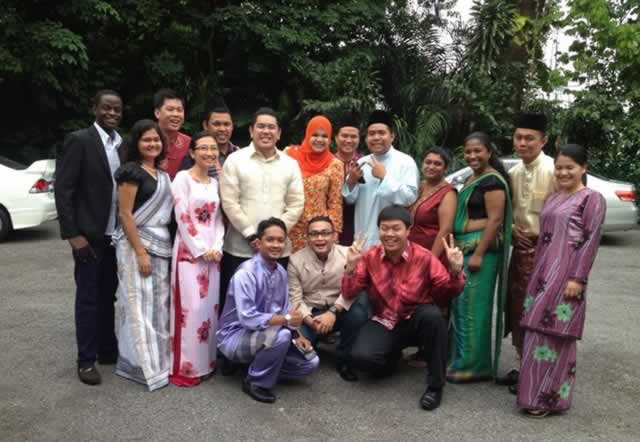
Lloyd Gumbo Features Writer
It was not only the colour of my skin that made me appear the odd one out. I was embarrassed like a priest who has been caught stark naked in a nun’s bedroom. Imagine turning up at an all black-attire function, in all white.
My colleagues looked at me in disbelief with pending questions written all over their faces.
Clad in blue chinos pants, a white polo shirt, a dark blue blazer and black deauville drivers shoes, I thought, I would be one of the slickly dressed for the occasion with that style staple.
But the illusion only lasted as far as I discovered, I was the odd one out.
It was at the closing ceremony of a journalism fellowship at the Malaysian Press Institute early on October 2 where journalists from the host country Malaysia, Bahrain, Vietnam, Sri Lanka, the Philippines and Zimbabwe underwent a month-long journalism refresher course.
We were expected to be clad in our national dresses for the closing ceremony as a way of celebrating our diversity. I was informed of the requirement way before I left Zimbabwe.
“Is that Western attire, your national dress Lloyd?”, asked one of the daring Malaysians who was clad in baju melayu (a traditional Malay dress for men). Most of the Malaysian female colleagues wore baju kurung, which is also a traditional Malay dress that symbolises the goodness and politeness of Malaysian women.
A male colleague from the Philippines wore a barong tagalog, which is a Philippines traditional formal wear symbolising that country’s heritage with the guy from Bahrain wearing a thawb-a traditional Arab clothing for men. I have a couple of West African attires in my wardrobe, but I decided,, I would not fool myself to make West African clothing appear Zimbabwean.
If countries with complex cultures like South Africa and Malaysia can have a national dress, how about Zimbabwe with its more of a unified culture, bar of course the political polarisation that has divided the country for over a decade now.
While Zimbabweans have expressed their wish to be identified as Africans by wearing West African garb at some functions, there is nothing at the moment that identifies Zimbabweans in terms of dressing except, of course, political party regalia, which does not really count, at least outside the country.
As a way of trying to shrug off Western attire, Zimbabweans have sometimes been forced to wear what has become known as African attire even though it is West African fabric.
Just recently journalists who were nominated for the National Journalism and Media Awards dinner were ordered to be clad in African attire yet if we had our Zimbabwean attire it would have made the event even better. Asian and Western dress code has also become synonymous with our culture, as a result of cultural imperialism.
A PhD student with the University of KwaZulu- Natal University in South Africa, Lyton Ncube said national identity was a crucial aspect of nationhood.
“Any nation worth its name on this planet must have a national dress anchored in the cultural beliefs, values and principles of its people,” he said.
“National dress will definitely assist in defining and distinguishing Zimbabweans from other nationalities. Above all, national dressing unifies citizens of a country regardless of the fact that they are dispersed across the globe.
“Government, therefore, must quickly address this issue at policy level and ensure that we have a national dress that will invoke sense of patriotism and confidence in us. Nation, nationhood and national identity are just theoretical but critical aspects for any country on the planet.”
Ncube, who is also a Media and Society Studies lecturer at the Midlands State University, added: “National monuments, national anthem, national flag are some of the crucial aspects in reinforcing the concept of the nation and national identity.
“National dress as an aspect and a signification of people’s values, identity and culture should also play its part in helping Zimbabweans’ imaginations of the nation real.”
At the moment, we do not have what we can call an embodiment of the country’s national heritage.
A lot has been said over the years about the need for a national dress but nothing has materialised.
Sometime in 2005, the then Education, Sport, Arts and Culture Minister Aeneas Chigwedere launched what was to be called a national dress but it never saw the light of day. The fabric had all colours of the national flag with a print of animals representing various totems among other unique features of the country. The idea died a natural death.
Principal Director for Arts and Culture in the Ministry of Sport, Arts and Culture, Reverend Paul Damasane said the company that was producing what was adopted as national dress years back was no longer operational.
“Yes, we have a national dress that was launched some years ago and people are still using the national fabric but we cannot have it now because the company that was producing it is no longer operational.
“We are looking at a broader perspective of things that will include inter-alia national dress, national identity, cohesion and patriotism,” said Rev Damasane.
There has been no co-ordinated approach to the national dress agenda over the years.
Last year’s Miss Curvy pageant models exhibited another proposed national dress “Nhowe Zimbabwe Dress” but the idea seems to have died a natural death again.
National Arts Council of Zimbabwe director, Mr Elvas Mari said coming up with a national dress was a complex process that required consideration of a number of things.
“So if there is a desire what caused the failure of past efforts? Yes churches, political parties, schools, etc, have uniforms that identify them. Is that what we mean?
“We need first to have consensus on Zimbabwe common values and purpose. This is a process. (Abraham) Maslow’s hierarchy of needs is a critical consideration. We need a national dress but other needs may need to happen before the society embraces it,” said Mr Mari.
Zimbabwe being one of the most outspoken against imperialism, it is time, we walk the talk by showing that we have not only gained political independence and in the process of being economically empowered but is completely independent in all facets including culture.
Now that we have a Ministry of Sport, Arts and Culture, the minister in charge, Cde Andrew Langa, must make it one of his goals to ensure that the country has a national dress.
There is need for wide consultations on how the national dress should look like so that it can be adopted effortlessly. The national dress could be the tonic we need to be united because at the moment citizens are divided along political party lines, race, religion and even football clubs.



 Online Reporter