Obey Musiwa
Herald Reporter
ZIMBABWE on Wednesday joined the continent in commemorating African Statistics Day under the theme “Institutionalising Water and Sanitation Statistics for Sustainable Climate-Resilient Development in Africa.”
The commemoration saw the Zimbabwe National Statistics Agency (ZIMSTAT) launch a chatbot, a WhatsApp line and a toll-free line, giving the public direct access to its offices.
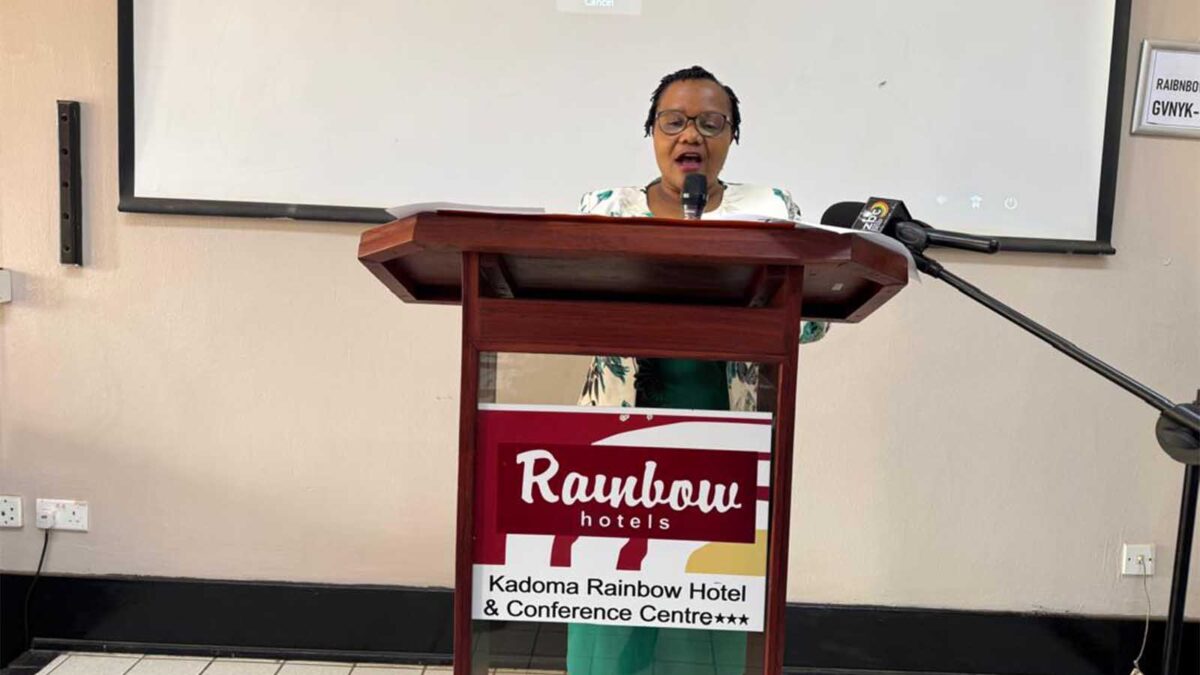
Speaking at the commemoration ceremony held in Harare, ZIMSTAT Director-General Mrs Tafadzwa Bandama, said the platforms were about closeness to the people the agency serves.
“The introduction of these two platforms marks an important step towards bringing ZIMSTAT closer to the people we serve,” she said.
“They will provide convenient channels through which the public can make enquiries, seek clarification on statistical information, verify survey activities, share feedback and access updates on the work of the institution.”
In practice, a family can confirm that an enumerator at the gate is genuine, or a farmer can ask what a figure means, or a business owner can send feedback, all without travelling to an office.
Mrs Bandama said the agency’s job does not end at publishing numbers.
“We must also ensure that the information we produce is accessible, understood and utilised by the public,” she said.
She added that the platforms would “strengthen two-way communication, improve customer service and promote transparency, responsiveness and public confidence in official statistics.”
The theme captures concern growing over a projected Super El Niño, a weather pattern linked to drought, and what it could mean for water, food and livelihoods.
Mrs Bandama said preparing for it takes more than infrastructure and policy.
“Sustainable development and climate resilience require more than infrastructure and policy commitments; they require reliable, timely and disaggregated statistics to inform planning, guide investments and measure progress,” she said.
The numbers show real progress in the 2023–24 Zimbabwe Demographic and Health Survey found that about 84 percent of households now use improved drinking water sources, up from 78 percent in 2015.
Access to improved sanitation has risen to 77 percent from 67 percent, while open defecation has fallen from 23 percent to 16 percent.
Mrs Bandama linked these gains to programmes such as the Presidential Borehole Drilling Scheme, which targets all 35 000 rural villages, and the Pfumvudza/Intwasa climate-smart farming programme.
Giving the opening remarks, ZIMSTAT Director for Demography and Social Statistics, Mr Aluwiso Mukavhi, said the theme calls for a change in approach.
“This year’s theme challenges us to move beyond data collection and towards institutionalising water and sanitation statistics within our national systems,” he said.
He said this demands “stronger partnerships among data producers and users, improved data-sharing practices and increased investment in statistical capacity across institutions.”
Mr Mukavhi stressed that the work cannot be left to one body.
“No single institution can achieve this objective on its own,” he said, pointing to the roles of ministries, local authorities, service providers, development partners, academia, civil society and communities,” he said.
Zimstat’s Director of Production Statistics, Ms Matiwonesa Phiri, said the task ahead is to make sure progress in the sector is properly recorded, and gaps are understood.
“For Zimbabwe, the task ahead is to ensure that the progress being made in the water and sanitation sector is adequately documented, that existing gaps are clearly understood and that emerging needs inform future interventions,” she said.
She said the coming El Niño makes the theme especially important for Zimbabwe.
Strengthening the capacity to generate and use water and sanitation statistics, she noted, is essential “in anticipating challenges, informing preparedness measures and guiding appropriate interventions.”
Ms Phiri also urged stakeholders to embrace data sharing and actively utilise these communication platforms to ensure that statistical products and services respond to their information needs.