Chronicle Editor
Raymond Jaravaza, [email protected]
OVER 20 years after the country was placed under illegal Western sanctions, which have crippled access to lines of credit for key capital projects, the Government through the Zimbabwe National Roads Administration (Zinara) continues to harness domestic resources to rehabilitate and maintain the road network through regular disbursements to road authorities.
Zinara, a corporate body that was established in terms of the Road Act (Chapter 13:18) in 2002 in line with the Government’s commitment to developing a good road network, allocates funds to road authorities who then carry out rehabilitation and maintenance works across the country in line with their priorities.
This year, from January to September 2024, Zinara has disbursed ZWG2,7 billion for the maintenance and rehabilitation of the nation’s road network in both urban and rural areas.
According to the latest update issued yesterday, the amount includes fuel disbursements of 1,5 million litres drawn during the same period in line with Zinara’s strategic agenda to capacitate road authorities in the country.
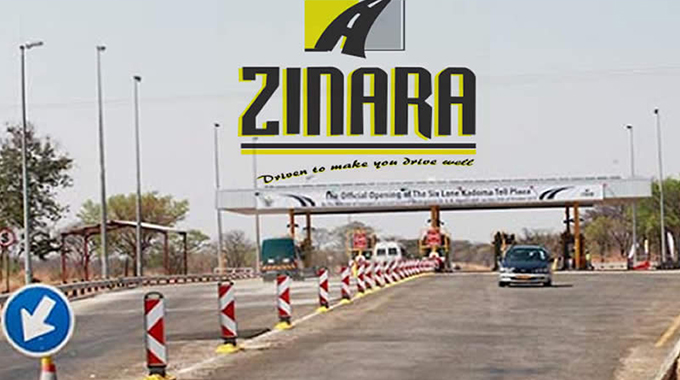
The agency has, however, expressed concern over gaps in budget utilisation by some road authorities who are trending below the 20 percent threshold, thereby lagging in the rehabilitation and maintenance of roads in their jurisdictions.
Reflecting on this, the legislator for Nketa constituency in Bulawayo, Cde Albert Mavunga, said the establishment of Zinara was a vital masterstroke in the fight against sanctions, as local resources are pulled together to solve challenges facing the country.
“In the face of illegal sanctions that were imposed on our country at the turn of the millennium, it’s important for us as a country to continue finding innovative ways to fix our problems without depending on external forces,” he said.
“Zinara is just one of the many ways that the Government is proving to our distractors that we can build and develop our own country using local resources.
“My plea is for other parastatals or corporate bodies to learn one or two things from Zinara on how to pull together resources and distribute them for the development of the country,” said Cde Mavunga.

The youthful legislator’s sentiments were anchored by Bulawayo South legislator and Deputy Minister of Industry and Commerce, Cde Raj Modi, who said local solutions to local challenges are the key to busting sanctions. He said maintaining a good road network in the city will spur economic development.
“Bulawayo’s road network needs some upgrading and our hope is that the Zinara funds will be used to maintain good roads so that the city keeps attracting investment,” he said.
“The country has been under sanctions for years but the Government is doing its best to keep services such as roads in good shape.”
Bulawayo Mayor, Senator David Coltart, while acknowledging funds disbursed by Zinara, said the city needs more.
“The City of Bulawayo has received ZWG13 million for the rehabilitation of roads. At the current exchange rate that equates to US$520 000. Bulawayo needs US$15 million just to maintain its current road system,” he said.
“The city’s motorists pay Zinara over US$520 000 per annum in car license fees.”

Zinara has said its strategic funding ensures that local authorities have the resources required to attend to various road works.
“General uptake of funds has been steady across respective categories of road authorities, closing the period at 91 percent uptake against the annual budget. 80 percent of provinces have accessed above 50 percent of their allocation, whilst projects currently underway are expected to push this uptake up significantly by the close of the year,” said the agency.
The top takers include Harare Metropolitan Province with 88 percent uptake, largely influenced by the Harare City Council (HCC)’s 98 percent budget utilisation.
HCC’s high utilisation percentage was spurred by extensive road works around the city before and after the SADC Summit thereby yielding a positive transformation of the capital city’s roads.
Bulawayo Province was also one of the leading provinces with a budget utilisation of 71 percent, accounting for a significant number of projects completed and still ongoing in the province.
Mashonaland East Province has also been a standout, drawing 73 percent of its allocated ZWG26.9 million.

“While disbursements have progressed well in many areas, there are still gaps in budget utilisation, with some road authorities trending below 20 percent.
“Support efforts are being rendered as Zinara’s technical department works with counterparts in road authorities to close these gaps,” said the agency.
Zinara said that overall, most road authorities executed their budgets well and attributed the trend to improved investment in the capacitation of road authorities by the corporate body, particularly with regard to technical competencies to co-ordinate, manage and acquit disbursed funds.
For the period from January to September 2024, Bulawayo Metropolitan Province was allocated ZWG18.5 million, received ZWG13.1 million and has an outstanding budget of ZWG5.4 million.
Matabeleland South Province was allocated ZWG25.9 million, used ZWG15.9 million and has a remaining allocation budget of ZWG10 million. Rural District Councils (RDCs) namely Bulilima, Insiza, Mangwe, Matobo and Umzingwane received various amounts for the rehabilitation and maintenance of road networks while Beitbridge Municipality, Plumtree Town and Gwanda Municipality also got their share of the Zinara cake.
Matabeleland North Province was allocated ZWG26 million and has a remaining budget of ZWG12 million after spending ZWG14 million.

The province’s RDCs namely Binga, Bubi, Kusile, Tsholotsho, Nkayi, and Umguza benefitted from the Zinara disbursements while Hwange Town, Lupane Town and Victoria Falls Municipality were also beneficiaries.
Midlands Province was allocated ZWG983 million and has an outstanding budget of ZWG482 million after utilising ZWG500.6 million.
In its National Planned Maintenance Projects update, Zinara said 33.773km of road works have been completed in 568 different projects.
“In terms of construction, reconstruction and rehabilitation at the national level, 33.773km of road works have been completed in 568 different projects.
“This trajectory is very encouraging and as further funds are accessed in the fourth quarter, projects will be significantly accelerated to ensure a strong finish to the year,” said the agency.
Zinara has reiterated its commitment to the effective discharge of its mandate as a road fund administrator.
As a key player in the socio-economic development of Zimbabwe, Zinara envisages a traffickable road network in line with the national vision of attaining an upper middle-income economy by 2030.
The mandate of the corporate body is to fix, collect and disburse road user fees to road authorities and is also responsible for mobilising revenue for road development and maintenance.
It assists road authorities in making annual or multi-year road maintenance rolling plans and approves such plans. To uphold corporate governance principles to ensure transparency and accountability in its operations, Zinara has forged a partnership with the Zimbabwe Anti-Corruption Commission (Zacc) by establishing an Integrity Committee.



 Online Reporter