


 Online Reporter
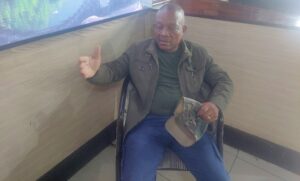
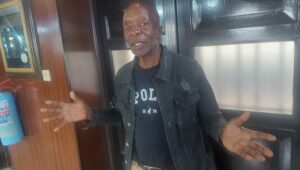
CDE JOHN GAZI (JG), whose nom de guerre was Alfred Dube, continues his narration of his exploits during the liberation struggle. This week, he recounts to our Society Editor PRINCE MUSHAVEVATO how Zimbabwe People’s Revolutionary Army (ZIPRA) fighters successfully transitioned from basic guerrilla warfare to advanced guerrilla tactics, a crucial step in their evolution towards becoming a regular army. Cde Gazi was joined in the discussion by fellow ZIPRA fighter CDE CETSHWAYO SITHOLE (CS), whose liberation name was Tonderai Ngoma, who periodically interjected, sharing his sentiments.
***************
Q: Last week, we concluded our discussion with you (JG) explaining the transitions in ZIPRA’s fighting tactics. This largely created a perception, among some, that ZIPRA was not heavily involved in direct battlefield engagements, as comrades reportedly spent a significant amount of time in training camps, “creating a regular army”. What is your take on this perception?
JG: That is nonsense! Such views are held by misguided individuals who have little or no understanding of how ZIPRA operated and what it stood for. We were highly active in the struggle from start to end. Our leaders and trainers, like Brigadier-General Ambrose Mutinhiri (Retired), trained guerrilla fighters who were all- rounders in terms of ideology and the use of explosives, sometimes improvised or home-made.
Guerrilla fighters could use anything they laid their hands on. However, guerrillas do not capture and defend territory, hence the need for a force of regular fighters to defend liberated zones that had been neutralised by guerrilla fighters. That is why we kept advancing our training.
CS: (interjects) During the war, we had liberated zones that needed to be defended and that was not possible with guerrilla units.
We needed regular tactics; thus, we had armed aircraft units and Strela units — the surface-to-air missile launchers.
Through our advanced training, we reached a point where we could counter any air force that entered our operational areas and camps.
The camps had to be defended and the first battalions were there to defend them. We did not want to allow a situation where the enemy could move into our zones and do as they pleased. Strategies were devised to discourage attacks and to effectively pound the enemy. We had taken into consideration that we had three basic enemies attacking us, namely, the then-apartheid South African defence forces, Rhodesian defence forces and the Israelis, together with some British elements.
Q: Can you explain why apartheid South Africa and its allies were so intent on attacking you in your quest to liberate the country?
JG: According to the South Africans, their primary line of defence was Rhodesia, as Zambia had already gained independence. They had pledged not to yield an inch of Rhodesia. Therefore, to defend South Africa, they felt compelled to defend Rhodesia and Namibia, which served as buffer zones. Consequently, they had to assist the Rhodesians.
Furthermore, Umkhonto weSizwe was involved in the struggle alongside ZIPRA from the outset, actively fighting the Boers in South Africa. This effectively extended the struggle, leading the Boers to counter anyone allied with Umkhonto weSizwe. It is important to remember that ZAPU and the African National Congress (ANC) of South Africa shared a united front, especially during the period when leaders like Nkomo and Mandela were detained.
Operating from Zambia to South Africa presented significant challenges for the South Africans due to the difficult terrain. Even linguistically, when they crossed into Zimbabwe, they encountered various languages like Tonga, Shona and Kalanga, which were difficult for them. This fostered alliance among the liberation movements. The South Africans were aware that our operations, including weapon logistics, were based in Rhodesia as early as 1966.
It was in response to these operations that South Africa deployed its own forces to fight us. There was an incident along the Zambezi River border where South African fighters were defeated not only by Umkhonto weSizwe, but also by ZIPRA fighters, as the South Africans attacked anyone they considered a terrorist. South African forces were deployed from Gwanda, even remaining there after Zimbabwe’s independence. This history is why the slogan “ZIPRA-Umkhonto weSizwe” symbolised a unified force.
Q: How easy or difficult was it to transform a comrade from guerrilla warfare to become a regular fighter?
JG: It was a difficult task to transform a guerrilla fighter into an advanced guerrilla fighter and then finally into a regular fighter. Some comrades resisted this change and failed to adapt. I salute the ZIPRA commanders, among them Nikita Mangena and Mutinhiri, for their foresight and ability to evolve with the times, successfully converting a guerrilla army into a regular force. The Boers were genuinely surprised. They underestimated us, never expecting to encounter us with advanced artillery such as rockets, tanks, Katyusha multiple rocket launchers, armoured personnel carriers and helicopters, which we used effectively.
This transformation was a testament to our commanders’ effective strategies.
To win a war, you need quick-thinking commanders who can plan and execute in real-time during battle. This was a key lesson from our Cuban and Russian advisers: to attack and advance, with no retreat.
We needed commanders who would sit down, strategise and set targets to be achieved within specific time frames. This was only possible by creating a regular army.
It is important to note that during those training periods, we had different units actively operating across most parts of the country. We established Northern Front One and Two and Southern Front One, Two and Three. We even encountered some Zimbabwe African National Liberation Army (ZANLA) fighters in areas like Mberengwa, extending down to Mwenezi and Gwanda, where our forces were operating.
Our commanders, like Mangena and Ackim Ndlovu, hailed from Mwenezi.
Before the famous 1967 battles, ZIPRA forces had already begun operations the previous year.
CS: (Interjects) There was also the Special Affairs Unit, commanded by Ackim Ndlovu, which operated in Zambia.
Read more on www.sundaymail.co.zw
Its members were from the youth wing of the Zimbabwe African People’s Union (ZAPU).
The enemy initially thought we would employ primitive methods of attack and sabotage, perhaps using landmines and small guns, as we did not have specialised weapons then.
However, as the war progressed, our weaponry systems evolved from petrol bombs to bazookas and so did our fighting strategies.
Larger units were introduced.
This is why we started recruiting young boys from school; they possessed the necessary education to operate the more complex weapons that required calculations.
You could not just take a guerrilla and expect them to operate a heat-seeking missile; that required educated personnel.
Q: You can carry on.
JG: The first urban guerrilla units were ZIPRA divisions that operated in Harare, Bulawayo, Gweru and Plumtree.
They effectively conducted hit-and-run missions in these areas and carried out successful operations like the Salisbury tank bombings (however, in previously published articles, the ZANLA side has also claimed to have been responsible for bombing the fuel tanks) and the derailment of cargo trains in Victoria Falls.
In fact, there was a period when the colonial government stopped using the railway line entirely because ZIPRA was repeatedly hitting their rail system hard.
The individual leading the bombardment of our camps was eventually struck by ZIPRA fire.
Some of his famous comments were: “The terrorists are dirty; their fire is dirty — Mayday, Mayday.”
That was when we hit him.
Several Rhodesian aircraft were downed by ZIPRA, including those struck in Zambia and at the front lines. However, the enemy narrative focused on the Viscount aircraft, wrongly accusing us of being terrorists attacking civilians.
But even before the Viscounts, several of their jets and helicopters had already been brought down. Some of the comrades who hit those aircraft are still alive today.
If you follow the liberation history, the narrative often makes it seem as if the two Viscounts were the only planes downed, yet many others suffered a similar fate.
We hit them countrywide because we possessed the weaponry and personnel, all trained through a programme meticulously put in place by our senior commanders.
We can even revisit some of these locations, like Kanyemba, among others, where you can still see the wreckage.
Cdes John Gazi and Cetshwayo Sithole will continue their narrations next week, highlighting their wartime experiences.


 Online Reporter
 Bongani Ndlovu