


 Online Reporter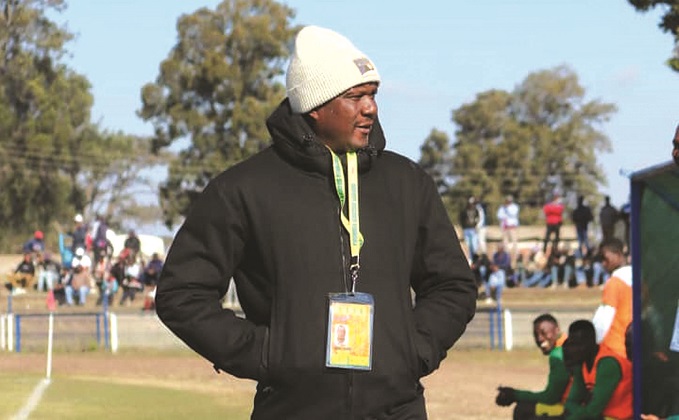
Veronica Gwaze
Zimpapers Sports Hub
IN the heat of a packed Rufaro Stadium, with thousands watching and hearts pounding, Herbert “Jompano” Maruwa did what he does best, pull off the improbable.
His TelOne side, written off by many, had just stunned giants Scottland with a slender, but seismic 1-0 win. It was not just a match result. It was a statement.
It marked TelOne’s highest ever mid-season league position — third place — and reinforced the legend of a coach who does not just lead teams; he transforms them.
Jompano is no ordinary gaffer. Speak his name, and you will spark polarising debate.
To some, he is a mysterious “juju master”, cloaked in superstition and suspicion. To others, he is a football purist with a clairvoyant eye for raw talent and a surgeon’s precision in team-building. But strip the myths, and a clearer picture emerges: a devout Christian, driven by discipline, hard work and a deep, almost spiritual connection with the game.
“I am all about work rate,” Maruwa says calmly.
“I love players who put in the hard work because I believe there are no shortcuts in football.”
In Zimbabwe’s top-flight football, Maruwa is more than a coach. He is a rebuilder, a man whose fingerprints are left not in silverware, but in the careers he resurrects, the clubs he revives and the lost talents he redeems.
Watching Maruwa on the touchline, you would be forgiven for mistaking his calm demeanour for detachment. There is little animation; few antics. But beneath that composed exterior lies a man orchestrating every movement, predicting the opponent’s next play before it unfolds. His methods are not loud. They are effective.
From Black Rhinos to Dynamos and now TelOne, Maruwa has turned struggling or overlooked squads into competitive sides. His blueprint is understated brilliance: scout smart, build trust, revive confidence and bet on players no one else would.
Take TelOne’s resurgence this season.
Under his stewardship, the team is not only winning matches; it is rewriting expectations. They have gone from also-rans to potential title contenders. Their form has ignited interest across the league, with many now touting TelOne as the season’s dark horse.
At the heart of the surge is Washington Navaya. Once considered excess baggage at Highlanders, Navaya has flourished under Maruwa and now leads the scoring charts with 10 goals. Similarly, midfielder Panashe Mutasa, who had laboured through three forgettable seasons, is back to his best.
And then there is Chris Mverechena. Out of sight and out of mind for years, the goalkeeper is once again relevant, revitalised by a coach who does not see baggage, only potential.
“People tell different stories about me and my beliefs,” Maruwa admits. “But I’m a Christian. I believe in forgiveness and anything God-related.”
Maruwa’s spell at Black Rhinos remains one of the clearest examples of his impact.
Across seven seasons, he assembled a team brimming with no name players who morphed into league regulars. Names like Donald Mudadi and Keith Madera were unearthed and nurtured by him. When he eventually left, the army side quickly spiralled into relegation, a stark reminder of just how much he held the club together.
“I was heartbroken by their demotion,” he says. “Though I had left, I basically assembled that team. I wanted to see how far the project would go.”
In 2023, Maruwa took over at Dynamos, inheriting a fractured side and the heavy expectations that come with leading Zimbabwe’s biggest club. He replaced Tonderai Ndiraya and quickly got to work. The result? Dynamos won their first major silverware in nine years, earning a return to continental competition. More importantly, they became a team fans wanted to watch again.
Mudadi and Madera were joined by unheralded talents like Junior Makunike, Tanaka Shandirwa, Emmanuel Ziocha, Shadreck Nyahwa and Aurthur Musiiwa. Youngster Elton Chikona emerged as Premier Soccer League (PSL) Rookie of the Year. And in midfield, Makunike, Mudadi and Shandirwa formed arguably the best trio of the season.
Even fallen stars got a second act.
Denver Mukamba, once dismissed by many, found discipline and purpose under Maruwa’s wing, helping DeMbare to a top-four finish.
But when Maruwa left, the team unravelled. Despite a brief spell of continuity and a Chibuku Super Cup defence, the spark was gone.
“That team oozed confidence,” recalls one fan. “It wasn’t just about results. You could see the belief, the swagger . . . the rebirth.”
Maruwa’s approach to talent development is rooted in his background, working with junior players. It is here where he hones his skill for identifying raw gems before anyone else notices.
“I regularly watch junior games,” he says. “That gives me insight into their strengths, weaknesses and how to nurture them.”
This insight has paid off, twice.
In successive seasons, players under his wing have been crowned Rookie of the Year: Elton Chikona at Dynamos and Allen Chapinduka, whom he handed a PSL debut midway through last season. It is a pattern: find the ignored, believe in them and give them purpose.
After his exit from Dynamos, Maruwa joined Division One outfit Harare City. His tenure was brief, but it was vintage Jompano.
Armed with a squad of greenhorns and castoffs, he launched a seven-game unbeaten run (six wins and one draw) before moving to TelOne. Once again, his absence was felt immediately. Harare City’s promotion dreams crumbled.
His arrival at TelOne brought with it the usual transformation. He brought along players dismissed as “rogues” or “past it” by other clubs; names like Frank Makarati, Xolisani “Scara” Moyo and Mukamba. All have since flourished.
“A coach should know what these players can give,” Maruwa explains. “It’s all about managing their characters. Football is about quality, and they have it.”
Maruwa began the current campaign with modest ambitions: a top six finish. But now, at the season’s halfway point, TelOne are sitting pretty in third.
His plans have shifted. His dream has grown.
“This year, we are rebuilding,” he says. “Most of my players are youngsters, so riding high like this shows we’re heading in the right direction.”
And as for his legacy?
“I just want to be remembered as the man who, despite never winning a championship, transformed lives,” he said.
In a game where trophies speak loudest, Maruwa is writing his own gospel, one of redemption, rebuilding and relentless belief.


 Online Reporter
 Bongani Ndlovu