Online Reporter
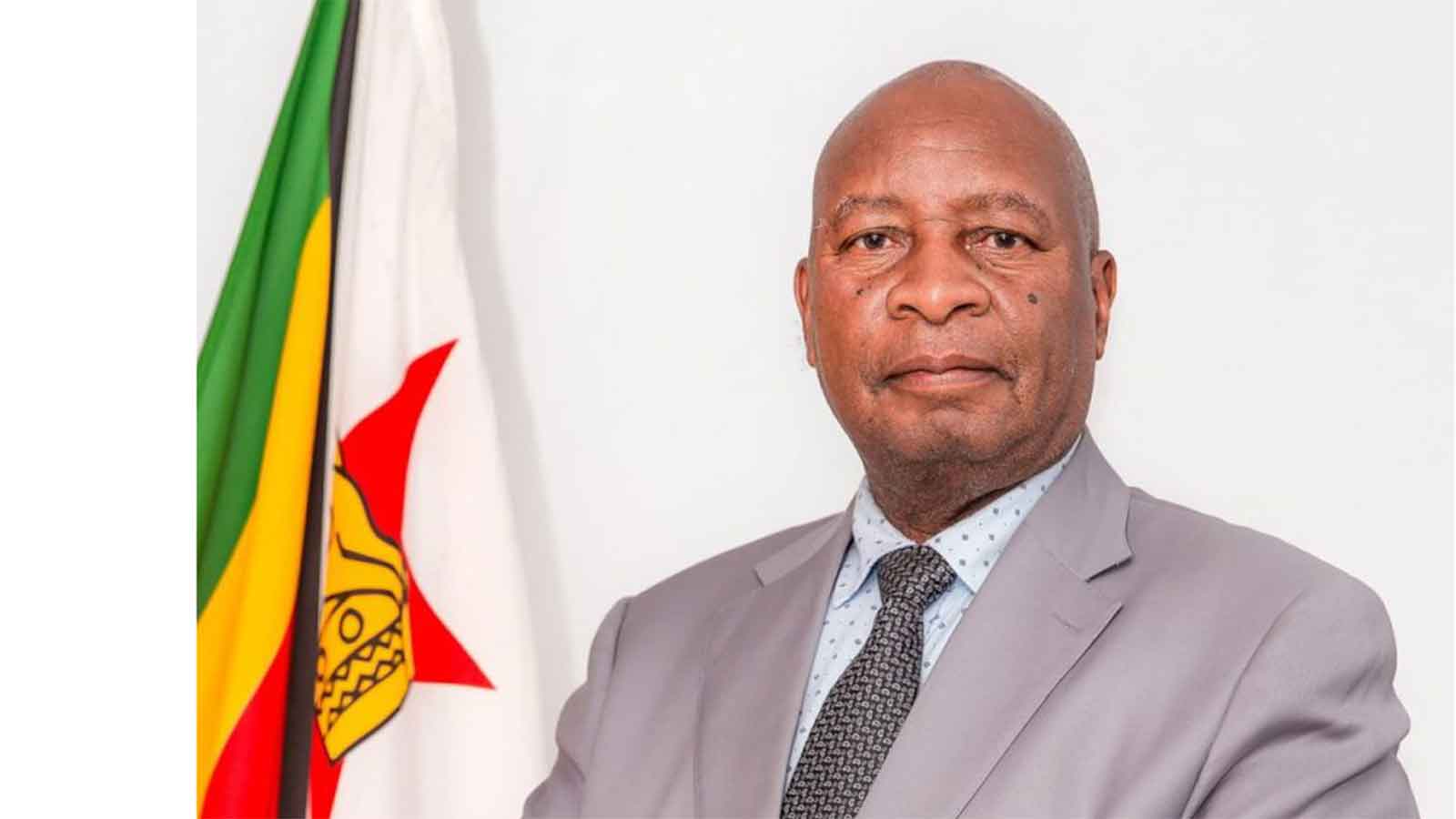
Persistence Gwanyanya
Herald Correspondent
NOW that Zimbabwe has made significant progress in growth and macro-economic stability, the focus in 2026 and beyond should be on translating the gains into tangible improvements in the daily lives of ordinary citizens.
As we enter into the last phase of economic reforms, the natural expectation is for policymakers to reflect on the progress made towards the ultimate objective of uplifting the lives of ordinary citizens into a shared and prosperous upper-middle-income status and to make necessary policy adjustments towards this objective.
Zimbabwe embarked on economic reforms in October 2018, under the auspices of Vision 2030, with the implementation of the last five-year developmental plan, National Development Strategy 2 (“NDS2”) set to start in 2026.
Reflecting resilience of the economy, the economic rebasing exercise, which was concluded by ZimStat in 2025, set the economy at around US$44,7 billion and US$52,4 billion in 2024 and 2025, respectively, which is a significant increase from US$34 billion at the beginning of reforms.
This makes Zimbabwe the fifth largest economy in Southern Africa after South Africa, Angola, Tanzania and DRC.
Going by World Bank classifications, Zimbabwe is now a middle-income economy at a Gross National Income (GNI) per capita of US$3 200. Simplified, Zimbabweans are now surviving on an average of US$9/day, which only explains why the focus should now be on reducing income inequality.
The highlighted economic performance was enabled by an average growth rate of 5,5 percent since 2019, which itself reflects the resilience of Zimbabwe’s economy. Since we embarked on reforms in 2018, the economy has experienced increased incidences of external factors, which have inhibited it from achieving its full growth potential.
Commendably, after a long spell of instability, the monetary authorities seem to have struck the right chord with the introduction of a structured currency, ZiG, and adherence to tight monetary policy stance, supported by prudent fiscal policy measures.
Consequently, ZiG has been stable for more than a year, with parallel market premiums narrowing from more than 100 percent to less than 20 percent.
Owing to the strong positive causal relationship between currency and price stability, the economy experienced rapid decline in inflation from a peak of 95,8 percent in July 2025 to 15 percent as at December 2025.
Average Zig month-on-month inflation was managed below 0,4 percent for the whole of 2025, excluding the month of January when it spiked due to shock caused by increases in rentals.
After growing by an estimated 7,3 percent in 2025, official projections are for the mining sector growth to remain strong at 6,3 percent supported by increased production in 2026.
However, authorities are concerned that the increased mining sector activity has not translated into commensurate growth in the sector’s contribution to the fiscus and national development.
Zimbabwe is experiencing a boom in mining sector activities at a time when mineral prices except gold are generally softening, which warrants close analysis and investigations as she might be losing significant revenue through illegal, under-declared and/or undeclared exports of minerals.
Treasury has already indicated its commitment to support the implementation of mineral assaying initiative in 2026. This initiative is necessary to ensure that Government receives fair value from exports of especially critical minerals and rare earth minerals such as lithium from determination of precise grade (concentration) and purity of minerals.
Importantly, the commissioning of additional smelting capacity by Zimplats in July 2025, which will also provide toll manufacturing services to other miners in the sub-sector, will see increased contribution of the PGM sub-sector to the fiscus and foreign currency inflows from export of beneficiated product-matte.
Again reflecting increased concerns by authorities about the contribution of the mining sector to fiscus and national development, it took a lot of convincing for Treasury to reverse the proposed increase in gold royalties of up to 10 percent.
Whilst it’s beyond doubt that gold subsector supports more than 1,5 million livelihoods through mainly artisanal and small scale mining, Treasury felt the need to increase Government’s share from the gold price rally noting that the subsector has been benefiting from incentives and concessions to artisanal and small scale miners who are said to be contributing more than 70 percent of gold deliveries to Fidelity Gold Refinery (“FGR”).
Regarding agriculture performance, the projection of normal to above normal rainfall coupled with increased economic stability may mean improved prospects for the agriculture sector.
Due to climate change, it may be too early to judge the performance of the agriculture sector. However, it appears tobacco is doing well, with some farmers starting to reap their irrigated crop.
Given the historic record production of 355 million kg in the 2024/5 season, there is fear that prices of the crop will be depressed this year. We understand that there are carryover stocks of between 60-80 million kg. The commissioning of the tobacco processing plant will go a long way in supporting value addition and beneficiation of the crop.
It appears, wheat production is now on a sustainable increase, with annual production growing from 94 000 tonnes in the 2018/2019 season to around 605 000 tonnes this 2024/25 farming season.
This production is against the annual demand of 360 000 tonnes, implying the need for the country to start exploring opportunities to export excess wheat as well as opportunities to produce hard wheat, which we currently import.
We expect the Government to continue with infrastructure projects, inspired by the benefits from completed projects, including attraction of private sector investments around the key infrastructure. Housing construction as well as construction of modern commercial business premises is expected to accelerate, as private capital from both foreign and domestic sources is increasingly attracted by the performance of real sectors of the economy and entrenching macro-economic stability.
Expediting the investment in irrigation infrastructure towards the targeted area under irrigation of 296 000ha by 2030 is essential. Irrigable land is currently at 223 000ha, which represents a significant opportunity for investment in irrigation infrastructure to mitigate against the country’s vulnerability to drought.
Though the manufacturing sector is expected to continue growing from revised growth of 4,2 percent in 2025, the projected growth of 3,7 percent remains significantly lower than what is required to meaningfully turn around the sector, to deliver quality jobs, reverse informality and resolve macroeconomic imbalances.
However, the recent developments on the ground give us hope of accelerated growth in 2026 and beyond.
The newly commissioned state-of-the-art cigarette manufacturing plant by a company called Cut-rag Processing Plant (Pvt) Ltd as a newly established gas cylinder manufacturing plant by a company-Bronzepels (Pvt) Ltd, demonstrates the scale of manufacturing sector investments coming up.
With the expression of interest to revisit investment in Zimbabwe’s manufacturing sector by Africa’s richest man, Aliko Dangote, we expect more projects of the scale highlighted above to drive the manufacturing sector growth towards the 25 percent share of GDP.
There are already power generation projects lined up to drive reindustrialisation as well as value addition and beneficiation programs. These include refurbishment of Hwange Units 1-6 as well as expansion of Kariba Power Station. Increased electricity generation by independent Power Producers (IPP), enabled by Government support with offtake agreement and guaranteed currency convertibility, is seen as supporting the projected electricity sector growth of 6, 5 percent.
Whilst the retail and wholesale sector is expected to continue growing by 7, 4 percent in 2026, to support the growth of the primary sector of the economy, the right-sizing process is expected to continue with businesses that fail to adjust to the new stable environment expected to falter. The new environment requires businesses to be more efficient and innovative to deliver a superior customer experience.
Supporting the expected growth of the real sectors of the economy is the implementation of the ease of doing business reforms. Treasury has so far reviewed regulations and regulatory fees for five out of 12 targeted sectors of the economy. The remaining sectors are expected to be dealt with in the first quarter of 2026. Indications by Treasury are that the respective legal instruments to effect the reviews will be expedited through respective Statutory Instruments and gazetting of the Finance Act.
Sustained growth, supported by effective implementation of the ease of doing business reforms is seen as entrenching macroeconomic stability. If the projected decline of annual inflation to a single-digit level in the first quarter of 2026 is to be realised, we expect some loosening of monetary policy by the monetary authorities during the same period.
Going forward, monetary policy stance will be guided by the growth needs of the economy and projected average annual inflation. To encourage savings and incentivise credit creation towards the productive sector, monetary authorities should seek to maintain a positive real interest rate.
At less than 10 percent of GDP, the country’s savings are currently very low, which calls for measures to mobilise both public and private savings. By maintaining the budget deficit below the SADC benchmark level of 3 percent, Treasury is seen as supporting not only the mobilisation of savings but also durable stability.
Demonstrating commitment to deficit management, Treasury limited its access to RBZ overdraft accommodation to 5 percent of the previous year’s revenue, way lower than the statutory limit of 20 percent. This is necessary to avoid incidents of monetisation of deficits to minimise the re-emergence of volatilities.
However, fiscal risk remains elevated due to mounting arrears and debt. Treasury hopes that the implementation of the new Public Finance Management will improve efficiency while dealing with the problem of overpricing by suppliers and over-contracting by Ministries, Departments and Agencies.
Meanwhile, Treasury has proposed a five-year (2026-30) arrears clearance structure to systematically liquidate an estimated ZWG45.7 billion (US$1, 7 billion) accumulated in unpaid domestic bills, while also agreeing to the proposal to separate market-based TBs and TBs relating to legacy debt as a way of managing sovereign risk.
Monetary authorities are expected to effect the increase in ZiG money supply in circulation to 5 percent in line with SADC benchmark, a move that will be supported by increased demand for ZiG by Government. Treasury indicated that the increase in demand for ZiG will be pursued through the procurement process, service and statutory fees among others. The Government is better placed to drive the demand for ZiG as it commands more than 70 percent market power.
Also supporting the demand for the ZiG is the planned introduction of better quality note and coins in the first quarter of 2026. Importantly, there is need for monetary authorities to be more innovative attractive ZiG denominated investment instruments, as a way of driving its demand.
The performance of the interbank market will continue to be supported by RBZ strategic interventions, themselves enabled by the reserve accumulation strategy. The Central Bank has so far accumulated foreign reserves of more than US$1 billion, which provide more than 17 times reserve cover but also cover all ZiG money supply in the economy.
I wish all Zimbabweans a happy and prosperous New Year, whilst reminding you of the enormity of the task that lie ahead of us to transform our economy into a shared and prosperous upper middle income class.
Persistence Gwanyanya is a Trade Finance Specialist, Chartered Banker and a member of the RBZ Monetary Policy Committee. He is also the founder and Vision Steward of Bullion Group International. For feedback email: [email protected]