admin
admin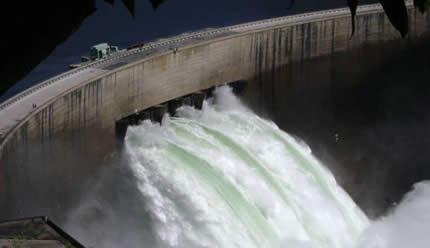
maximise the new power station’s value and improve its status as a project worth extending finance for its expansion.
The expansion of Kariba South Power Station would consume at least US$400 million, borrowed from local, regional and international financial institutions.
ZPC said the decision was arrived at after an analysis of various potential development structures and considering factors that may improve the securing of funding.
This also followed an examination of the long-term nature and magnitude of the funding required, which make financiers demand stringent conditions on project structures to ensure the risks are appropriately allocated.
“Financiers also require stringent creditworthiness of the borrower and all counter parties in the projects structure,” ZPS said in a statement.
“To this end, Kariba South Power Station extension is being developed as a stand-alone Special Purpose Vehicle, which combines the assets of the existing plant and the proposed KSPS extension.”
The sole equity holder in the SPV would be funded purely from debt. Financiers would be concerned with the creditworthiness of the Zimbabwe Electricity Transmission and Distribution Company as the sole off-taker.
“ZEDTC will therefore need to be credit-enhanced to ensure that is viewed by financiers as being able to carry long-term power purchase obligations with adequate revenues for the SPV to repay the debt on KSPS.”
ZPC said export credit agencies would provide 85 percent of the funding for the KSPS expansion project, with the balance coming from regional development finance institutions and commercial banks.
Regional banks that have already expressed interest to support the transaction include the Afreximbank, the PTA Bank, the Development Bank of Southern Africa and the African Development Bank.
Zimbabwe is exploring various ways to shore up production of electricity since the last investment in 1986.
The country is presently only able to produce about 1 320 megawatts against national demand for power of 1 950MW.
ZPC said the system development plan concluded that the best way to narrow the supply shortfall is through installation of additional base load and peaking capacity.
This would involve the increasing of capacity at Hwange Thermal Power Station from 920MW to 1 520MW and that of Kariba from 750MW to 1 050MW.
Zimbabwe will also partner Zambia on developing an 800MW hydropower project at on the Batoka Gorge Zambezi River and also rehabilitate three thermal generation power plants in Bulawayo, Kwekwe and Harare.
Over 13 licences have also been given to independent power producers, with the biggest being the 4 000MW Gokwe North thermal power plant.


 Online Reporter