Chronicle Editor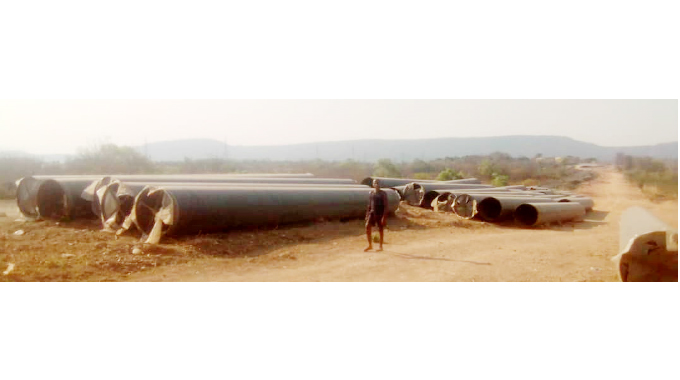
Leonard Ncube, Victoria Falls Reporter
THE Zimbabwe Power Company (ZPC) has said it is well on course to meet timelines on the US$48 million Deka water pipeline project with pipes stretching more than 3km already laid while excavation works are nearly complete.
The pipeline supplies cooling water to Hwange Power Station, after an independent review of the project upgraded the budget from the initial $28 million.
Exim Bank of India is funding the project through a US$48,1 million credit line.
The 962mm pipeline will run parallel to the existing one used by Zimbabwe Electricity Supply Authority (Zesa) for water supply to the power station and Hwange community.
ZPC had been working to upgrade the old Deka water pipeline’s low and high lift pumps and thereafter lay a new pipeline to draw water from the Zambezi River to Hwange Power Station, the country’s largest coal-fired power plant.
Hwange Power Station will require significantly more water and a more efficient transportation system to draw the water from the Zambezi River given that ongoing efforts to expand the 920MW plant by a further 600MW for $1,4 billion will increase water demand.
The power station draws raw water for electricity generation and cooling from the Zambezi River and the Deka water project is crucial in that regard.
The Deka Pipeline will increase the water supply to the power station from the current 3 500 cubic metres to 6 000 cubic metres per hour.
The Zimbabwe National Water Authority Water Treatment (Zinwa) plant in Hwange will be refurbished and there will be three tap-off points for the supply of potable water to the Deka community in Makwa, Marshala and Chachachunda along the pipeline.
The massive power project is among the key steps being taken by the country towards achieving energy self-sufficiency, thereby contributing immensely to the aspirations of the National Development Strategy (NDS1) and Vision 2030.
The Government has identified the steady availability of electricity crucial to the attainment of NDS1 goals and an upper-middle income society by 2030. The Deka upgrade project officially started last year in October and is expected to be completed by March 31, 2023.
In March this year, President Mnangagwa officiated at the ground-breaking ceremony for the construction of the pipeline.
The Deka Pipeline will increase the water supply to the power station from the current 3 500 cubic metres to 6 000 cubic metres per hour.
The project is timely as it will facilitate the Second Republic’s efforts to enhance electricity generation by solving water supply challenges.
In an update report, ZPC said the 3 555 mild steel pipes (equivalent to the 42km) which came into the country through the Beira port and conveyed to Hwange by trucks, have all been received at the site.

“The project is on course to be completed by March 31, 2023. Excavation works are 95 percent completed and the laying and fitting of the pipeline is in progress and about 3,2km out of 42km have been laid so far.
“At the end of the project, a total of US$13,7 million would have been invested in procuring local goods and services such as surveys, general civil works, inland transportation, pipe laying, and jointing, and pipe hydro testing and commissioning, thus, enormously contributing towards socio-economic development,” said ZPC.
Excavation work includes digging of the pipeline trench linking the Deka waterworks with Hwange Thermal Power Station.
A Chronicle news crew yesterday observed some pipes placed near a trench across the Hwange-Victoria Falls Road where they will be connected.
ZPC said as part of its corporate social investment initiatives, the parastatal is cognisant of the need for access to water in the communities. — @ncubeleon.



 Online Reporter