Online Reporter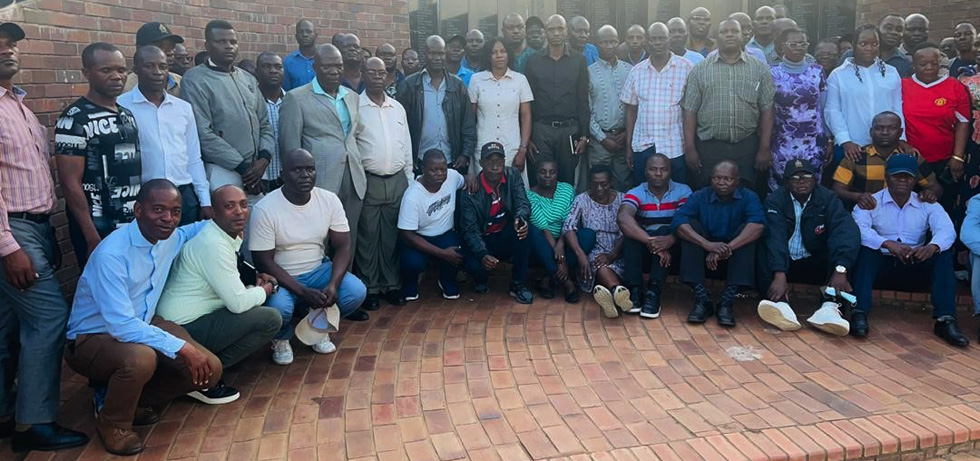
Lloyd Makonya
Correspondent
A DELEGATION of 65 senior officers from the Zimbabwe Prisons and Correctional Services (ZPCS), including five high-ranking correctional officers from Rwanda, visited the historic Chimoio Shrine in Mozambique on Tuesday as part of their 12-month Senior Management Course in Corrections.
The visit formed part of a broader initiative to instil historical consciousness, patriotism, and leadership values among senior correctional personnel.
Led by ZPCS Staff College Principal, Assistant Commissioner Kudakwashe Zvidzai, the group was taken through the harrowing history of the Chimoio Massacre, which occurred on November 23, 1977.
The massacre remains one of the most brutal episodes in Zimbabwe’s liberation struggle.
The tour was conducted by an official from the National Museums and Monuments of Zimbabwe (NMMZ), the Government body responsible for the preservation and interpretation of national heritage sites, including the Chimoio Shrine.
During the visit, Assistant Commissioner Zvidzai took a moment to address the officers, emphasising the significance of the shrine and the memory it holds.
“Our nation’s independence came at a steep cost. As leaders in corrections and custodians of national security, we must uphold the values that so many sons and daughters of Zimbabwe died for,” he said.
His words underscored the importance of remembering the past as a foundation for ethical and patriotic leadership in the correctional services.
One of the most emotional highlights of the visit was an eyewitness testimony by Superintendent Edison Mutwira, one of the few surviving members of the 1977 Chimoio bombings.
Superintendent Mutwira recounted, in vivid detail, the brutality of the Rhodesian aerial assault, and his miraculous survival amid the carnage that claimed the lives of hundreds if not thousands of Zimbabwean liberation fighters.
“The sound of explosions, the screams, the blood, it is something you never forget.
“But we survived to tell the story, and we must continue to preserve this memory,” Superintendent Mutwira said with visible emotion.
A Rwandan officer in the delegation remarked that the visit had deepened his understanding of Zimbabwe’s liberation history and underscored the importance of African nations safeguarding their hard-won independence.
“It is a powerful reminder that freedom is never free. We, as African states, must never take our sovereignty for granted,” he noted.
The Chimoio Shrine holds deep national significance for Zimbabweans, and is revered for its three foundational values which are historical, spiritual, and social.
Historically, the site represents the brutal assault by Rhodesian forces on a Zimbabwe African National Liberation Army (ZANLA) training camp, which resulted in the loss of hundreds of lives.
It is a place that tells the story of sacrifice, resistance, and the resilience of the liberation fighters who laid the foundation for Zimbabwe’s independence.
Spiritually, the shrine is regarded as a sacred resting place for the country’s fallen heroes.
Each year, Zimbabweans, particularly veterans of the liberation struggle, make pilgrimages to Chimoio to honour their comrades, perform traditional rites, and reconnect with the spirit of those who gave their lives for the country.
“These acts of remembrance serve as spiritual reinforcement for national unity and identity.
Socially, Chimoio serves as a platform for education, intergenerational dialogue, and national reflection.
University students, civil servants, and political leaders alike visit the site to gain a deeper understanding of the liberation struggle.
In doing so, they help ensure that future generations grow up informed about the country’s past, rooted in a strong sense of pride and national consciousness.
Ultimately, the visit to the Chimoio Shrine served as a powerful reminder to the officers of the legacy they are tasked with upholding.
It reaffirmed the importance of national service anchored in historical awareness, spiritual reverence, and social responsibility.
In a spirit of ubuntu/hunhu, the delegation donated foodstuffs and money to the two Mozambican custodians helping in the maintenance of the site.
Assistant Commissioner Zvidzai summed up the significance of the visit by saying: “We must never forget where we came from, for it is in remembering the past that we safeguard the future.”