Online Reporter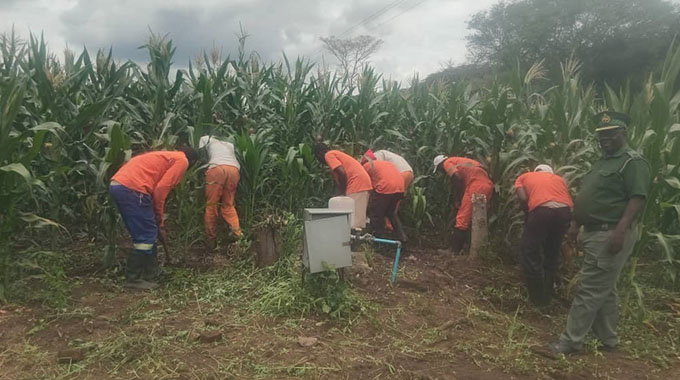
Patrick Chitumba, Midlands Bureau
THE Zimbabwe Prisons and Correctional Service (ZPCS) is breaking new ground with an innovative smart agriculture project in Shurugwi, Midlands Province, transforming what was once semi-arid land into a thriving farming venture that is boosting food security while equipping inmates with vital life skills.
The thrust dovetails with the organisation’s “smart prison concept” driven by the fact that ZPCS is now correctional in outlook and business-oriented. Already, ZPCS has embarked on several income-generating projects being undertaken at the country’s correctional and rehabilitation facilities.
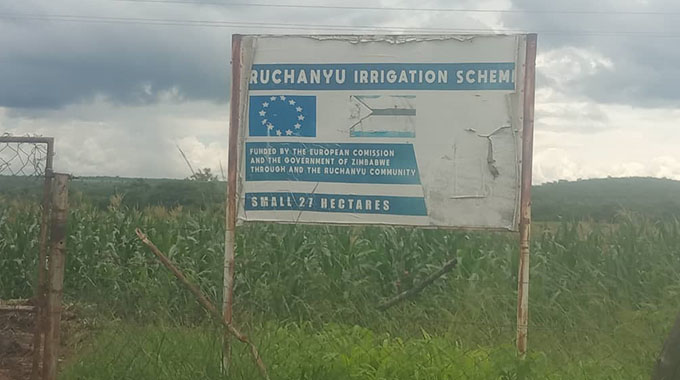
Located about 20 kilometres from the mining town of Shurugwi along the Zvishavane Road, Ruchanyu Farm is emerging as a model of agricultural excellence, demonstrating how climate-smart farming techniques can yield results even in dry regions traditionally considered unsuitable for large-scale crop production.
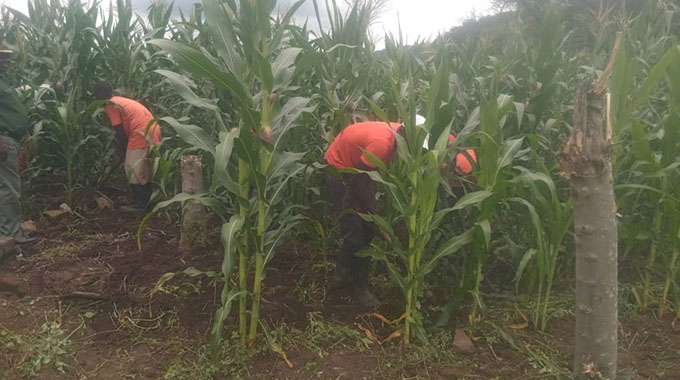
The initiative comes against the backdrop of the Government’s national drive to promote Pfumvudza/Intwasa smart agriculture, a climate-resilient farming model aimed at improving yields, enhancing food security and reducing dependence on rain-fed agriculture, particularly in drought-prone areas such as the Midlands Province.
With 10 hectares of dry land now under Pfumvudza/Intwasa, the prison farm is targeting an impressive five tonnes of maize per hectare – a significant achievement in a region that often battles erratic rainfall and poor soils.
Beyond food production, the project forms part of ZPCS’s broader rehabilitation strategy, which seeks to impart practical, income-generating skills to inmates as part of their correctional and reintegration programmes.
The officer in charge of Zvishavane Prison, Superintendent Fundo Majaya, on Monday showcased the flourishing 10-hectare maize crop, alongside growing piggery and poultry projects being undertaken at the farm.
“We are not just growing crops, we are growing people. By involving inmates in the cultivation process, we are giving them a chance to acquire new skills and contribute to their own rehabilitation,” said Supt Majaya.
He noted that the project’s success has ignited hopes for the expansion of ZPCS’s agricultural activities, creating more opportunities for inmates to turn their lives around while contributing meaningfully to national food production.
This development comes at a time when the Government is intensifying efforts to modernise agriculture through innovation and smart farming practices, in line with Vision 2030, which aims to transform Zimbabwe into an upper-middle-income economy.
“As the country seeks to transform its agricultural sector, Ruchanyu Farm is a shining example of what is possible when innovation meets determination. We are located some 20 kilometres from the mining town of Shurugwi along the Zvishavane Road. At least 10 hectares of dry land have been put under Pfumvudza/Intwasa smart agriculture this season with an expectation of five tonnes per hectare,” said Supt Majaya.
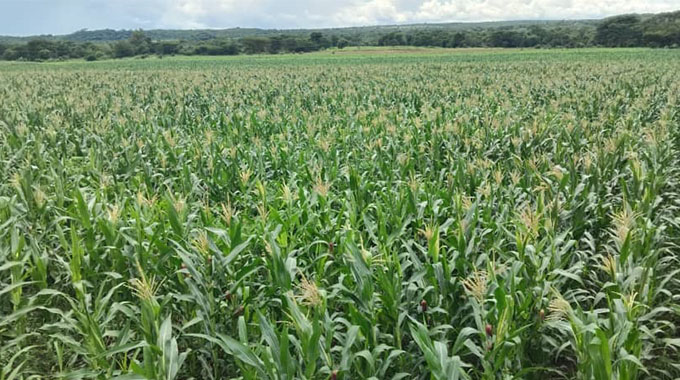
Supt Majaya said the initiative was primarily aimed at ensuring food security for inmates while reducing reliance on the Government fiscus.
“As alluded to earlier, we are producing to ensure food is secure for our inmates. Apart from farming, we are also doing piggery, poultry and fishery, which constitutes a subsistence farming culture that is proving to be productive,” he said.
The project has also attracted private sector participation, with local seed companies partnering ZPCS to enhance production and productivity.
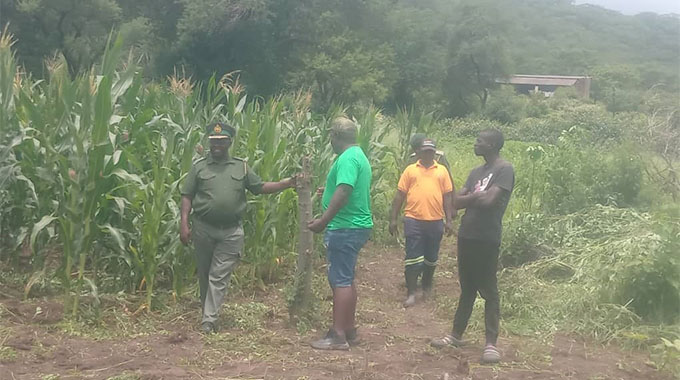
A representative of one of the seed companies, Mr Prosper Chinyakata, said Ruchanyu Farm had huge potential to contribute to national food security and self-sufficiency.
“Production and productivity at this farm can be attributed to the synergies and support services between ZPCS and seed distribution entities. We are providing convenient access to quality seed and technical support throughout the cropping season. This support ensures that farmers are successful in their endeavours,” he said.