admin
admin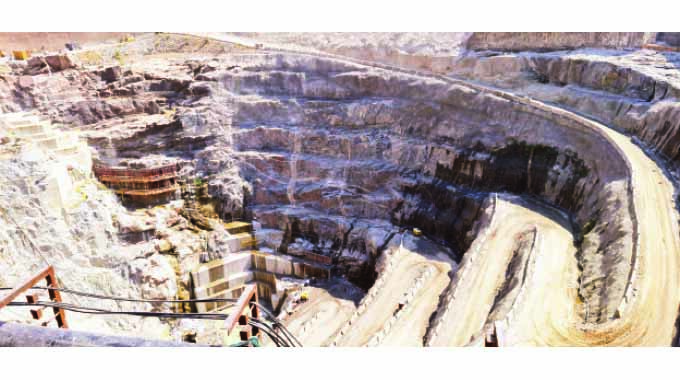
Conrad Mupesa
Mashonaland West Bureau
THE Zambezi River Authority (ZRA) has dispelled as unfounded, social media reports claiming the Kariba Dam wall has become weak and is about to collapse.
ZRA, which is co-run by Zambia and Zimbabwe, manages the stretch of the river from Kazungula to Luangwa.
The ZRA has since embarked on a US$294,2 million Kariba Dam rehabilitation programme that is being bankrolled by the European Union, the African Development Bank, the Swedish Government and the World Bank, while the authority itself is pumping in US$19,2 million into the works.
The United Nations has expressed its wish that the dam’s lifespan be prolonged to secure power generation.
United Nations country representative, Mr Edward Kallon, Mashonaland West Minister of State for Provincial Affairs and Devolution, Marian Chombo and their respective delegations yesterday toured the Kariba Dam rehabilitation programme as well as FAO food resilience and DDF projects in the resort town.
Dam management services senior manager, Engineer Charles Chibvura said the current rehabilitation works at the facility were aimed at extending its lifespan.
The scope of work included the plunge pool reshaping sub-project, which had been completed, the refurbishment of the spillway control facility and institutional strengthening, which was underway.
The plunge pool has seen in total, about 750 000 tonnes of rock being excavated through meticulous drilling and controlled blasting, coupled with the stabilisation of 20 000m² of slopes using anchors and shotcrete.
The project is expected to increase the longevity of the famous bridge by an extra 60 years and the successful completion of the excavation speaks positive news to Zimbabwe and Zambia energy production.
Kariba produces at least at least 2 000 megawatts of clean electricity to Zimbabwe and Zambia. It is also a source of livelihood to many families through fishing and tourism.
The rehabilitated projects are expected to be commissioned in 2025, which in turn will add life to the bridge that was constructed in the 1950s before subsequent commissioning in 1960.
Said Engineer Chibvura: “From all the information that we have and all the activities we are undertaking at Kariba Dam wall, including information and data, we rely so much on the instruments that we use and we believe that the dam is safe.
“The risk of us losing this dam is very low and we intend to secure the long-term safety of the bridge as it is a critical facility for the two nations.”
Eng Chibvura added that while the dam wall was still safe and intact, it was the authority’s mandate to ensure that routine maintenance was done to protect the lives of over 4,5 million people downstream, should an unavoidable catastrophe occur.
The efforts by the authority are also informed by research and well documented history.
“There were a lot of bridges that were constructed between the period of 1950 to 1990. This period also saw a surge in the construction of dams but there was less information and knowledge unlike what we have today.
“Because of that information, we are going back, and you will see that it’s not only here but, in many countries, where dams built during this time are being rehabilitated.”
The world has recorded several dam failures that resulted in deaths of humans and animals, including the South Fox Dam disaster in America where 2 200 people died in 1889.
In 1963, 2 600 people died in Italy after Vajont Dam collapsed while between 40 to 100 people died in Kenya recently after a dam failure.
Mr Kallon commended efforts being made to rehabilitate the facility which pumps life to millions through fishing and tourism in the two neighbouring countries.
During what was his second visit to the Kariba Dam rehabilitation project, Mr Kallon said, he was happy with progress. He is also looking at the mitigatory efforts to address challenges posed by El Nino-induced drought.
Minister Chombo challenged ZRA to invest in Kariba which is perceived to be one of the underdeveloped districts in Zimbabwe.
People from Kariba, including those of Tonga origin, were affected by the construction of the dam as they had to be relocated.
It was also revealed during the tour that climate change continued to affect dam levels, with a harvest of 18 billion cubic metres this year compared to 45 billion cubic metres last year.


 Online Reporter