admin
admin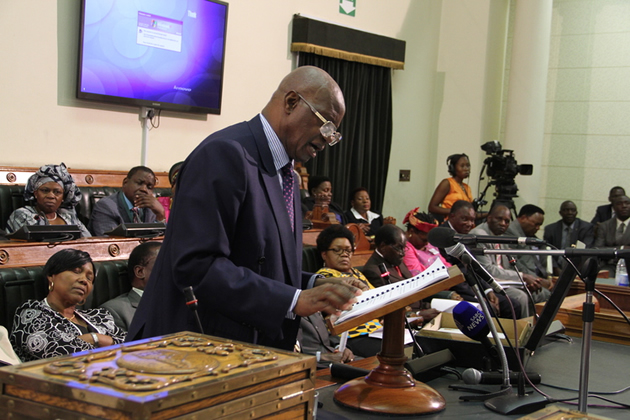
Oliver Kazunga Senior Business Reporter
DEMUTUALISATION of the Zimbabwe Stock Exchange (ZSE) is intended to be finalised in the first quarter of 2015 as work was already in progress to transform the bourse into a company.
The demutualisation is a process through which any member-owned organization becomes a shareholder-owned entity.
Finance and Economic Development Minister Patrick Chinamasa said the demutualisation should result in a well capitalised exchange, with more flexible decision making, and one that can respond to a fast changing and competitive market. “The demutualisation of the Zimbabwe Stock Exchange is intended to be finalised in the first quarter of 2015.
“A Memorandum of Understanding was signed between Treasury, the Zimbabwe Stock Exchange, and the Securities and Exchange Commission of Zimbabwe on July 21, 2014, to pave way for the smooth demutualisation of the ZSE,” he said while presenting the 2015 fiscal policy statement last week.
He added that Cabinet had also approved the recommendation for the reduction of shareholding (post demutualisation) by the present shareholders of the ZSE.
The shareholders are government with 32 percent shareholding and stock brokers 68 percent.
Under the demutualised exchange, government is expected to reduce its shareholding to 16 percent while stockbrokers will reduce their shareholding to 32 percent.
“The remaining 50 percent will be shared among private financial institutions and individuals. Institutions such as banks, insurance companies, and pension funds will get 20 percent, whilst individuals will be allocated 30 percent,” said Chinamasa.
“Work is currently on going in making the necessary legislative amendments to facilitate the registration of the ZSE as a company in line with the MoU.”
It is hoped that once demutualisation is complete, the ZSE can now democratize and create a second-tier exchange or more exchanges.
Starting with the Stockholm Stock Exchange that demutualised in 1993, to date all major bourses around the world such as those in India, Singapore, Australia, United States, Hong Kong, Malaysia and Japan operate on the basis of demutualisation.



 Online Reporter