admin
admin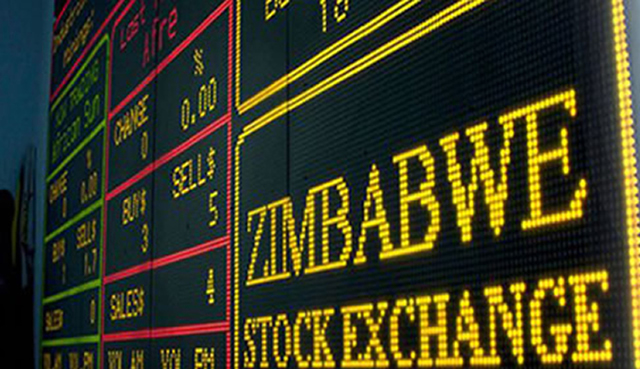
Business Reporter
THE Zimbabwe Stock Exchange has maintained its position among Sadc’s top performing bourses after recovering from the losses suffered after the July 31 elections.
Presenting the 2014 National Budget on Thursday, Finance and Economic Development Minister Patrick Chinamasa said the ZSE lost significant ground post the July 31 elections, but had since recovered on the back of the steadily growing business and investor confidence.
“It is encouraging to note that as at September 30 2013, the Zimbabwe Stock Exchange remained within the regional top five (best performers) on a year-to-date return basis, after Ghana, Malawi, Nairobi and Uganda,” the minister said.
The ZSE main industrial index opened the year at 152,4 points, and gained 60,05 points, representing 398 percent gain, to close the month of November at 213,9 points.
Minister Chinamasa said trading on the bourse during the past 11 months of 2013 has been generally positive although it was clouded by political uncertainty, as investors were cautious and speculative.
He said the pre-election period was characterised by strong and sustained bullish sentiments, increased consumer and business confidence with the industrial index reaching an all-time high of 232,87 points as at July 30 2013.
But the post-election period was characterised by bearish sentiments normally associated with adjustments portfolio. Foreign investors pulled out of the market and local investors could not capitalise on the relatively low prices due to a liquidity crunch, hence, industrials declined to 181,67 points as at August 31.
Contrary to the general market sentiments, the mining index opened the year 2013 at 65,12 and lost 18,1 points (-27,8 percent) to close the month of November 2013 at 47,2 points. During the first 11 months, the mining index was volatile, registering 84,07 points as at January 31 2013, falling 66,21 points by March 31, before recovering in July, and trending southward in November.
This could be fundamentally explained by weakening international commodity prices and the high cost of production and general operating environment in the mining sector.
Accordingly, the market capitalisation moved in tandem with the market direction as it started the year at US$3,96 billion and reached an all-time high of US$6 billion on July 30, before declining to US$5,5 billion as at November 30.
Net foreign purchases by foreigners averaged 45 percent of total market turnover during the month of January 2013, but declined to 38 percent in March 2013 and further decreased to 8 percent during the month of August 2013. The reduced net foreign purchases and increased foreigner investor sales translated into declining portfolio investment which contributed to the strong bearish sentiments as local investors were not liquid enough to invest on the market.



 Online Reporter