Online Reporter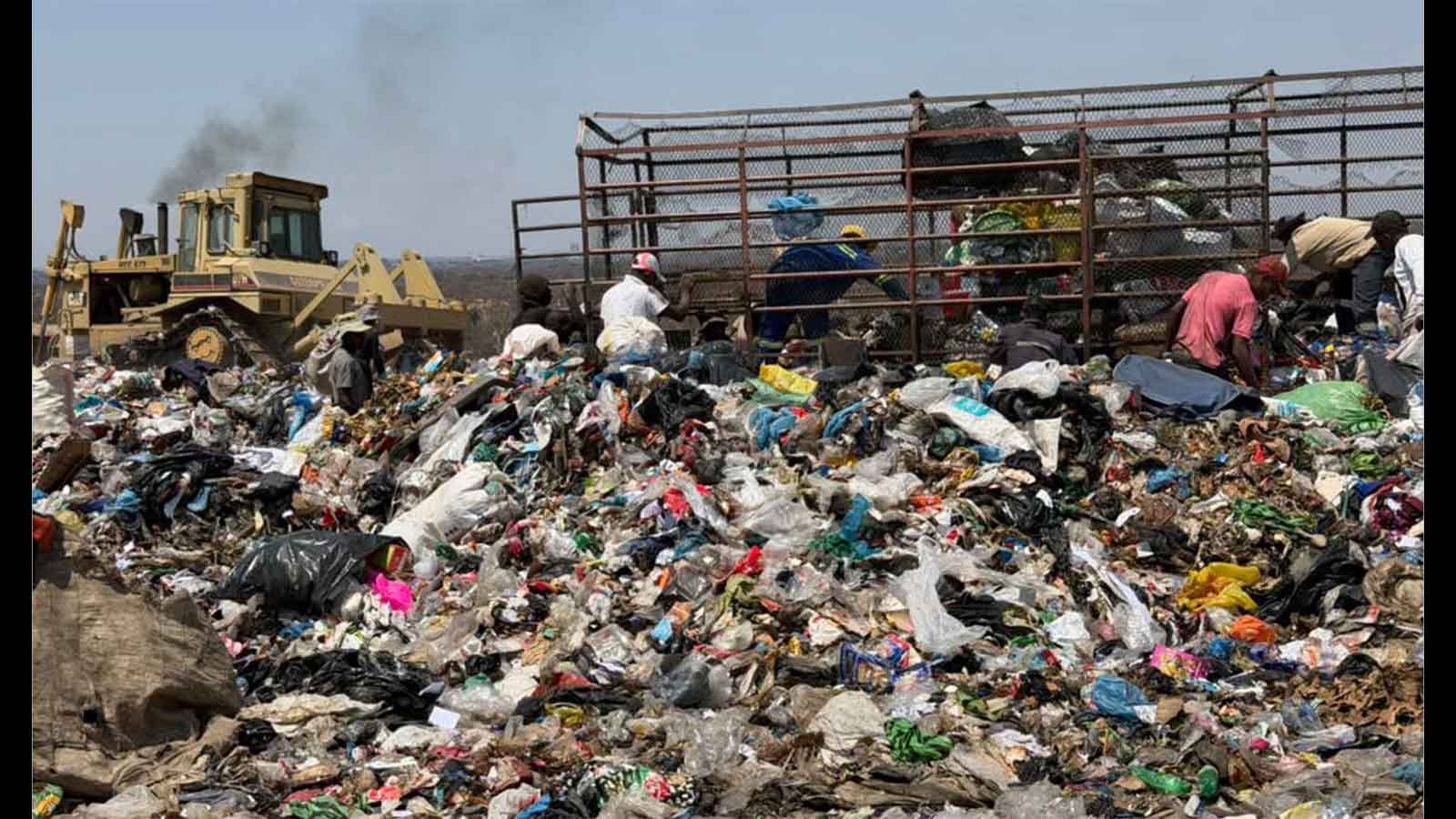
Vusumuzi Dube, Deputy Radar Editor
FOR nearly a decade, Bulawayo has been promised that its mountains of garbage could be turned into electricity, fuel, jobs and a cleaner environment.
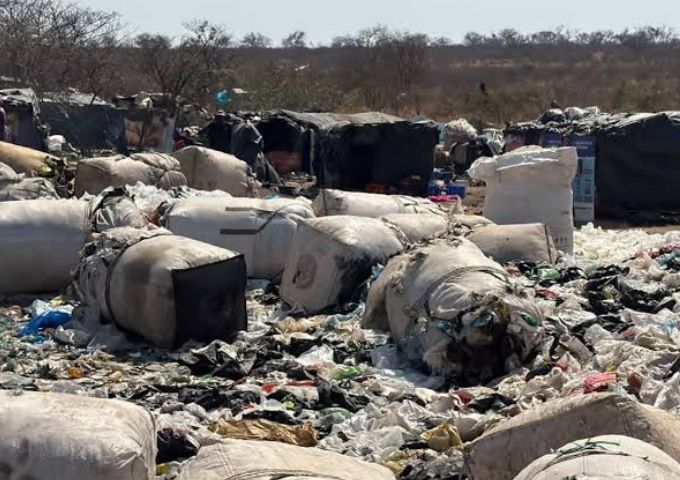
Instead, the city has been left with an ageing landfill, recurring fires, pollution complaints, informal waste pickers living off rubbish and a waste-management crisis that has now forced Central Government to intervene.
The chronology is difficult to ignore.
From the original Pragma Leaf Consulting proposal in 2016, through the signing of a waste-treatment contract in 2018, the granting of national project status and repeated assurances that construction was imminent, the promised waste-to-energy solution never materialised.
Three mayors later; Alderman Martin Moyo, Dr Solomon Mguni and the incumbent Councillor David Coltart, Bulawayo is still trying to find a sustainable answer to what has become one of its most visible environmental problems.
And now, in September 2026, Government has effectively taken the initiative, directing the council to engage Harare-based Geo Pomona Waste Management to tackle the city’s waste crisis and the deteriorating Richmond Landfill, popularly known as Ngozi Mine.
The council has since authorised its management to engage Geo Pomona to come up with a draft Memorandum of Understanding before any final decision is made.
The question is therefore no longer simply why has Bulawayo failed to get a waste-to-energy plant?
It is, how did a project that was first conceived more than a decade ago repeatedly move from promise to promise without reaching operation and has Government’s latest intervention finally changed the trajectory?
The original proposal dates back to an initiative supported by the Common Market for Eastern and Southern Africa (Comesa) in 2012.
By 2014, Pragma Leaf Consulting had reportedly purchased land for the proposed facility.
In 2016, the project was formally brought before council, with the UK-registered company proposing a US$68 million waste-to-energy plant.
The proposed facility was expected to produce up to 110 000 litres of biodiesel and 2.2MW of electricity, while creating employment for plant workers and thousands more people in downstream
industries.
The concept was straightforward, instead of sending virtually all of Bulawayo’s waste to landfill, the waste would become a feedstock for energy and fuel production.
Council was also told that the project would process about 325 tonnes of waste a day.
The investor wanted a long-term waste lease of between 25 and 30 years, while council proposed an annual land rental of US$40 000.
Yet even at this early stage, the project became entangled in questions over procurement, unsolicited bids, the role of Central Government and whether the arrangement constituted a joint venture.
The then mayor, Alderman Moyo argued that there was no reason to continue delaying the investment.
The council eventually resisted attempts to rescind its original approval, allowing the project to proceed.
At the time, the expectation was that construction could take between 12 and 18 months once the necessary agreements were signed.
It did not happen.
Two years later, the project appeared to have finally crossed the biggest hurdle.
On November 30, 2018, council signed a contract with Pragma Leaf Consulting for the treatment and disposal of municipal solid waste.
The company was expected to mobilise resources and commence operations within 120 days.
The project had also grown substantially.
Pragma Leaf subsequently put the investment value at about US$150 million, with projections of more than 300 direct jobs and about 2 000 downstream jobs.
The scope was ambitious.
The plant was supposed to sort municipal waste, process it and produce biodiesel, biogas and electricity.
The project was also supposed to help modernise refuse collection, rehabilitate old landfill areas and create opportunities for skills transfer through proposed links with institutions including the
National University of Science and Technology and the Harare Institute of Technology.
Again, however, the promised 120-day mobilisation period came and went.
Then came more delays.
The Covid-19 pandemic subsequently became one of the reasons cited for delays.
Pragma Leaf said the pandemic affected the movement of its international players and funders, while the completion of the Front-End Engineering Design study was also delayed.
But there was another major development.
Government granted the project national project status, giving it preferential treatment, including a five-year duty-free window for eligible imported equipment and other benefits.
That intervention was significant because national project status is generally reserved for projects considered to have substantial capital, equipment and skills requirements.
The Government’s endorsement therefore appeared to remove one of the major obstacles facing the investment.
Yet the plant still did not materialise.
By 2022, the patience of council officials was running out.
A council report noted that Pragma Leaf had submitted a Gantt chart showing the construction of a material recovery facility as one of its first major steps.
But councillors and officials realised that, instead of the promised 120-day mobilisation, the project was now potentially taking four years just to reach commissioning of the material recovery facility.
The Health, Housing and Education Committee questioned the pace of implementation.
There was also a major concern that the project had effectively been scaled down to a material recovery facility, which officials felt would not adequately address Bulawayo’s immediate waste-management crisis.
Council management eventually recommended terminating the contract.
That recommendation marked a dramatic reversal.
A project that had once been presented as a US$150 million flagship investment, capable of producing fuel, gas and electricity, was now being described by council officials as a contract that could not remain open indefinitely.
By the time Dr Solomon Mguni was mayor, the waste-to-energy project had become one of several stalled investments frustrating council.
In his 2023 address to councillors, Dr Mguni specifically mentioned the recycling and waste-to-energy project as an example of investments that had not been consummated.
He questioned why expressions of interest were allowed to gather dust in council offices.
His warning was blunt; Bulawayo could not continue using outdated methods while failing to embrace private investment and new technologies.
He also pointed to waste pickers and recycling groups as a largely untapped economic resource.
But the political acknowledgement of the problem did not translate into a functioning waste-to-energy facility.
This is where the decade-long saga becomes difficult to explain away as simply an investor problem.
At different points, the city had an investor, land for the proposed plant, a feasibility study, council approval, a signed waste-treatment contract, a proposed 25-year operating period, a national project status granted by Government, projected investment of up to US$150 million, projected electricity and biodiesel production, projected thousands of jobs and repeated assurances that construction was about to begin.
Yet Bulawayo still had no operational waste-to-energy plant.
And while the contractual dispute with Pragma Leaf ultimately became a major obstacle, the wider problem, what to do with the city’s waste, remained.
By last year, council was reviewing expressions of interest from potential waste-management companies.
Council’s engagement with Geo Pomona was also already on the radar.
A June 2025 letter from the Ministry of Local Government and Public Works highlighted the need for improved waste-disposal systems in urban centres, while council engaged Geo Pomona to understand its operations and waste-to-energy model.
This was significant because Geo Pomona had become the Government’s showcase for a different approach to waste management at Pomona in Harare.
The company’s model combines waste collection, weighing, sorting, recycling, landfill management, leachate treatment and a planned waste-to-energy facility.
The model has since been incorporated into Government’s broader waste-management thinking. The National Development Strategy 2 document describes the planned Geo Pomona plant as a waste-to-energy facility designed to process about 1 000 tonnes of waste per day and generate 16–22MW.
But in Bulawayo, the search remained unfinished.
The urgency has now shifted from an investment opportunity to an environmental emergency.
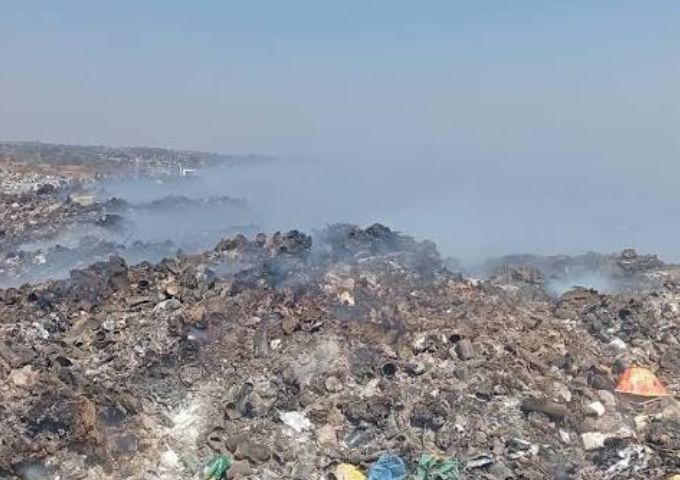
Richmond Landfill was established in 1994 and has continued operating beyond its originally projected lifespan. Residents around the site have complained about smoke, fires, foul smells and other environmental problems. Recent reporting has also highlighted the number of people who depend on the landfill for their livelihoods.
The turning point came on September 10, 2026.
Local Government and Public Works Minister Daniel Garwe directed Bulawayo City Council and Geo Pomona Waste Management to work towards an agreement to address the city’s waste crisis and the problems at Richmond Landfill.
Mayor Coltart has said council noted the directive and instructed management to obtain a draft MOU from Geo Pomona for consideration by councillors.
The significance of the Geo Pomona proposal is that it is not merely another expression of interest sitting in a council file.
Geo Pomona already operates a waste-management facility at Pomona in Harare and says it has installed infrastructure including a weighbridge, sorting facility, landfill infrastructure, leachate-treatment facilities and an encapsulation system for old waste.
It recently completed an international technical study tour in Austria focused on waste-to-energy, emissions control and residue management.
Therefore, there is no question that Central Government’s latest move is the most direct intervention yet in Bulawayo’s waste-management crisis.
The real test is no longer whether another waste-to-energy proposal can be announced.
It is whether Bulawayo can finally move from proposals, expressions of interest, council resolutions and Government directives to a functioning waste-management system that deals with the landfill, protects surrounding communities, creates a viable recycling economy and ultimately converts waste into energy.
After a decade of promises, residents are entitled to something more tangible than another project timeline.