Online Reporter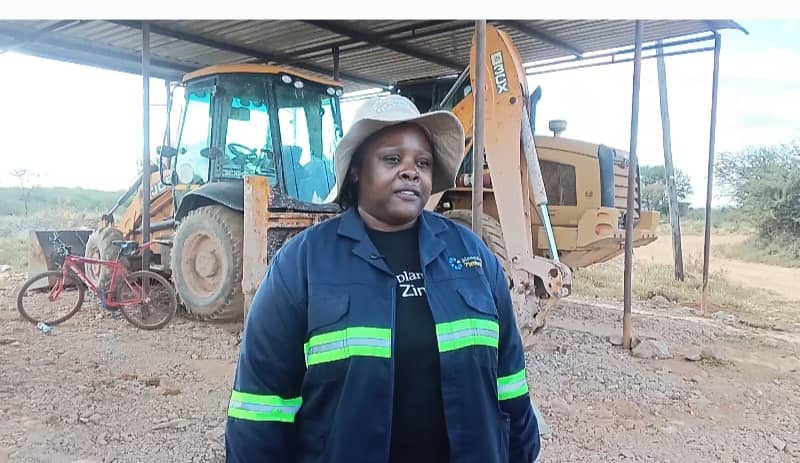
Gibson Mhakam, [email protected]
PLANETGOLD Zimbabwe has set a major environmental target aimed at reducing mercury use in the artisanal and small-scale gold mining sector by 4,85 tonnes over a five-year period as part of efforts to promote safer, cleaner and sustainable gold extraction methods in the country.
Speaking during a technical visit to Waterwitch Mine in Bubi District, Matabeleland North province, on Monday by officials from the Ministry of Mines and Mining Development, the Environmental Management Agency (EMA) and planetGold Zimbabwe, project manager Ms Nyaradzo Mutonhori said the initiative seeks to transform the artisanal and small-scale gold mining sector through formalisation, improved access to finance, adoption of mercury-free technologies and knowledge-sharing.
The visit was aimed at understanding how miners are currently processing gold as well as identifying challenges and areas for improvement.
Mercury, which is widely used to extract gold from ore, is a highly toxic chemical that damages the lungs, skin and eyes.
he substance can also travel far from where it is released, polluting air, water and soil, while bio-accumulating in the food chain.
Authorities and environmental stakeholders have in recent years expressed concern over the widespread use of mercury in the artisanal and small-scale gold mining sector, which contributes more than two-thirds of Zimbabwe’s total gold output.
Zimbabwe became a signatory to the Minamata Convention on Mercury in 2013, a global treaty aimed at reducing and eventually eliminating mercury use, before formally acceding to the convention on August 19, 2021.
Despite these commitments, about 96 percent of artisanal gold production in Zimbabwe is still linked to mercury use.
Ms Mutonhori said the planetGold Zimbabwe project was working towards creating a safer mining environment through practical interventions targeting miners across project districts.
“Planet Gold Zimbabwe aims to achieve a safe, clean and sustainable artisanal and small-scale gold mining sector in Zimbabwe through reducing the use of mercury by 4,85 tonnes at the end of five years,” she said.
Ms Mutonhori said the project would implement four strategic approaches to achieve its objectives.
She said the first component focuses on assisting artisanal and small-scale gold miners to formalise and integrate into the formal economy through partnerships with large-scale mining companies.
“We will assist artisanal and small-scale gold miners to formalise and be integrated into the formal economy.
“We will do this by modelling successful pilots where the large-scale mining sector will work with artisanal and small-scale gold miners to support formalisation,” she said.
Ms Mutonhori said the second component seeks to improve miners’ access to finance to enable them to acquire mercury-free gold processing technologies.
“We are going to be working with banks, microfinance institutions and other financial services sectors to enable this access to finance for artisanal and small-scale gold miners,” she said.
She said the project would also introduce mercury-free gold processing technologies through the establishment of 11 demonstration sites across the project districts, including Waterwitch in Bubi, Maholokohlo in Filabusi, Will South (VhoVha) in Gwanda, Rozi 25 in Zvishavane, RM Museveni in Bindura, Kuzivakwashe in Mazowe, G Zone in Chegutu and Trafalgar 4X in Kadoma.
In addition, eight mercury-free gold processing centres will be established to help miners transition to safer and environmentally sustainable methods.
“The Planet Gold Zimbabwe project is going to establish eight mercury-free gold processing centres in the project districts so that artisanal and small-scale gold miners can transition to safer mercury-free gold processing technologies,” said Ms Mutonhori.
She said the final component of the project focuses on knowledge generation and communication, including producing research and information products on formalisation, technologies and access to finance.
Ms Mutonhori said Waterwitch Mine had been identified as one of the project’s key intervention sites because of the high concentration of artisanal miners operating there.
“Today we are in Bubi District in Matabeleland North at Waterwitch Mine. Waterwitch is one of the project sites.
“At Waterwitch Mine, it is a mercury hotspot because they work and contract artisanal and small-scale gold miners from the surrounding communities close to one another,” she said.
She said more than 1 000 artisanal and small-scale gold miners supply ore and process it at the mine.
“We are documenting the technical and environmental baseline so that we can look at opportunities to optimise technologies and how we can introduce mercury-free gold processing here at Waterwitch Mine,” said Ms Mutonhori.


 Bongani Ndlovu