Zimpapers Correspondent
AFRICA must urgently close its electricity gap if it is to industrialize, expand regional value chains and deliver on the promise of the African Continental Free Trade Area, Economic Commission for Africa, executive secretary, Mr Claver Gatete, has said.
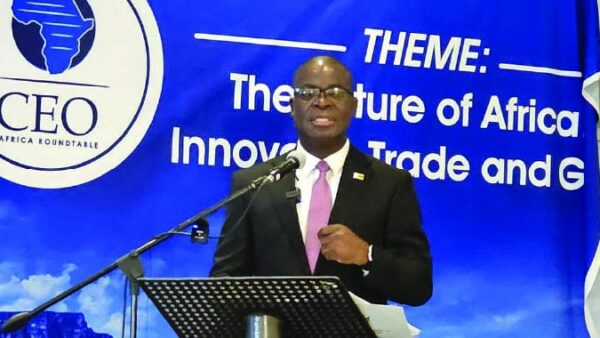
Speaking virtually at the Ministerial Compact Roundtable on Financing Africa’s Nuclear Energy Future, held during the Nuclear Energy Innovation Summit on Africa 2026, Mr Gatete said reliable and affordable power would determine the continent’s economic competitiveness.
“No nation industrializes in the dark,” he said.
“Africa cannot realize the promise of the AfCFTA or build competitive regional value chains on intermittent power alone.”
Mr Gatete said Africa’s energy challenge is taking place at a time of overlapping global shocks, including climate extremes, high borrowing costs, tighter finance, and geopolitical instability.
These pressures, he noted, are disrupting energy markets, trade routes and public finances, while limiting the ability of many African countries to finance the infrastructure they need.
Mr Gatete said the AfCFTA offers Africa a historic opportunity to deepen intra-African trade, expand productive capacity, strengthen regional value chains and build long-term resilience.
But this transformation, he warned, will not happen without electricity at scale.
Nearly 600 million Africans still lack access to electricity, including about 400 million people in rural communities beyond the reach of existing grids.
Although electricity access has risen from about 25 per cent a decade ago to roughly 51 per cent today, Mr Gatete said the pace must accelerate sharply.
“Africa needs to connect around 100 million people every year to stay within reach of SDG 7,” he said.
Mr Gatete added that electricity demand could quadruple by 2040 as African countries expand manufacturing, mineral processing, cross-border logistics, modern agriculture, pharmaceuticals, regional value chains, and digital infrastructure.
Against this backdrop, Mr Gatete said nuclear energy should be considered as part of Africa’s diversified clean energy mix.
“Modern economies need clean power, but they also need firm, reliable, always-on power,” he said.
“Nuclear energy can help deliver this, alongside renewable sources of energy.”
Mr Gatete said nuclear power can provide firm, dispatchable and low-carbon electricity while supporting grid stability and complementing variable renewables. He also noted that global momentum around nuclear energy is growing, with renewed interest in small modular reactors and new projects under construction worldwide.
Africa, he said, has important strategic advantages. The continent has uranium resources, emerging nuclear institutions and growing interest from countries exploring nuclear energy as part of long-term energy and industrialization strategies.
South Africa already operates commercial nuclear power, Egypt has reactors under construction at El Dabaa, Morocco continues to advance its nuclear preparations, and Rwanda is demonstrating early institutional coordination as it explores future small modular reactor deployment.
But Mr Gatete said financing remains the main obstacle.
“Nuclear ambition will not become investable reality unless countries can lower risk premiums through credible governance, bankable delivery models and strong institutions,” he said.
Mr Gatete further outlined five priorities for moving forward: strong political leadership; transparent governance and independent regulation; blended finance and risk-mitigation tools; regional cooperation; and greater support from multilateral development banks and development finance institutions.
He also called for investment in the “roads and brains” needed for nuclear development, including grid readiness, logistics infrastructure, engineers, regulators, technicians, safety specialists, and regional centers of excellence.
Small modular reactors, he said, could offer a practical starting point for some African countries because they are modular, scalable, and potentially better suited to smaller grids and industrial zones.
Mr Gatete said Africa’s energy decisions today will shape the continent’s development for generations.
“Our task is not merely to expand power generation,” he said.
“It is to build the energy foundations of Africa’s next development era.”
The ECA executive further reaffirmed commitment to supporting African member States through technical cooperation, policy advice and strategic partnerships as they move from nuclear energy vision to effective implementation.