admin
admin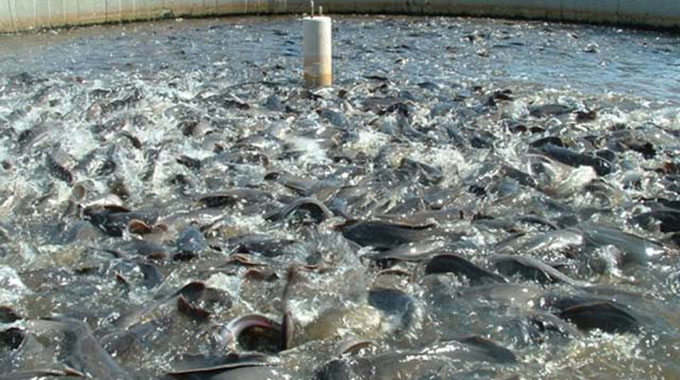
Precious Manomano
Herald Reporter
Over 150 dams have been earmarked for fingerling stocking during the 2023/24 summer season, with an expected yield of 360 tonnes after eight months of stocking.
Seventy irrigation schemes with functional fish ponds will also be stocked during the summer season, with beneficiaries trained in fish farming.
In its weekly update, Agriculture and Rural Advisory Services in the Ministry of Lands, Agriculture, Fisheries, Water and Rural Development, indicated that 1,5 million fingerlings will be distributed in 150 dams, which are expected to produce 360 tonnes of fish.
The report also indicates that 382 710 fingerlings will be distributed to 70 irrigation schemes with functional fish ponds, and 92 tonnes are expected to be produced.
Matabeleland South, Mashonaland Central, Midlands and Manicaland provinces are all targeting 20 dams and 200 000 fingerlings are required to produce 48 tonnes each province.
Matabeleland North is targeting 13 dams and 130 000 fingerlings will be required to produce 31 tonnes.
Mashonaland East is targeting 18 dams and 180 000 fingerlings will be required to produce 43 tonnes.
Mashonaland West is targeting 16 dams and requires 160 000 fingerlings to produce 38 tonnes and Masvingo province is targeting 23 dams and 230 000fingerlings are expected to produce 55 tonnes.
Government is pulling out all stops to ensure the fish farming industry grows to contribute effectively to the national agenda of boosting food and nutrition security and income generation in line with the Fisheries and Aquaculture Development Strategy.
The introduction of community gardens that accommodate two fish ponds and the various dam projects currently underway across the country has given birth to many fish hotspots that have the potential to turn commercial and generate income for the participating households.
This has seen the Government increasing the number of fish ponds by 29 percent from 5 634 fish ponds in 2022 to 7 247 this year.
Fish farming is dominated by Nile Tilapia followed by Rainbow Trout while the other farmed species contribute a very small proportion of the production levels.
Recently, Deputy Minister of Lands, Agriculture, Fisheries, Water and Rural Development Davis Marapira said participation in fish production led to the development of the country through exports of produce to SADC regional markets and other countries thereby increasing incomes.
He said more fish ponds would be set up to support people’s livelihoods, adding that Manicaland was doing well in fish production.
Aquaculture can be a turning point in Zimbabwe’s economic growth through creation of employment for youths.
Government’s move is in line with vision 2030 working towards an upper-middle income economy by 2030, following the successful completion of the Fast Track Land Reform Programme.
Tobacco Farmers Union Trust president, Mr Victor Mariranyika, said farmers needed to diversify, adding that several individuals were earning a living through aquaculture.
“A lot of people are earning a living through aquaculture. This is a positive step towards diversity, improving nutrition and incomes. We appreciate the initiative and we hope the majority will benefit a lot from this strategy. “Fish farming has many benefits to individuals. We encourage farmers who are close to water bodies to use the opportunity because a farmer needs to diversify farming to make profits,” he said.
Mr John Khumalo of Matabeleland expressed excitement on the move by the Government to come up with the Bill on fisheries as farmers in the region were being short-changed by bogus suppliers of fingerlings who were supplying poor quality.
He said the Government’s initiative will uplift farmers.
“We have fish farmers here in Matabeleland, but most were not harvesting to their expectations largely because of some unscrupulous individuals who were supplying substandard fingerlings that were not giving the expected yields,” said Mr Khumalo.
“Fish farmers are, therefore, extremely excited by the Government’s move on the Presidential Fisheries Programme as it will result in us getting quality fingerlings which will help us contribute towards agriculture,” he said.
Fish farming is the fastest growing food producing sector and can be produced more efficiently and cost effectively.
The Presidential Fisheries Programme is set to be introduced in 1 200 dams across the country with 50 000 fingerlings set to be released into each dam by 2025.



 Online Reporter