Online Reporter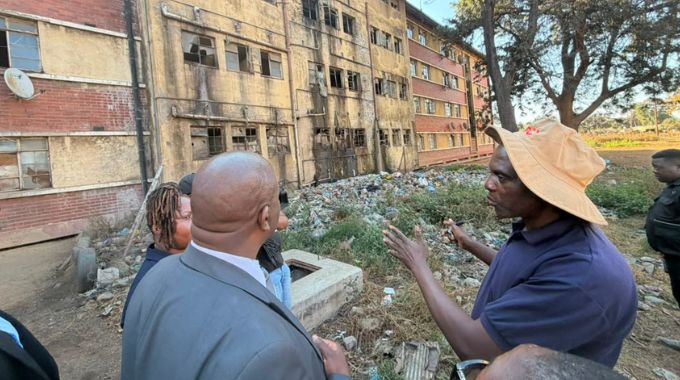
Gibson Mhaka, Senior Reporter
FOR Ms Joyce Makhalima and hundreds of other families living at Burombo Flats in Bulawayo’s Nguboyenja suburb, home is no longer a place of privacy, dignity or comfort.
It is a cramped room where entire families are forced to sleep together with overflowing toilets that regularly push sewage back into their living spaces and dark corridors have become part of everyday life.
Ms Makhalima, who is the chairperson of the Burombo Residents Association, says some families have endured the conditions for years, with overcrowding leaving parents and children with virtually no privacy.
“There is no privacy here. Entire families of five are squeezed into single rooms with virtually no privacy. When parents retire to bed, their children are forced to witness everything because there is no separate sleeping space,” she said.
Her experience starkly illustrates Bulawayo’s worsening housing crisis, with the city’s waiting list now standing at about 160 000 applicants as demand for decent, affordable accommodation continues to far outstrip supply.
At Burombo, the crisis has reached such proportions that a council verification exercise found some rooms ac-commodating between five and 13 people, while some units had as many as 16 occupants.
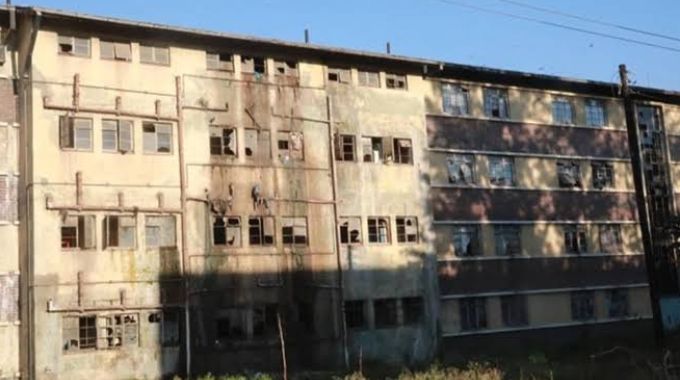
Built in 1954 to accommodate single male industrial workers, the 159-unit complex is now home to nearly 1 000 people, according to the Bulawayo City Council (BCC).
What was designed as temporary accommodation for single workers has, over the decades, evolved into a densely populated settlement where families are struggling to carve out lives in ageing infrastructure never intended for such numbers.
“The toilets are overflowing, the corridors are pitch dark and many of the windows are broken. Whenever we flush the toilets, sewage backs up and dirty water flows out,” said Ms Makhalima.
Residents have also gone for almost three years without electricity in common areas, forcing them to endure dark surroundings while relying on alternative sources of energy.
Ms Makhalima urged Government and the council to consider alternative housing arrangements that would allow families to escape the deteriorating conditions.
“We appeal to the Government to consider building alternative housing under a rent-to-buy arrangement so that families can move to decent accommodation,” she said.
The extent of the overcrowding was exposed during a recent verification and assessment exercise conducted by the BCC through physical inspections and door-to-door interviews.
The exercise, which sought to establish tenancy status, compliance with occupancy regulations and rental payment performance, established widespread irregularities.
Some rooms were occupied by illegal tenants, while more than half of registered ones were no longer living in their allocated units.
Ms Makhalima believes the ultimate solution is not simply repairing the old buildings, but providing families with decent homes where they can live with dignity.
Some registered tenants had died, relocated to rural areas or found alternative accommodation, while in some cases the people now occupying the rooms did not even know the names of the registered tenants.
With demand for accommodation rising and few alternatives available, communal infrastructure has also been converted into living quarters.
The assessment found that all common kitchens had been subdivided into small rooms, while some people were living in storerooms without ventilation or lighting.
The consequences are being felt most severely in the water and sanitation system.
BCC Director of Health Services Dr Edwin Mzingwane Sibanda told a council committee that the sheer number of people living at Burombo was placing enormous pressure on infrastructure.
“Burombo Flats suffered from vandalism, water taps were being stolen, sewer pipes were always blocked due to overpopulation. Some rooms had five to 13 people,” he said.
Almost all shower heads, galvanised water pipes and hand-washing basins had reportedly been stolen, further compromising sanitation and water supply.
Dr Mzingwane Sibanda said some residents could also be relocated to Vundu Hostels as part of efforts to re-duce congestion, while those who could afford residential stands were encouraged to approach council’s Regis-try section.
The absence of electricity has also forced residents to depend on gas and charcoal for cooking and heating, raising fire risks in an already overcrowded environment.
Housing and Community Services Assistant Director Mr Zakeu Sibanda told the Parliamentary Portfolio Com-mittee on Local Government, Public Works and National Housing, during its recent fact-finding mission to Bu-lawayo, that the original purpose of Burombo had long been overtaken by demographic changes.
“Burombo was designed for bachelors and has 159 housing units. Today, instead of accommodating about 159 occupants, it is home to nearly 1 000 people,” he said.
“This has placed immense pressure on the sewer and water infrastructure, while vandalism has compounded the situation.”
While BCC has undertaken sewer and water rehabilitation works, Mr Sibanda said overcrowding and vandal-ism continued to undermine service delivery.
“We have carried out extensive refurbishment of the sewer and water infrastructure and you will see evidence of that. However, congestion and vandalism remain major challenges,” he said.
“We have established residents’ committees so that we can engage directly with the communities on issues affecting their welfare.”
Council plans to refurbish Burombo in phases, temporarily relocating residents to nearby Mashumba Flats as each block is worked on.
The communal toilets have been identified as the immediate priority, with most of the materials required for the rehabilitation reportedly already procured.
But the problems at Burombo are symptoms of a much larger crisis as Bulawayo’s housing waiting list has bal-looned to 160 000 people, placing pressure on the local authority to unlock more land and accelerate the pro-vision of serviced stands.
City Mayor Councillor David Coltart has called for a housing indaba to bring together stakeholders to find a comprehensive solution to the city’s housing crisis.
He said council had land available for housing development and that providing decent and affordable accom-modation should remain one of its primary responsibilities.
“Council’s primary responsibility was to provide decent and affordable housing for working-class residents and people living in the informal sector,” he said.
Clr Coltart has also called for the housing waiting list to be digitalised to improve transparency and enable council to prioritise applicants according to how long they have been waiting.
Ward 3 councillor Mxolisi Mahlangu said council should urgently service land already available and allocate residential stands to people who had spent years on the waiting list.
He said the city had the potential to produce about 20 000 serviced stands a year, but inadequate servicing had slowed development in some areas.
Clr Mahlangu proposed prioritising Hyde Park and allocating the stands to residents who had been on the waiting list for at least 10 years.