admin
admin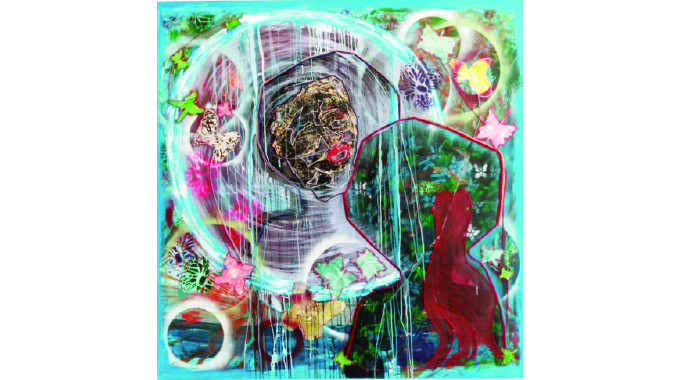
Stephen Gran’anga Visual Art
Zimbabwe’s visual art platforms and art business transactions have remained subdued for a while but that has not deterred most practitioners from creating. Due to the shear economic stress bedevilling the country many have resorted to using what they can though at times compromising quality or inhibiting their ability to make their ideas come through. 2014 visual art year began on a very weak note with limited activities taking place in the country and mostly in Harare. That quadrupled the anxiety of the already stressed practitioners who wondered what will come of the year and their lives.
The National Gallery of Zimbabwe in Harare had a couple impressive art shows at the beginning of the year which included “Woman at the Top” and “Zimbabwe In Design” before terminating all activities for a while paving way for major renovations of the structure since its inauguration in 1957. Gallery Delta Foundation for Art and the Humanities in Harare has been consistent with sponsored monthly though mostly closed shows with a handful having printed catalogues. They also had a couple of art competitions and exhibitions that had awards which enlightened artistic spirits for many young and upcoming practitioners.
The third edition of the annual ‘Wild Gueese Art Festival’ took centre stage once again on June 1, 2014 at the Wild Gueese Lodge in Harare. The festival is the only one in Zimbabwe entirely dedicated to “visual art” and the promotion of its market. It continues to grow with the number of participating artists of race and creed from all pockets of the nation almost doubling every year.
The event had an art competition of small paintings and sculptures under the theme “Remind Me of Zimbabwe” that were displayed in their own gallery. Some amazing quick small painting demonstrations took place and some sold as quickly as they finished. There were more art sales in this year’s edition than the previous ones.
Wild Gueese Art Festival offers visual artists a free platform to showcase their work, converse directly with buyers and handling of their sales. When artists have conducted art business transactions they are kindly requested to remit 10 percent of their sales to the Wild Gueese Charity. This is a unique pleasant scenario like no other in this modern day of harsh economic environment where profits if not profiteering rule. There were various small private art spaces which were invited to spot the talent they could tap. The crowd in attendance was also very different from that normally attend art exhibitions at galleries and that is a significant reassuring scenario.
It was in the second half of the year when few positive movements started that saw a number of art exhibitions being hosted at various private art spaces including high density suburbs especially in Harare, the resurgent of activities at Dzimbanhete Arts Interactions, the opening of Empire Gallery at Ascot shopping mall in Bulawayo, the open call submission of artworks announced by the National Gallery of Zimbabwe in Harare for the reintroduction of an annual art exhibition.
There was also the collaboration of Gwanza Arts and Njelele Art Station in organising Gwanza photography exhibition that used to be annually hosted by the Harare National Gallery as Gwanza Month of Photography.
For the first time since “Operation Murambatsvina” that saw a number of practitioners being displaced, the Mutare National Gallery confirmed an exhilarating improvement on artists’ participation in their exhibitions. The National Gallery said the forgettable days where they used to struggle to fill a full calendar year of exhibitions and kneeling for artists’ participation were a thing of the past especial in year 2014.
The National Gallery of Zimbabwe in Bulawayo had a somewhat subdued period at the time with some exhibitions running for far too long. Art sales too in the region as in other regions outside Harare had been almost non-existent.
July 2014 saw ‘Dzimbanhete Arts Interactions’ (DAI) Trust having a relaunch ceremony and exhibition that marked the beginning of hyper visual art other cultural activities at the artists’ resource centre. That came as a short in the arm for practitioners who have endured lengthy periods of uninspiring artistic environment with very minimal movements.
Harare’s Verandah Gallery in Emerald Hill conducted the 23rd edition of its annual charitable single day art exhibition coinciding with Emerald Hill Children’s Home’s centenary cerebrations with numerous artists at various levels on board. The worthy cause show see’s 25 percent of all its sales being forwarded to the Emerald Hill Children’s Home and Emerald Hill School for the Deaf. The exhibition dominated by small sized paintings on card and very few graphics had several practitioners who rarely or do not participate in mainstream art exhibitions with locally established galleries and a handful of the established
ones.
The second half of the year also saw the launch of a new small art space called ‘Koo Vha’ – Creative Hub Gallery by elegant beer brewers ‘Koa Vha’ Craft Beer that was hidden at Newlands Shopping Centre. They launched with a debut solo exhibition by young creative and innovative emerging artist, Terence Musekiwa and followed up with other shows that included ‘Collectors’ Cocktail’ and ‘Disowning my Mutupo’ another debut professional solo exhibition by young and upcoming female artist Tandazani Dhlakama. First Floor Gallery in Harare’s city centre had a share of their shows but not vibrant as they used to be.
More important they have been exposing Zimbabwe’s contemporary artworks to the outside world with trips and participation at festivals in Berlin, London and Johannesburg. They have travelled with some artists and their work to other countries before establishing crucial networks.
A few local art festivals also incorporated visual arts in their programs, tertiary learning institutions and other schools have also continued to showcase artworks at various spaces.
When the Harare National Gallery of Zimbabwe ended their closure they resumed activities with a high profile exhibition of the Zimbabwe Pavilion at the 55th Venice International Art Biennale.
They followed it up with other shows with such themes as “Tavatose” (Sisonke) the annual schools and colleges art exhibition, “Crossing the Bridge” by two multi award winning artists Israel Israel and Forbes Mushipe and “A Collaborative Experience: Beautiful Timeles” for the “Basket Showcase II”. They also had their annual open day and exhibition at their Visual Art and Design School in Mbare for its final year students. They finalised their year with the lengthily and eagerly awaited Zimbabwe’s major annual open call visual art exhibition rebranded and renamed Zimbabwe Annual Exhibition, formerly the prestigious “Zimbabwe Heritage” annual exhibitions of the mid 1980s and better part of the 1990s before manifesting into the first Mobil Zimbabwe Heritage Biennale in1998 to 2002 then to “The Harare Biennale 2004” before vanishing from the face of the earth due to lack of sponsorship.
The National Gallery of Zimbabwe in Mutare closed their year with a solo exhibition titled “Shanduko” by established multi media artist Stephen Garan’anga. The exhibition explored some of the various changes that the artist has embraced in his life to date as well as the nation of Zimbabwe. The National Gallery of Zimbabwe in Bulawayo too had an improved end of year with a final annual show of the Visual Artists Association of Bulawayo. Gallery Delta Foundation for Art and the Humanities concluded their full calendar of exhibitions recently with the hosting of their annual premier art show called the “Summer” Exhibition.
The show has been in existence since the Gallery’s inception in 1975 and has proved popular with various generations of the Gallery’s loyal artists, art lovers and dealers.
“Dzimbanhete Arts Interactions” (DAI) Trust has been a vibrant cultural space to be with the unleashing of various activities which included a national artist-in-residence programme, art exhibitions in their Gallery and numerous traditional Mbira music extravaganzas. They concluded their year hosting local visual artist Munyaradzi Mazarire for three months in a successful artist’s residency programme that concluded recently with his resounding three dimensional solo exhibition. Njelele Art Station ended the year by hosting “The Crown” a travelling art project by Shani Peters from New York, United States of America whilst showing artworks by Kombo Chapfika in the other subsection of the gallery.
The month of December also saw First Floor Gallery Harare celebrating their fifth anniversary. Founded by Valerie Kabov and her young local team of artists in a humble room downtown but with a loft belief in importance of supporting artistic excellence and philosophy that ‘Art is for Everyone’ and ‘If you want to go far lets go together!’. They have been supporting the country’s emerging art and have succeeded remarkably specially when taking Zimbabwean young art to the outside world.
The relocated KoaVha Art Gallery now at Maestro Complex on 146 Enterprise Road in Highlands, Harare, finished the year with an exhibition opening with a somewhat unique but complex theme for the participating seven avant-garde young visual artists who gave it their all to create some remarkable representational and nonrepresentational abstract multi media art pieces. The theme ‘Umoji’ emanating from the Japanese interpretation, “Emoji” which is derived with its linkage to Japanese “Kanji” script which means bolstering expression by summarizing words through image.
Today it is the use of representations of facial expressions such as a smile or frown formed with keyboard characters and used in email and text messages to convey the writers’ feelings. An open call art competition and exhibition themed “In Celebration of 2014, the Chinese Year of the Horse” was also hosted in December at a private space called Sorellas Pizzeria and Café in Borrowdale.
We hope the swift momentum of visual art activities that graced the nation of Zimbabwe at the summit of 2014 will to continue for a foreseeable future and place the country back on its former glory position in the art world.


 Online Reporter