

 admin
admin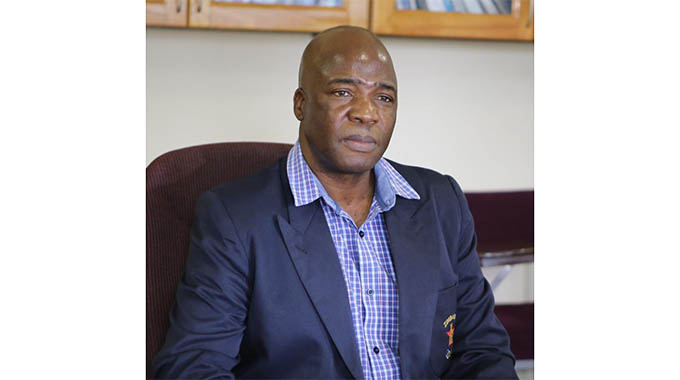
Ellina Mhlanga-Senior Sports Reporter
THE Paris 2024 Olympic Games are now behind us and a new four-year cycle begins ahead of the Los Angeles 2028 Games.
Work has to start now, be it building on the positives from the previous Games, improving on where the country did not do well and initiating more projects and efforts targeted for a better show in the next Games.
Zimbabwe Olympic Committee president Thabani Gonye is alive to that fact.
As he reflected on the Paris Games, he highlighted some of the positives and some of the aspects they want to implement and build on for Los Angeles 2028.
Among the areas they are looking at is sports science and continuous engagement of various stakeholders including former athletes that have walked the road before.
“We are going to be engaging in the immediate post the Games to find out and help carry out sports science test on the physiology, psychology and just to find, profiling the condition of our athletes being informed by sports science to say what was their condition at the Games.
“So, that informs us in terms of the immediate support and the immediate interventions that are required so that we have a good base to work from for all the athletes that participated.
“So that sports science, guiding us in terms of informed decisions and support we will then be working from that.
“That will really be the base of how we are going to be working going forward. Sports science being front and centre in terms of what we do.
“We can’t run away from the fact that sports science does play a huge role in terms of outcomes, in terms of preparation, in terms of getting athletes to the level that you want.”
ZOC have already come up with an initiative to engage former athletes to assist in their quest to turn around the country’s prospects in the future.
The Paris Games served as a platform to also see if the project works and based on the results from the Games where for the first time, Zimbabwe produced two finalists in the men’s 200m; it is looking promising.
“And for us again looking at, if these athletes are then supported through the cycle to LA, through this big cycle of four years to LA.
“Again I need to mention that already prior to Paris we had kick-started a project working with former athletes, Olympians such as Brian Dzingai, who was also working with a team in the US of coaches, a bunch of coaches that we know we have got in the US.
“They have done a great job in initiating a project that was aimed at LA 2028 . . . There is a platform we can build on using the outcome of Paris.
“Those are the things that when we engage with all the stakeholders, we need resources from now to go through all the preparations that our athletes that we already sign-posted, that will be the bearers of trying to fight for a medal, to try and fight for a podium place in the finals in LA in the events that we are going to be focusing on.
“We also look at that it was very deliberate in terms of strategy to ensure that we can never leave people that have experienced and have been at the levels that they have competed in. People like Brian Dzingai, because you can’t buy experience.
“So, we will certainly be engaging everybody and anyone that is available for us to tap into their wisdom, to tap into their technical expertise, so that we work as a family.”
“So we are going to be involving the government . . . We are also going to be engaging as a board being informed by the outcome of the Paris Games from a formal report that we are going to be receiving from the CDM.
“We will base that reports in terms of the positive outcomes, the negative outcomes. What we could do, what we did well and reflect very well in terms of what then we need to do, borrowing also from the other countries,” Gonye said.
This year Zimbabwe saw an improvement, fielding seven athletes with four qualified and three on universality compared to the Tokyo 2020 Games where they had five athletes.
And three were on universality slots.
Gonye said while they missed their target of doubling the figure from the Tokyo Games for the Paris 2024 Games, they achieved quality.
“What made the difference really is that prior to the Games we came out with a strategy. It’s not the strategy that got us to where we are alone, but we were very clear in terms of that strategy, where we need to go and accepted where we were, which was not a good position for Zimbabwe.
“I think going into the (Paris) Games, for those that I have spoken to was, we had a target that we were chasing of 10 which we didn’t achieve, but what we achieved was the quality of the athletes that qualified was better than in Tokyo.”



 Online Reporter