Online Reporter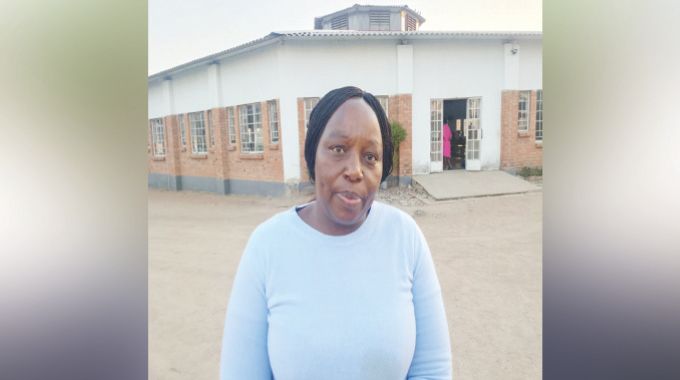
Robin Muchetu, Health and Gender Editor
UN Women has called for an extensive, family-centred approach to combating gender-based violence (GBV) in Zimbabwe and warned that the crisis is no longer confined to intimate partner violence but is increasingly affecting children and entire households.
Speaking on the sidelines of a stakeholders’ consultative meeting on the organisation’s 2027-2031 Strategic Note in Bulawayo, UN Women deputy country representative Ms Loveness Makonese said the evolving nature of GBV demands a more coordinated response involving Government, communities, civil society and development partners.
She said recent cases of family violence highlighted the urgent need to rethink existing interventions.
“One persistent issue is gender-based violence. We are now realising that it is not just intimate partner violence, where the husband or spouse is abusing the intimate partner,” said Ms Makonese.
“We are also seeing a whole-family dimension to violence, where even children are becoming survivors or victims of gender-based violence. We have two major cases right now that are in the media.”
Ms Makonese said the increasing number of children affected by domestic violence called for more holistic and community-based interventions.
Her remarks come in the wake of recent cases in which a Zimbabwean man based in the United Kingdom allegedly killed his wife and two children before fleeing to South Africa, where he was later arrested, while another man in Harare allegedly killed his two children, set their bodies on fire, stabbed his wife and later attempted to take his own life.
Ms Makonese said such incidents demonstrate that violence within families has become a broader societal issue requiring collective action.
“As UN Women, we want to go a step further by adopting a more holistic and community-based approach towards ending violence within families and communities,” she said.
Ms Makonese said the consultative meeting formed part of preparations for the organisation’s Strategic Note for 2027-2031, which will guide UN Women’s work in Zimbabwe over the next five years.
“We are finalising the implementation of our Strategic Note 2022 to 2026 and are now in the early thinking phase for our Strategic Note for 2027 to 2031. This strategic document will guide our priorities for women and girls over that period,” she said.
Ms Makonese said engaging stakeholders from Bulawayo, Matabeleland North and Matabeleland South was critical to ensuring that regional priorities and lived experiences inform the organisation’s future programming.
“This meeting is very important because it allows us to engage stakeholders from these provinces so that their voices are heard and reflected in our planning process,” she said.
“It is also an opportunity for stakeholders to identify areas where their work aligns with our vision and where we can build stronger partnerships.”
Ms Makonese said UN Women was embracing the spirit of devolution by moving away from centrally designed programmes towards approaches that respond to community-specific challenges.
“Gone are the days when we would simply sit in Harare and develop a strategy. We want something that reflects the spirit of devolution and addresses the lived realities of people in Matabeleland and Bulawayo,” she said.
Ms Makonese described the Strategic Note as UN Women’s roadmap for advancing gender equality and women’s empowerment between 2027 and 2031.
She said while progress had been made under the current strategy, several critical gaps remained, particularly in funding and accountability.
“The most outstanding issues relate to accountability for women and girls. We continue to see insufficient resources being allocated to women’s empowerment and gender equality programmes,” she said.
Ms Makonese said services for survivors of gender-based violence, including one-stop centres, safe shelters and other support mechanisms, remained underfunded.
“Going forward, we will continue advocating for increased accountability and gender-responsive budgeting so that more resources are directed towards services and interventions that support women and girls,” she said.
Ms Makonese added that UN Women also intends to strengthen its presence at provincial and community levels, noting that inequality is often experienced within families and communities rather than only at national level.
“In terms of our operational footprint, one of the critical gaps is that our work has largely focused on national policy reforms. However, inequality happens within families and communities.
“We therefore need to work more closely with Government and other stakeholders to address those realities during the 2027-2031 period,” she said.
—@NyembeziMu