Online Reporter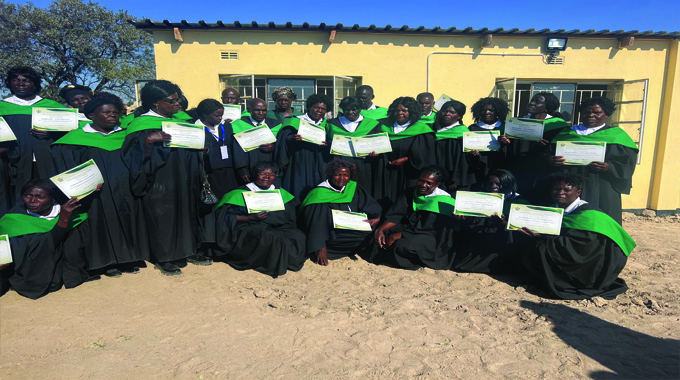
Sukulwenkosi Dube-Matutu, Matabeleland South Bureau
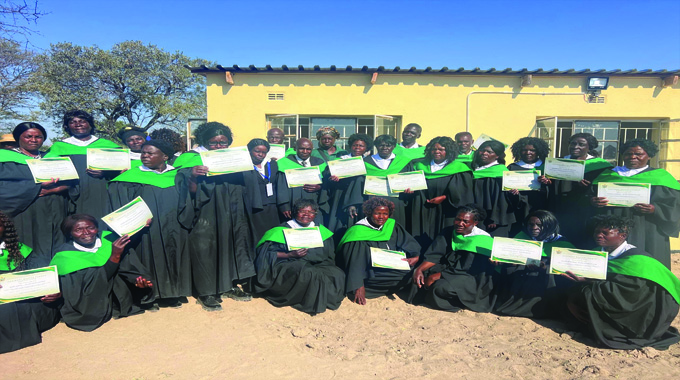
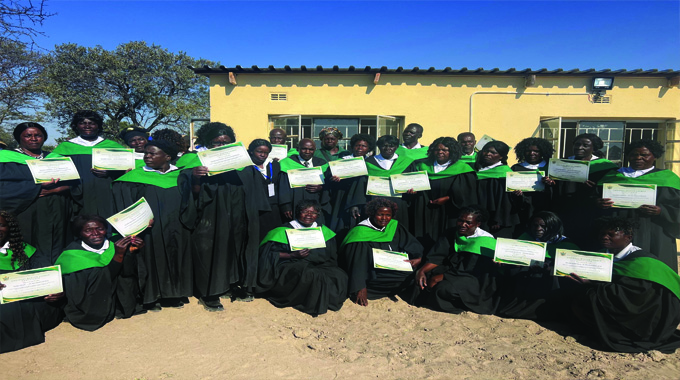
A total of 31 farmers from Siwazi Irrigation Scheme in Insiza District have graduated from the Government’s Master Farmer Training programme, aimed at improving production, productivity and profitability for smallholder farmers while promoting environmental sustainability.
The farmers completed the ordinary level stage after two years of training, which included both theoretical and practical lessons in crop and livestock farming.
Their training was conducted by agricultural business advisors, formerly known as extension officers.
Speaking at the graduation ceremony held at Avoca Agricultural Information Centre in Insiza, Mr Sibangilizwe Dlodlo, Director for Training in the Ministry of Lands, Agriculture, Fisheries, Water and Rural Development, urged the graduands to apply their knowledge to improve their livelihoods and contribute to national food security.
“I would like to congratulate the Master Farmer trainees who are graduating today. Learning does not end in life. Today, you stand better equipped to fight life’s challenges with skills you acquired through your training. With the knowledge that you have acquired, you now have a crucial role to play in Government’s food security drive.
“From here, use the knowledge you have acquired to ensure food security in your households and community. It is my fervent hope that onlookers and the late majority group are motivated to undergo the same training programme,” he said.
One of the graduates, Ms Sphumuziwe Ncube from Phakama Village, expressed optimism about how the knowledge gained will enhance their farming outcomes.
“We learnt a lot about farming and how we should run our farming enterprises. When starting production, one has to record every step of the process, starting with when land preparation was done, when crops were planted, and cultivated. We also have to record when we harvest and the quantities.
“This helps to keep track of the activities and to know when the next step is due. It also serves as a learning process because next time we can refer to those records and see how best to improve our processes for improved yields,” she said.
Ms Ncube also highlighted that they received training on animal health, including dosing and vaccinating livestock to prevent diseases.
She added that they were educated on dehorning and castrating cattle, as well as on new production methods such as fish farming and tree production. She emphasised the importance of diversification in farming.
“Every process in farming plays a crucial role in production. For example, we learnt that a calf has to be weaned at eight months to reduce strain on the mother, allowing her to mate again and thereby increase production. We also learnt proper ways of storing our crops after harvesting to preserve them,” said Ms Ncube.
Another graduate, Mr Legion Ncube, stressed the importance of managing farming as a business, including making critical decisions such as crop selection. He noted the value of crop rotation in preserving soil health and eliminating pests.
He added that production of cash crops and aligning farming operations with climatic conditions were key lessons.
“With the prevailing climatic conditions, we now know that we have to select crops suitable for our region, and in our case, small grains do well. We also have to select short varieties. Cash crops are also suitable in farming as a business.
“We also learnt that in farming, nothing is rubbish. The stover that remains after harvesting is good for mulch. Even animal dung is a great source of manure,” he said.
Master Farmer Training is a comprehensive agricultural skills and knowledge programme designed to enhance smallholder farmers’ productivity, profitability, and environmental sustainability.
The programme combines classroom sessions, practical exercises and demonstrations, equipping farmers with techniques in conservation, agriculture, water harvesting, and soil management. It also supports access to credit and markets to improve overall food security and economic outcomes.
The master farmer certificate requires two years of training, with an option to obtain an advanced certificate after an additional year.
@DubeMatutu