

 mbulelo smpofu
Dr Milton Chemhuru
ZIMBABWE commemorated 45 years of independence on 18 April and we reflect on the colonial impact of illegally raising the Union Jack by the British South Africa Company (BSAC) under Cecil John Rhodes over Salisbury (Harare), on 13 September, 1890.
For almost a century, the majority black population experienced ruthless rule by the British. Our forefathers reciprocated by fighting the invaders as soon as the enemy entered the country and after they raised that flag over Salisbury. Many of our people were killed by the enemy between 1890 and 1896. By 1896, our ancestors resorted to guerrilla warfare (using spears and arrows against machine guns).
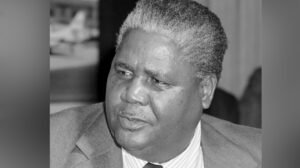
We are told of the great sacrifice by some of the heroes. Among those heroes were Sekuru Kaguvi and Mbuya Nehanda. When the two and others were captured, the enemy tortured them by burning them alive with their bodies hanging to death. This evil act was done on public display.
In 1930, the settlers introduced the notorious Land Apportionment Act. This law forced separate development of the natives and the intruders. The same act economically disadvantaged the natives by depriving them of their fertile land and livestock. These were their source of income and survival. The natives were forced to live on crowded, restricted and arid rural land. This land was mostly characterised by soil erosion, sandy soils, low rainfall and high temperatures. The strangers grabbed fertile lands along the high land. This land had favourable temperatures, good rainfall, forests and mountains, rich in minerals, gold, chrome, asbestos, coal, copper, diamond etc.
Hence, by 1959, the blacks formed political parties. The goal was to negotiate with Britain to grant independence under majority rule. The African nationalists demanded a peaceful reasonable transitional period to majority rule.
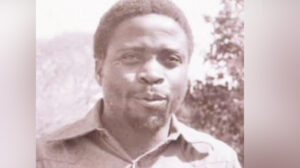
However, the 1960 and 1961, Southern Rhodesia Constitutional Conference held at Lancaster House in London and Salisbury respectively were aborted. These talks were held between the Zimbabwe African People Union (Zapu) and the white minority government led by the late Vice President Dr Joshua Nkomo and Sir Edgar Whitehead respectively. Unfortunately, Zapu was banned in 1962.The Zimbabwe African National Union, (Zanu), led by Ndabaningi Sithole, was formed and also banned in 1963. Zanu was a split from Zapu.
The black majority had no alternative but to organise national civil unrest to protest against injustice and suppression of the blacks by the white minority. In response, the government detained (without trial), black political leaders and their supporters at Gonakudzingwa Restriction Camp, Connemara, Wha Wha, Chikombezi and Gweru Prison. In addition, the government was involved in many human rights violations (raping, adoption, torture, assassinations).
On 11 November, 1965, the Rhodesian Front government under Ian Douglas Smith announced the Unilateral Declaration of Independence (UDI). This was another political insult, similar to the raising of the Union Jack over Salisbury by the BSAC.
Smith raised the Rhodesian Front (RF) party flag over Salisbury. This was a rebellion and treason against Her Majesty, the Queen of England and the majority in Zimbabwe. The blacks understood the UDI concept as an announcement of war against them.
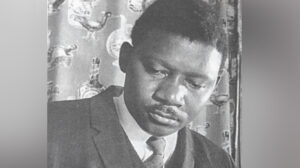
Sadly, the blacks by 1964, had decided to prepare themselves for a possible guerrilla warfare against the occupiers. Many aspirant fighters were being trained in Zambia, Tanzania, Cuba, Russia, Algeria, Egypt, China, Scandinavian countries and later in Mozambique.
Between 1964 and 1979, we lost about 50 000 fighters and civilians during this brutal bush war. Our refugees were bombed with napalm. In some instances, heavy machine guns were used to massacre innocent civilians. We witnessed those atrocities by the enemy in Nyadzonia in Mozambique, Freedom and Mkushi Girls Camps respectively in Zambia.
Our leaders, Jason Ziyapapa Moyo, Herbert Chitepo and Nikita Alfred Mangena were assassinated by the enemy in Zambia. Josiah Magama Tongogara died under mysterious circumstances in Mozambique in 1979 on the eve of our Independence.
Many fighters and some guerrilla aspirants were killed before this day, 18 April, 1980. Eddison Sithole was thrown into a disused mine. Ethan Dube was kidnapped from Botswana by Smith agents. Leopold Takawira died in detention. Joshua Nkomo, Robert Mugabe and Ndabaningi Sithole were detained at Gonakudzingwa for 11 years.
Facing the harsh conditions in detention and in the bush, our leaders and our guerrillas did not betray us. They sang the same verse, “Independence, freedom, justice and equality for all our people”.
“The pains of the war were felt by all families in Zimbabwe. Today, we bury our political differences. We forgive and love each other. We strengthen the great tasks we have achieved and improve on our failures.
We remember the goals and objectives of the armed struggle.
The 1979 Lancaster House Agreement is a testimony of the sacrifice of the heroes of Zimbabwe.
We thank our masses and the Chimbwidos. We salute our war veterans for fulfilling the aspirations of our people.”
ν Dr Milton Chemhuru is a former ZPRA combatant and former Provincial Medical Director for Midlands Province. He operated under the pseudonym Cde Jimmy Ntonga or Cde Mbeya.


 Tawonga Ngoma
 Online Reporter