Online Reporter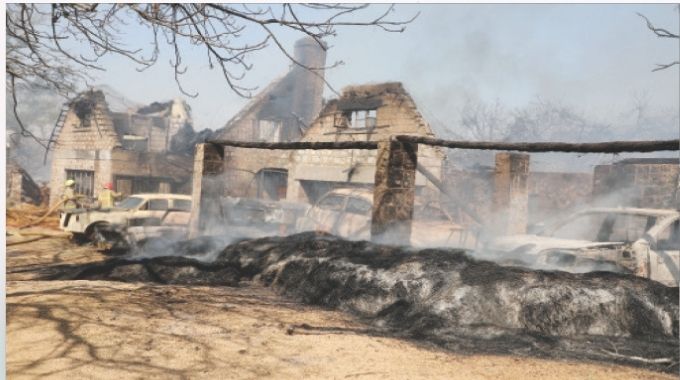
Liberty Mutamba, [email protected]
MATABELELAND SOUTH is facing a growing threat from veld fires, and the warning signs are already clear. The province lost 44 549.34 hectares of land to fires last year, up from 33 374.34 hectares in 2024. That is a sharp increase of 28,68 percent, and it has left authorities concerned about what lies ahead if action is not taken. Beyond the figures, the impact is being felt in damaged grazing land, lost wildlife and the slow destruction of the environment that many communities depend on.
Officials say most of these fires are caused by people. Something as small as a carelessly thrown cigarette butt can start a blaze, while others are caused by fires that are left unattended, especially in the early hours of the morning. In districts such as Insiza and Umzingwane, the problem has been made worse by illegal mining activities, where fires are often started without proper control and quickly spread.
In response, the Environmental Management Agency (EMA) in Matabeleland South has stepped up its efforts to deal with the situation. Their work is now more visible in communities, where environmental subcommittee members and community monitors are going around raising awareness. They are speaking at meetings, working with local leaders and encouraging people to take simple steps to prevent fires before they start.
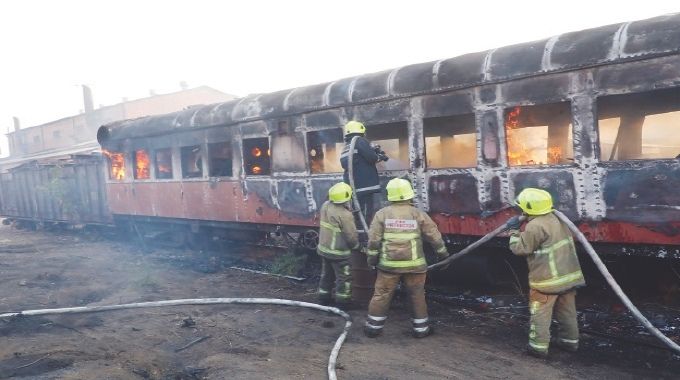
This year’s good rains, which were welcomed at the time, have now created another challenge. The province has thick grass and dense vegetation across many areas. While this is usually a sign of a healthy season, it also means there is more fuel for fires once the dry season begins. A single spark in such conditions can quickly turn into a fast-moving fire.
EMA provincial manager Mr Decent Ndlovu says the situation requires serious attention.
“The rains of the previous season brought abundant biomass. We had thick tall grass. This abundant fuel, combined with dry weather conditions, set the stage for rapid fire spread,” said Mr Ndlovu.
He said that veld fires cause damage that goes far beyond what people see at first.
“Uncontrolled fire destroys habitats, kills slow-moving and juvenile wildlife, degrades soil carbon, and erodes our biological diversity. When we prevent veld fires, we protect our indigenous tree species, safeguard our water catchments, and preserve the natural balance that sustains all life.
“EMA cannot fight these fires alone. The police cannot enforce environmental laws in every square kilometre without your eyes and ears. True fire preparedness lives in the hands of the local traditional leader, the commercial rancher, the plot holder, and the villager.”
His message is simple: everyone has a role to play. Preventing veld fires is not just the responsibility of authorities, but of every individual in the community.
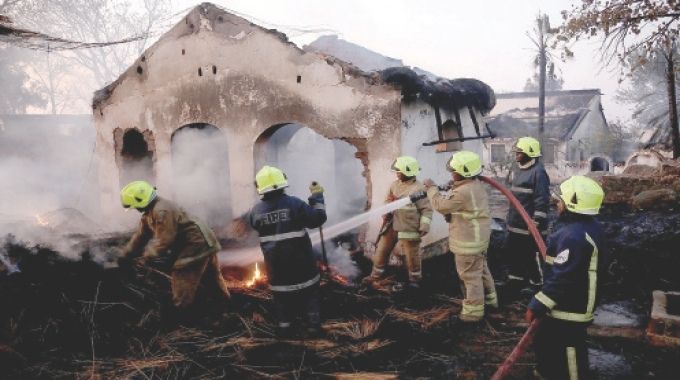
Nationally, the situation is just as worrying. EMA’s fire risk assessment shows that 41.93 percent of the country is now at high risk, while 11.69 percent is at extreme risk. Areas that were once considered moderately safe are now becoming more dangerous. In Matabeleland South, districts such as Insiza, Umzingwane and Matobo remain among those most at risk.
During the recent Fire Week programme, Matabeleland South Minister of State for Provincial Affairs and Devolution, Albert Nguluvhe, stressed that fighting veld fires is about protecting both people and livelihoods. He said farmers in particular are heavily affected when fires destroy crops, grazing land and stored feed.
This year’s Fire Week was held under the theme, “Prevent, Protect, Preserve: Combating Veld Fires Together,” highlighting the need for everyone to take responsibility.
“Our farmers, from communal grain producers to commercial ranchers, are the backbone of our nation. Veld fires have in recent years destroyed thousands of hectares of standing crops, grazing lands, and stored animal feed. A covenant to protect our biodiversity, to secure our food supply, to defend our tourism economy, and to realize the goals of NDS2,” said Minister Nguluvhe.
He said the Government has adopted a zero-tolerance approach to uncontrolled veld fires and is strengthening law enforcement. Those who deliberately start fires, whether for land clearing, poaching or out of carelessness, will face serious consequences.
The Minister also stressed that landowners must take responsibility by preparing properly for the fire season. This includes clearing fireguards and making sure they are wide enough to stop fires from spreading.
“The cause behind almost all of these recorded incidents? Unknown. When we do not know the source it means we must be prepared for any source. Is this appropriate? I ask this to every one of us here.
“We must acknowledge that nature gave us a challenge: the rains of the previous season brought abundant biomass. We had thick tall grass. This abundant fuel, combined with dry weather conditions, set the stage for rapid fire spread.
“We even saw the tragic destruction of property, such as the burning down of a lodge in Umzingwane. Thankfully, due to our vigilance, no human lives were lost. Our massive awareness campaigns and training saved lives, but we cannot rely on luck next fire season. We must move from awareness to aggressive pre-suppression and preparedness,” said the Minister.
The message coming out of Matabeleland South is clear. Veld fires may start small, but their effects are serious and long-lasting. Protecting the land requires effort from everyone, and the time to act is before the fires begin, not after.