Online Reporter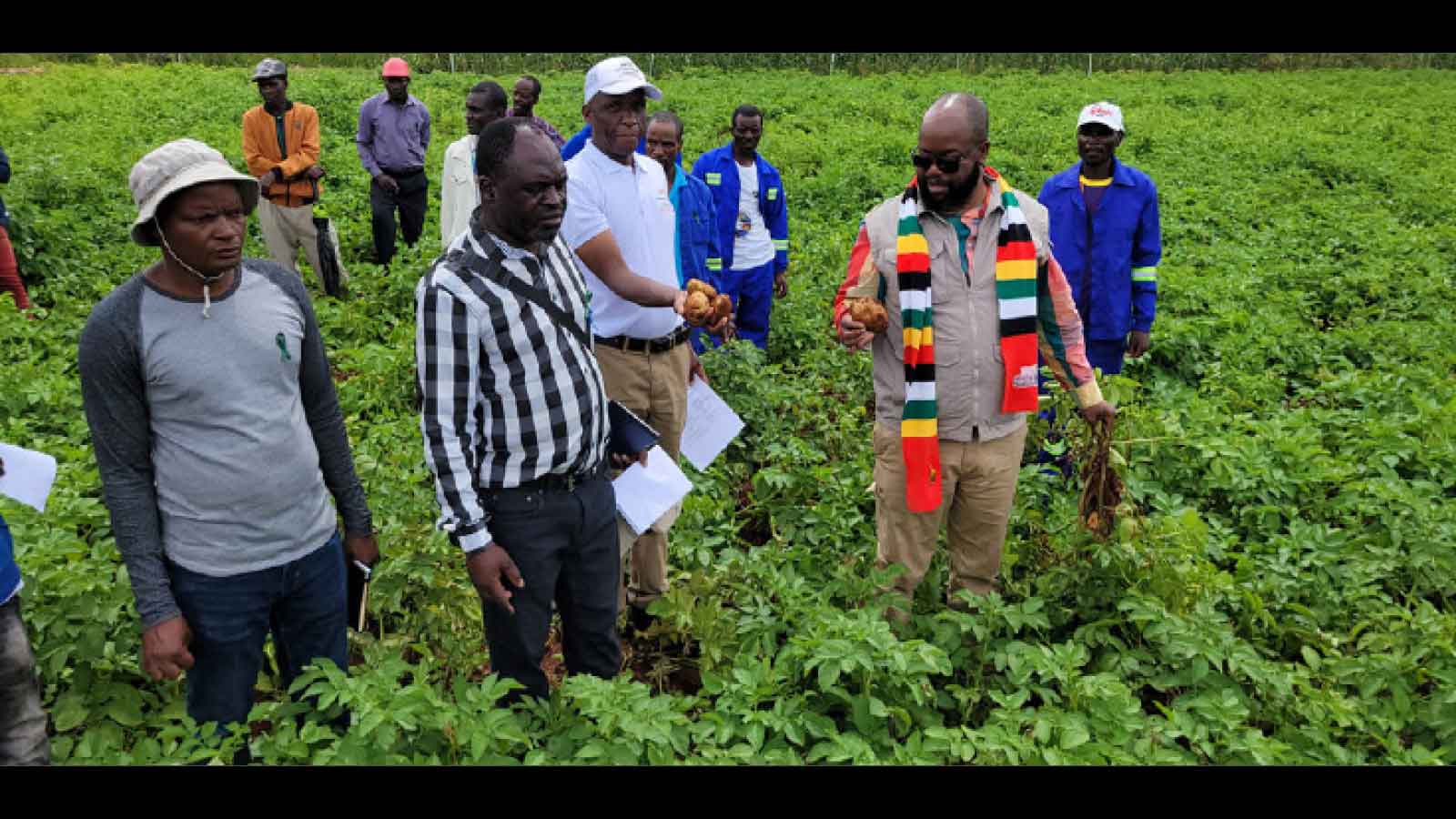
Precious Manomano-Herald Reporter
THE Presidential Borehole Scheme continues to transform rural communities across Zimbabwe, with 5 805 boreholes drilled countrywide and over 1 400 Village Business Units (VBUs) established to drive agricultural production, food security and rural industrialisation.
Latest statistics from the Agricultural Rural Development Advisory Services (ARDAS) show that 1 435 Village Business Units have been completed, while 248 are under construction, as Government accelerates efforts to turn rural communities into productive economic centres.
Of the 5 805 boreholes drilled so far, 900 have been equipped with bush pumps and 363 solarised, ensuring reliable water supplies for irrigation, livestock production and other income-generating activities.
The Presidential Borehole Scheme is a key pillar of the Second Republic’s rural transformation agenda, which seeks to improve livelihoods through infrastructure development, agricultural production, value addition and business development under the Village Business Unit model.
Reliable water supplies are central to the success of the programme, enabling communities to undertake horticulture, livestock production, food processing and other commercial activities throughout the year.
The VBU initiative is being complemented by other community-based enterprises, with 274 School Business Units (SBUs), 16 Youth Business Units (YBUs), 54 Community Business Units (CBUs) and nine Vocational Training Centres (VTCs) already completed across the country.
Masvingo Province has recorded the highest number of Presidential boreholes, with 1 086 drilled to date. Of these, 213 have been equipped with bush pumps and 49 solarised.
The province has also completed 297 VBUs, while 16 are under construction. In addition, 35 SBUs, two YBUs, 21 CBUs and two VTCs have been established.
Mashonaland Central has drilled 701 boreholes, including 87 fitted with bush pumps. The province has completed 269 VBUs, with seven more under construction.
It has also established 39 SBUs, one YBU, four CBUs and one VTC.
In Manicaland, 750 boreholes have been drilled, with 84 equipped with bush pumps and 48 solarised. The province has completed 150 VBUs and has 32 under construction, alongside 35 SBUs, two YBUs, four CBUs and one VTC.
Mashonaland East has drilled 769 boreholes, of which 128 have been fitted with bush pumps and 53 solarised, further expanding access to water for productive community projects.
The infrastructure programme dovetails with the Second Republic’s Rural Development 8.0 initiative, which is aimed at accelerating rural industrialisation and transforming villages into centres of production and economic activity.
Rural Development 8.0 encompasses a range of programmes, including the Accelerator Model, Pfumvudza/Intwasa, Presidential Poultry Scheme, Fisheries and Tick Grease Schemes, and the Presidential Cotton Inputs Programme, among others.
Together, these initiatives are supporting the attainment of Vision 2030 by increasing agricultural productivity, improving household incomes and creating sustainable economic opportunities in rural communities.
Agriculture, Mechanisation and Water Resources Development Permanent Secretary Professor Obert Jiri said community participation remained critical to the success and sustainability of the projects.
“We anticipate that the entire village will rally behind the village business unit to ensure its operational success.
“This initiative goes beyond just farming; it is about creating a sustainable economic model that empowers families and fosters community spirit. By working together, villagers can ensure food security, which is critical,” he said.
The impact of the programme is already evident in several parts of the country.
In Lupane, the Masibambane and Zamani nutritional gardens have evolved into thriving business units benefiting more than 100 people.
The projects are providing food and income to beneficiaries while demonstrating the transformative potential of community-driven agricultural enterprises supported by reliable water infrastructure.
In Manicaland, Village Agro-Business Units established in Chisuma, Temaruru, Tamburikayi, Hakwata, Chichesa, Mutema Secondary and at Chief Mutema’s homestead are helping to boost production, create employment and improve household incomes.
Beneficiaries say access to water and productive infrastructure is enabling them to move beyond subsistence farming and embrace commercial agriculture.
Mrs Fungai Chivhoko said the project had significantly improved the livelihoods of beneficiaries.
“This project has been a life changer for us. We have been able to sell products and get profits,” she said.
Mrs Patience Mhlanga, secretary of the Dzenga Village Business Unit, said access to water and drip irrigation had increased productivity and profitability.
“Our garden has four crops, and after we make sales, we are guaranteed of making huge profits.
“We are grateful that we have access to water and drip irrigation. Our lives are being transformed for real, and we are thankful to have been entrusted with such a project,” she said.
As the Second Republic continues to roll out the Presidential Borehole Scheme, the initiative is increasingly becoming a catalyst for rural industrialisation, empowering communities to build sustainable enterprises, create employment and contribute meaningfully to local economic development.
The provision of reliable water infrastructure is laying the foundation for resilient rural economies, ensuring that no community is left behind on the country’s journey towards Vision 2030.