Online Reporter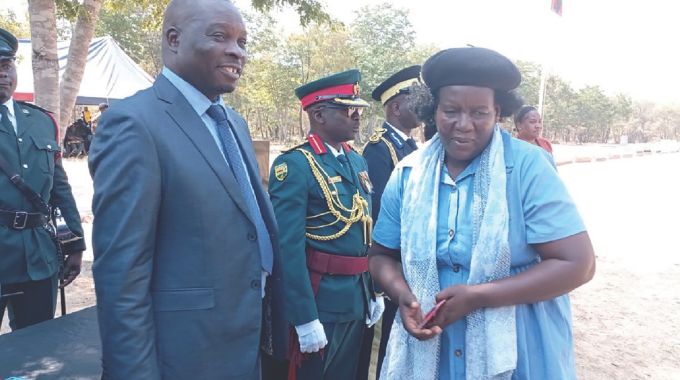
Raymond Jaravaza, [email protected]
AT just 16 years old, while many teenagers were focused on school and everyday life, Mrs Sihle Moyo was already playing a dangerous role in Zimbabwe’s liberation struggle.
Growing up in Nkayi District in Matabeleland North, she risked her life supporting freedom fighters at a time when Rhodesian security forces maintained a heavy presence in many rural communities. Despite the risks, she and other young people carried out crucial tasks that helped sustain guerrilla operations during the war.
Moving discreetly through villages where Rhodesian forces had established temporary bases, Mrs Moyo gathered information on troop movements and numbers before passing it on to liberation
fighters. She also helped provide food and clothing to the guerrillas, fully aware that being caught could have severe consequences.
“We referred to the guerrillas as obhudi (brothers) and did menial work for them such as cooking their food and supplying them with information about the number of Rhodesian soldiers that would have passed through our villages,” said Mrs Moyo.
“My first interaction with obhudi was when I was just 16 years old, together with other girls from my village. We understood that supplying them with food, clothes and information was dangerous, but we were ready for the repercussions.”
Mrs Moyo was among a group of war collaborators from Matabeleland North who were honoured by Government for their role in the liberation struggle during Heroes Day commemorations held at the Matabeleland North Provincial Heroes Acre in Lupane on Monday.
Her story highlights the vital but often under-recognised contribution of mujibhas and chimbwidos to Zimbabwe’s fight for independence.
While guerrilla fighters carried out military operations, war collaborators worked behind the scenes to ensure those operations could continue. They served as intelligence gatherers, couriers, scouts, guides, messengers, organisers, cooks and nurses. They mobilised villagers for night vigils, tracked enemy movements, transported supplies, sourced food and clothing for fighters, concealed guerrillas from enemy patrols and cared for the wounded.
For many of them, every task carried significant risk.
For Mrs Moyo, the medal she received represents far more than personal recognition. It symbolises acknowledgement of the sacrifices made by thousands of young people who supported the liberation struggle from their communities.
“Without the work of war collaborators, the military operations of the guerrillas would have been significantly weakened and we are happy that Government is appreciative of the role that we also played,” she said.
The recognition comes as Government broadens efforts to honour all those who contributed to Zimbabwe’s liberation. As part of that process, 50 000 Independence medals are being conferred on veterans of the liberation struggle in recognition of their service to the nation.
For war collaborators, Heroes Day remains a deeply emotional occasion, bringing back memories of the danger, hardship and sacrifice that defined the liberation war years.
Mrs Moyo said she was grateful that the contribution of people who assisted liberation fighters from within their communities was finally receiving formal recognition.
Another recipient, Mrs Monica Ngwenya (67), also joined the liberation struggle while still in her early teens.
Raised in Tshongogwe in Jotsholo, Matabeleland North, she was only 14 years old when she became a war collaborator. Her involvement was heavily influenced by her family’s commitment to the liberation cause, particularly her two older brothers who had already joined the struggle.
“I was just 14 years old when I became a war collaborator in Jotsholo where my family was based. My two older brothers had joined the liberation struggle three years earlier, so helping the guerrillas was something I did with so much pride because I understood why they were fighting the Rhodesian army,” she said.
Like many young people of her generation, Mrs Ngwenya carried out her duties knowing that discovery by the Rhodesian forces could place both her and her family in danger.
She said the recent recognition of war collaborators represents an important step towards ensuring that all contributors to the liberation struggle are acknowledged.
“I would like to applaud Government for addressing this historical imbalance by recognising war collaborators as veterans of the liberation struggle and integrating us into the broader War
Veterans League alongside the comrades who participated directly in the armed struggle,” she said.
Hundreds of people gathered at the Matabeleland North Provincial Heroes Acre in Lupane on Monday to commemorate Heroes Day and pay tribute to the country’s fallen heroes and heroines.
Matabeleland North Minister of State for Provincial Affairs and Devolution Richard Moyo joined families of departed liberation heroes at the provincial shrine as the province united with the rest of the country in reflecting on the sacrifices made during the armed struggle.
For many of the war collaborators present, the commemorations were a reminder that the country’s independence was achieved not only through the courage of armed combatants, but also through the sacrifices of ordinary villagers, many of them young boys and girls, who provided vital support under extremely dangerous conditions.
Their stories, often told quietly and away from the spotlight, remain an important part of Zimbabwe’s liberation history and a testament to the collective effort that ultimately secured the country’s freedom.