malvernmugadzikwa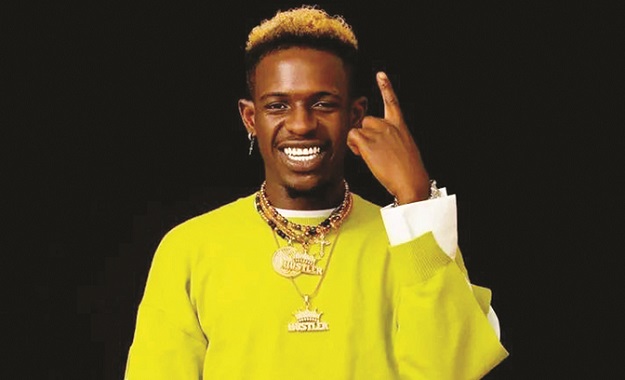
Theseus Shambare
TWO months ago, music sensation Saintfloew — real name Tawanda Mambo — checked into a drug rehabilitation centre in South Africa.
This came after he publicly opened up on his willingness to quit drugs and other dangerous habits. The gifted singer confessed to taking multiple recreational drugs.
He reckoned drug and substance abuse was taking a toll on his music career, as well as on his private life.
Saintfloew opted to undergo rehab, which was, however, going to cost him an arm and a leg.

Fortunately for the singer, a renowned local businessman chipped in to advise and foot the entire rehabilitation bill, including flight tickets to Mzansi.
Well, Mambo can be considered one of the few brave and lucky youths to have been rescued from the scourge.
Several people battling drug and substance abuse struggle to come out in the open about the issue, while those who do, at times, do not get the necessary help.
Zimbabwe currently has no dedicated public drug rehabilitation centres.

People battling drug addiction either pay their way into private facilities or are checked into mental shelters at hospitals like Sally Mugabe, Ingutsheni or Ngomahuru — free of charge.
A snap survey conducted by this publication indicates that a number of local private institutions charge not less than US$800 per month for admissions.
The figure caters for medication, food and full access to various rehabilitation professionals, among other things.
An individual undergoing drug rehabilitation therapy is said to require medication that costs an average of US$50 per month.

The costs at private institutions are beyond the reach of many.
The Sunday Mail Society interviewed several health experts, who highlighted some of the major hurdles encountered in the journey towards a drug-free life.
“Public institutions have limited facilities for huge numbers and, at the same time, private institutions’ charges are high, ranging from around US$1 200 for a four-week admission.
“Substance-induced mental illnesses are rampant lately, with psychosis being the most common. Common drugs that are abused include medical drugs like morphine, pethidine, while other substances like cocaine, crystal meth and Broncleer are also in the mix,” said Medical and Dental Private Practitioners of Zimbabwe Association president Dr Johannes Marisa.
Psychotic patients, Dr Marisa said, are a danger to society as they can harm or kill innocent citizens, hence extreme cases of psychosis characterised by visual and auditory hallucinations can warrant hospital admission.
“Ideally, after hospital discharge, rehabilitation should involve activities that keep the patient busy, especially employment or sporting activities. Such activities are scarce at the moment. Therapeutic drug compliance should be adhered to as well,” urged Dr Marisa.
He said Government should establish more rehabilitation centres to lessen the burden on the existing few.
Service provision
Mr Edwin Mavindidze, a mental health therapist and clinical co-ordinator at the University of Zimbabwe, argues mental health is a critical factor that is not being properly addressed.
“Mental health is vital for human life. We cannot talk of any success without a healthy mind-set. The health part of the mind is rarely spoken about and this is why we find people taking drugs for recreation, not knowing how detrimental they can be to their psychology,” he said.
The Government has a running national mental health strategic policy, which is aimed at improving mental health services in the country.
The policy also makes it mandatory for mental health patients to receive free treatment at all public health institutions.
However, the swelling number of patients is compromising effective service provision.
“Theoretically, mental illness is considered to be treated freely in Zimbabwe but with ballooning numbers of drug abuse patients, most mental health institutions can no longer cope,” said Mr Mavindidze.
Statistics, he said, reveal that all public mental health facilities are full to capacity, with 90 percent of the cases being drug-related.
At least 3 000 patients are said to be housed at both public and private mental health institutions (rehabilitation centres) across the country.
Ingutsheni chief medical officer Dr Nemache Mawere said bloated figures of patients were creating challenges for them.
“The number of patients being admitted keeps rising. For instance, the acute admission ward for males, Khumalo Ward, has 98 beds but usually, we have more than 250 patients admitted at any given time. Drug abuse has reached crisis levels,” reckons Dr Mawere.
Ingutsheni is the country’s largest mental health institution.
“We admit patients who are in crisis. These include those who are psychotic, suicidal or homicidal due to drug abuse but we do not have capacity for long-term rehabilitation,” he said.
Relapsing, the Ingutsheni official said, has become a major strain for the institution as resources are fast depleting due to high demand.
“Sadly, even after successful rehabilitation, patients are going back to the same toxic communities and, as a result, they are bound to return.
“It becomes a revolving door of sorts. This has caused many problems for us, as we cannot sustain the situation. Many people are in need of our services.
“We are in the process of engaging the Bulawayo City Council to establish post-admission assistance to patients we would have discharged,” revealed Dr Mawere.
Hidden costs
The period of rehabilitation depends on an individual and the condition involved. But experts argue it takes between three to six months for full recovery.
“In the end, relatives of the patient will have to chip in by bringing in some groceries and, certainly, buy medication because our pharmacy can no longer sustain the numbers. So, technically, it will no longer be a free service because of the costs involved along the way,” said the Ingutsheni official.
Dr Mawere added that the increasing number of patients was exerting pressure on his thin human resource base.
Friends and relatives incur travelling costs through several hospital visits during the admission phase.
Ngomahuru medical superintendent Dr Parirenyatwa Maramba weighed in.
“Ideally, we are supposed to provide all the necessary meals and medicines but we are no longer able to do so due to the huge number of patients seeking treatment. It is now up to relatives to supplement food and the required medication,” said Dr Maramba.
Ngomahuru currently has two doctors, who attend to an average 200 patients per week.
“Talk of balancing the ratio between our staff and patients is out of the question at present. We are heavily overwhelmed. A normal interview with a patient should take me 30 minutes to one hour. We normally attend to 200 patients per week,” he said.
Founder and chief executive officer of the International Wellness Centre Dr Nkululeko Dhewa said rehabilitation is a delicate process.
“A person can become an addict even after taking, for example, crystal meth once or twice. The drug leaves residues that induce cravings for more of the substance. Many people we attend to are habitual drug users, meaning the process may take longer to be complete,” said Dr Dhewa.
The institution’s rehabilitation process is in three phases.
“The first stage involves two weeks of withdrawal, whereby the addict is assisted to abstain from drugs. The second phase will be detoxification. At this stage, the patient is introduced to steaming (kunatira) after receiving some vitamin supplements.
“The final session is a psycho-support programme, where social workers and psychologists identify the skills and knowledge of the patient so that they prepare him or her for life after rehabilitation,” he explained.
The family is encouraged to continue supporting the patient, even after the formal rehabilitation process.
International Wellness Centre provides post-rehabilitation services to their patients and the costs are covered by the initial admission fee.
“When we house anyone at our institution, we create a bond with them and they become family.”
Alternative
Mr Cuthbert Nyaruvenda — who is the Zimbabwe National Practitioners Association (ZINPA) president — believes mental illness can be easily treated with traditional herbs and methods.
“There are many factors that contribute to mental illness. However, today, we will talk about this pandemic we are faced with — drug abuse.
“In as much as clinical methods help drug addicts, we also have registered traditionalists who can give you herbs to clean the whole system. Detoxification using traditional herbs has proven to be effective,” said Mr Nyaruvenda.
He said taking the herbal route is the cheapest way to deal with drug addiction. He, however, was quick to recommend use of registered professional herbalists.
Some of the herbs are said to cost as little as US$5 or even US$1 for a month’s supply.
In South Africa, some private drug rehabilitation centres charge as much as 40 000 rand (US$2 095) for a 60- to 90-day programme, while pubic institutions charge about US$250 for a similar programme.
In Nigeria, private institutions charge between US$500 and US$800 for the same programme.



 Online Reporter