Online Reporter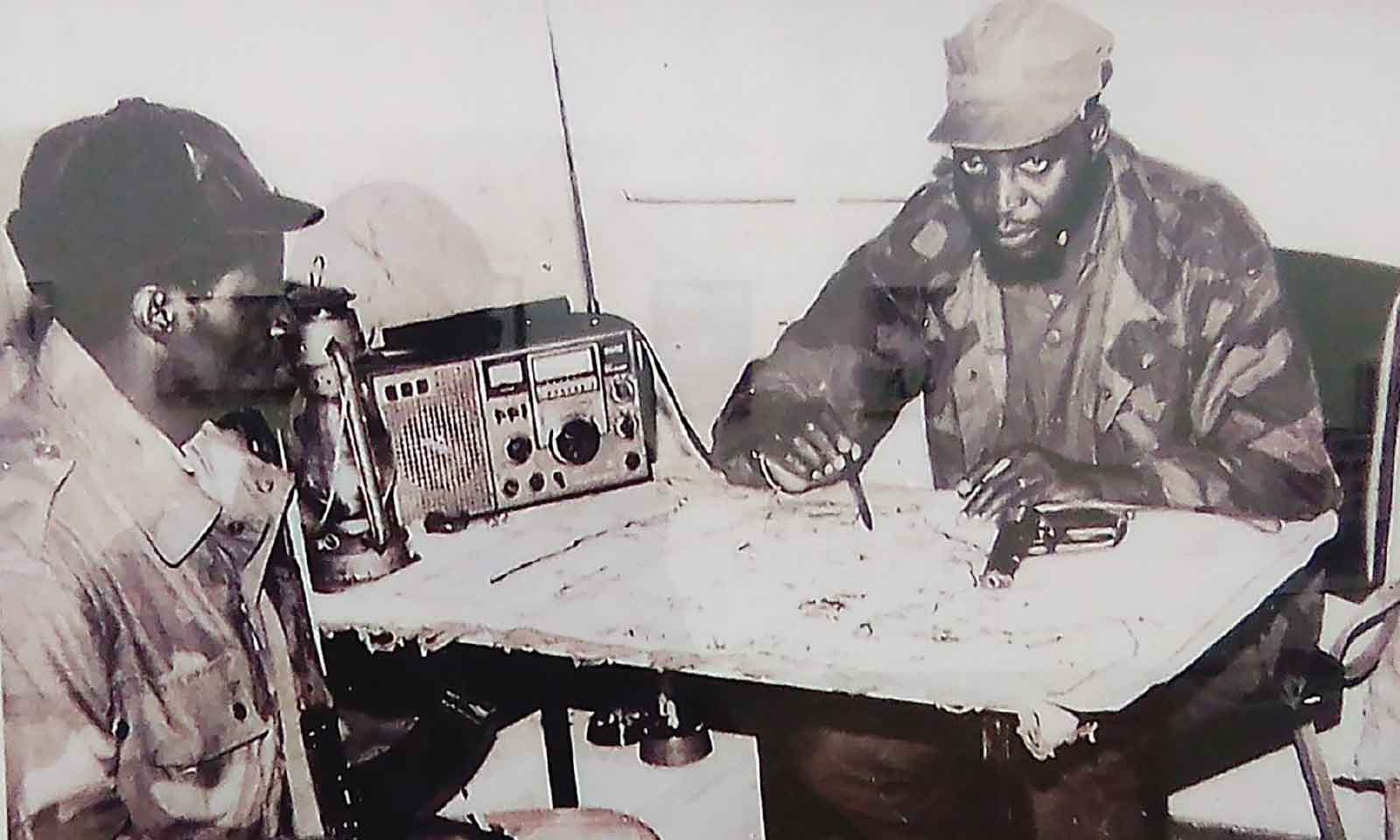
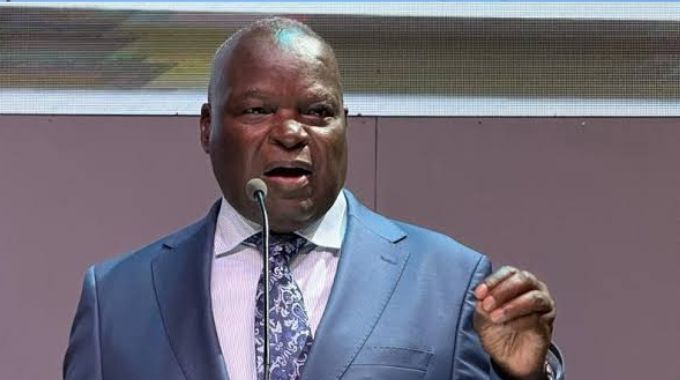
Lt-Col Humphrey Makuyana (Rtd)
There are figures in a nation’s history whose contributions can neither be erased nor forgotten.
Their names echo through time, carried by memory, testimony and the very freedoms they helped secure.
For Zimbabwe, General Josiah Magama Tongogara (like his counterpart, ZIPRA commander Nikita Mangena) stands among these enduring figures.
To narrate the liberation struggle without his name is to leave a blank chapter and to silence a drumbeat that once guided the rhythm of a people’s march towards independence.
Makings of a revolutionary
Josiah Magama Tongogara was born in 1938 in Shurugwi, in what was then Southern Rhodesia.
Like many of his generation, he grew up under the shadow of colonial rule — a system defined by racial exclusion, economic marginalisation and political disenfranchisement.
These realities shaped the consciousness of thousands of young Africans in the 1950s and 1960s, fuelling the fires of nationalism across the continent.
Tongogara’s early years were marked by ordinary struggles, yet he possessed an extraordinary sense of purpose.
Those who knew him recount a man who did not raise his voice unnecessarily yet spoke with conviction when principle demanded it.
His entry into nationalist politics came through the early movements that later evolved into liberation organisations.
When the political route was closed by detentions, bans and repression, Tongogara was among those who crossed borders and chose the path of armed resistance.
From cadre to commander
He rose through the ranks of the Zimbabwe African National Liberation Army (ZANLA), the armed wing of ZANU, not through privilege or connection, but through discipline, courage and strategic thinking.
By the late 1960s, Tongogara had become one of the key commanders, playing a pivotal role in reorganising ZANLA following early setbacks. His military training in countries such as China shaped both his tactical outlook and his understanding of guerrilla warfare.
Tongogara believed in purposeful struggle.
War, for him, was a means to secure justice — not an end in itself.
Under his stewardship, ZANLA expanded its operations, especially among rural communities, where fighters lived, trained and mobilised among villagers.
This strategy reflected not just military calculation, but political insight.
A liberation army, in Tongogara’s view, had to be rooted in the people.
He would eventually become ZANLA’s Chief of Defence — a role that placed him at the centre of the movement’s most difficult military and political decisions.
Unique command style
General Tongogara’s command style blended firmness with humanity.
He demanded discipline — from himself first and then from those he led.
Stories are told of his insistence that fighters respect civilians, use resources responsibly and conduct themselves with integrity.
Guerrilla warfare depended on trust, and he understood that abuse of that trust could undermine the entire struggle. He was not afraid to make hard decisions.
War is not clean, and like all liberation movements, ZANLA faced internal tensions, ideological disputes and security challenges. Tongogara was at times a stern disciplinarian, yet even critics acknowledged his deep sense of fairness. He listened. He reasoned. He drew people back to the central purpose — the liberation of Zimbabwe.
Where others saw rivals, he often sought comradeship.
He believed in unity of purpose and was wary of factionalism.
To him, ego, ambition and division were not just political weaknesses — they were existential threats to the liberation cause.
This clarity of focus earned him loyalty from fighters in the field, many of whom saw him as not only a commander but a father figure.
Relations with fighters
The bond between General Tongogara and the fighters under his command was not transactional; it was relational.
He shared their hardships — long treks, limited food and the ever-present risk of death.
He visited camps, spoke openly, listened to grievances and reminded cadres of the ideals behind the struggle.
Many veterans recall a commander who did not elevate himself above the movement.
He wore the same fatigues, shared the same meals and faced the same dangers.
That closeness made him deeply trusted. He was not remote.
He was present — emotionally, intellectually and physically.
Tongogara also emphasised political education.
Liberation, he taught, was not just about removing a regime; it was about creating a society grounded in justice, equality and national dignity.
Fighters were encouraged to see themselves not merely as soldiers, but as future citizens and nation-builders.
Navigating politics
General Tongogara’s role extended beyond the battlefield.
He became a crucial bridge between the political leadership in exile, fighters in the field and the diplomatic efforts shaping the international response to the conflict.
His participation in the Lancaster House negotiations in 1979 demonstrated a leader who understood that the ultimate goal was peace with justice.
His statements during that period reflected readiness to compromise where necessary to secure independence — even when some within the movement were sceptical.
He argued that endless war would only continue to cost lives, and that the movement needed to recognise political reality without abandoning principle.
This willingness to engage, to persuade and sometimes to challenge both colleagues and opponents alike marked him as a rare figure: a soldier with a statesman’s mind.
Relations with political leaders were not always smooth. Differences of strategy, personality and ideology inevitably arose.
Yet Tongogara remained committed to collective leadership. He believed that no personal ambition should eclipse the national cause.
His authority commanded respect — not because it was imposed, but because it was earned through sacrifice, competence and integrity.
The dark day
That is why the day he died — December 26, 1979 — remains etched as one of the darkest in the history of ZANLA and the broader liberation movement.
Zimbabwe stood on the threshold of independence.
The guns were falling silent. The flag of a free Zimbabwe was preparing to rise, yet one of the struggle’s central architects would not live to see that day.
His death — reported as the result of a car accident in Mozambique — stunned comrades and civilians alike.
The sense of loss was profound.
A pillar had fallen. Consolation could only be found in the legacy he left — in the freedom that soon followed and in the generations that would grow up under the independence he helped secure.
A legacy beyond the battlefield
General Tongogara’s legacy is multidimensional. He is remembered as a disciplined commander.
As a unifier in moments of fracture. As a strategist with a human touch.
As a patriot whose loyalty was to Zimbabwe first.
His story is inseparable from the thousands of men and women — known and unknown — who bore the brunt of the liberation war.
Yet his leadership gave structure, purpose and direction to that collective struggle.
In reflecting on his life, one is also reminded that independence was not a gift granted, but a prize earned at great cost.
He embodied that cost — willingly borne, never regretted.
Lessons for today and tomorrow
Tongogara’s memory continues to ask difficult questions of every generation:
What does principled leadership look like?
What does it mean to serve a cause greater than oneself?
How do we honour sacrifice — not only in words, but in the values we uphold as a nation?
He reminds Zimbabwe that unity is fragile but essential; that nation-building requires humility as much as courage. And that the true test of freedom lies not in the moment it is won, but in how it is sustained.
Today, decades after his passing, General Josiah Magama Tongogara remains more than a historical figure.
He is a symbol — of resilience, of discipline and of patriotic duty.
A reminder that history is carried on the shoulders of real people who lived, struggled, debated, fought, negotiated and sometimes died so that others might know a different world.
For Zimbabwe, his name stands engraved in the granite of national memory.
The liberation struggle — in all its complexity, triumphs and sorrows — is incomplete without him.
May his life continue to inspire reflection, unity and a deeper commitment to justice and dignity for all.
Rest in peace and in power, General.
Your story lives on.