

 dyton mupawaenda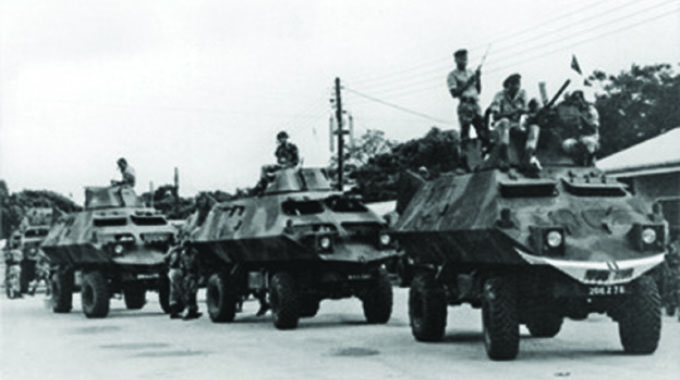
The sun was very hot, breathing unfathomable heat and sending cicadas crying for the immediate divine intervention of the ancestors and God.
Each day cicadas clung precariously on tree barks and cried loud, but the autochthons seemed to ignore them.
And so was the war. It had spread fast. Villagers took turns to feed “The Boys”, as the freedom fighters were affectionately called in the bush war that eventually gave birth to Zimbabwe.
The Boys stayed at a base on a rock promontory overlooking Mupinge River and there, the rolling moorlands, high mountain heath and interlocking valleys made them safe from the prying eyes of the Rhodesian forces.
This day, it was granny’s duty to feed The Boys. She left her clay pot-making business to prepare food for The Boys. Grandfather sat under a huge tree, carving stools from wood. Like granny, grandpa, also sold his wooden wares to whoever cared to buy.
At night granny, Uncle Gina (Ignatius) and myself, left the village on a fast trot, the bush immediately consuming us. Granny carried a basket of hot food, while the two of us carried pots of water.
Gina was a year older than me, so he carried the bigger pot.
Half way through the journey granny tripped and fell into a gully, letting the basket full of food, go. Only a stunted bush shrubbery stopped the basket from rolling off the food. Of course, some of the soup spilled. We normally laughed at such events, but this was no laughing matter; after all, the bush had grown ears and eyes, so we had been told by grandfather the other day.
Granny immediately summoned all her energy and, using the side wall of the gully, she picked herself up and loaded the basket. One hand on the basket overhead, the other trying to clean the dress by rubbing off dust, granny went into another fast-trot. We followed, with much unease.
At the base, The Boys watched as granny offloaded. She was sweating. A rivulet of sweat dropped from her temple to her eyes and down to the cheek and little everywhere else. One of the rivulets traced a path to the corner of her mouth. Subconsciously granny’s tongue shot out and licked it up. Salty! She wiped the sweat with the back of her hand, but it still streamed down. Then she took the loose high end of her wraparound cloth and wiped clearly this time around. Smart!
As the norm, she took a morsel of sadza and relish and ate, to prove her revolutionary chastity. Then it was time to drink water. Kneeling on one knee by her side and supported by the croak of her arm, granny gently, very, very gently tilted the clay pot and held it to her lips. She then, drank avidly. She must have been very thirsty!
She spilled some water which trickled down her body in little rivulets. Satisfied, the boys ate and drank. Unbeknown to us, two of them had travelled the whole journey alongside us from the village.
We never noticed them. They talked about granny’s infamous fall and her resilience. We were amazed.
After their feeding, we set off back to the village. A distance away, granny stopped, tilted her head to one side. She placed a finger in her ear, as if to clean the ear drum for sound clarity. She never really trusted her ears but she picked the sound of army trucks, the Puma or Dim-Dim (the names given to Rhodesian army trucks).
As we neared the village, there was a rare spectacle, very dangerous, we hid behind bushes and watched from afar. The groggy sound of roaring diesel engines had heralded the arrival of the convoy of Rhodesian forces at the outskirts of the village.
The road was no more than just a track in the high bush, where tall grass brushed against both sides of the huge military trucks as they moved fast and tortuously in a convoy. Then, the unrelenting din of the combined thunderous roar of five high-powered engines driven in low gear, announced trouble the villagers had always expected.
The lead car suddenly broke into high speed and pulled to the centre of granny’s homestead. Others followed suit but on other homesteads. The soldiers beat everything, from doors, to goats, dogs, cats and people. “Ipi lo wena gandanga?” (Where is the guerrilla?), one of them asked in Silapalapa, a colloquial language used mainly on white-owned farms.
We haplessly watched, grandfather being kneed, kicked, shoved and pushed, leaving the half-finished stool he was carving lying on shrivelled shavings.
When it appeared they would kill grandpa, granny left her hiding position and hurried towards the scene, her idea being to save her beloved husband.
But in the process the basket and the plates sold her out. It was clear she had been feeding The Boys.
One huge bearded white Rhodesian soldier took her down like a bull-fighter. Soon he cried loud and then they gathered around, beating her to get her to submit and give details. She refused.
She refused to sell out. She saved the lives of many freedom fighters at the base.
Gina and myself, continued hiding in the tall grass. Fear gripped us. The sounds and smells of death in the village, reached us. The yelling, the burning of homes and granaries that had been set on fire.
From our vantage point, we saw grandmother being beaten to near death. But she refused to say a word. They beat her until she collapsed.
As the Rhodesians left, granny rose from the ground, frail, shivering and staggering, probably to reach her burning kitchen. She collapsed. She tried to rise again but failed.
In the aftermath, she was pronounced dead. She paid the ultimate price. Somehow grandpa survived, albeit being battered, bruised and disoriented, albeit losing his wife.



 Online Reporter