Online Reporter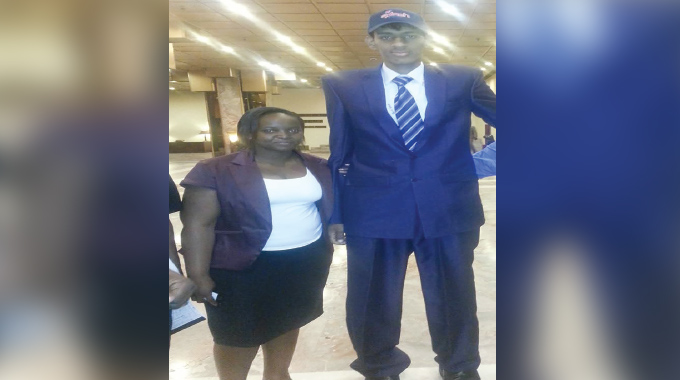
Robin Muchetu, Senior Reporter
I HAVE in my life had the rare opportunity to meet three extraordinary individuals with larger-than-life characteristics: two giants and one of the tallest men in the world.
Tragically, both giants — Calvin Moyo and Charles “Big Charlie” Nyoni both from Zimbabwe — have passed away.
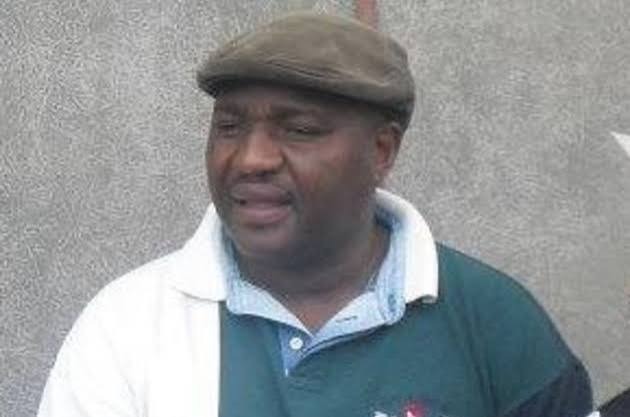
Big Charlie (59) from the coal mining town of Hwange, died just over two weeks ago at St Patrick’s Hospital where he was admitted for diabetes and hypertension.
Coincidentally, Calvin Moyo, the 21-year-old giant from Nkayi District also in Matabeleland North Province, succumbed to complications from diabetes at Mpilo Central Hospital in January 2024, with the illness being discovered on the very day of his passing.
His mother, Ms Sifiso Ndlovu said he was admitted around 3pm, but by that time, his blood sugar levels had reached critical levels. Tragically, he could not be saved and passed away just three hours later.
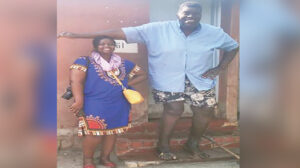
Calvin was laid to rest in Bulawayo at Umvutsha Cemetery on 14 January 2024, in an extra-large coffin that barely fit inside the hearse and a grave that required adjustments. It took 12 strong men and ropes to lower his coffin, as he weighed over 130 kilogrammes and measured more than 2,1 metres in height — his size may have even been larger.
In Hwange, Big Charlie was buried at No 1 Cemetery, towering over everyone at 2,1 metres tall and weighing a massive 300 kilogrammes just days shy of his 60th birthday. Due to his considerable size, a crane became a necessary piece of funeral equipment to lower his coffin into the unusually large grave — probably a fitting tribute for such a remarkable man.
My first encounter with a giant was with Big Charlie, while on an assignment to Hwange six years ago. I was excited to meet this larger-than-life character and envisioned writing a captivating article about him. I asked a colleague and photojournalist, Wilson Kakurira, to accompany me to conduct the interview.
As we arrived at the old Hwange Colliery house, which the company had allowed him to occupy after he left employment 10 years prior, my heart raced. There was Big Charlie, seated in the doorway, even larger than I had imagined.
The man was a real giant. I had never seen such a human being, it felt surreal. All the excitement of interviewing him disappeared instantly and fear immediately crept in. I could feel my heart beating loudly in my ears.
I suddenly felt a wave of fear washing over me, my palms grew sweaty and my heart raced.
When he extended his hand to greet me, I felt as if I was reaching out to a lion’s jaw, my mind racing with the fear that he might crush my hand in the handshake for his hands were barky, log-like and more than twice as big.
When he stood beside me, I felt dwarfed. He reduced my stature to that of an ant. I was reminded of the biblical tale of David and Goliath. His palm enveloped my hand, and my forearm appeared like a matchstick in comparison.
During our interview, I sat as far away from him as possible on a wooden bench, overwhelmed by his size. I struggled to focus on the conversation, instead drawn to the sheer enormity of his head, feet, hands and limbs.
The last shoe size he wore was a rare size 22, which had been graciously provided by a Methodist Church missionary from the USA.
In terms of shoe sizes Big Charlie was dwarfed by Calvin, known affectionately as the giant from Esiphezini, for he wore a size 23, but due to its scarcity in Zimbabwe, he also relied on imbatata — shoes made from old vehicle tyres that he crafted himself.
At one time, Bata Shoe Company produced large sizes on order but they eventually ceased doing so due to the high costs of creating such uncommon shoe moulds. It was uneconomic.
After our lengthy interview with Big Charlie, we took photographs together, though he struggled to rise to his feet and find his balance. My anxiety heightened as he stood next to me for the perfect shot, but I forced a smile, hiding my fear in order to capture the moment.
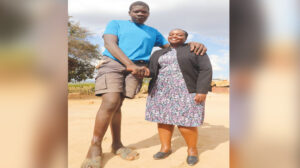
When I visited Calvin in 2024, the feeling was familiar — fear of approaching this towering young man. Unlike Big Charlie, Calvin moved with more agility, albeit slowly to maintain his balance. The signs of acromegaly—a condition resulting from excessive growth hormone production—were evident in his limbs. Both men suffered from this condition, caused by a benign tumour in the pituitary gland known as Pituitary Adenoma.
Individuals with acromegaly often exhibit abnormally large hands and feet, as well as pronounced facial features. They may also experience changes such as thick, coarse skin, skin tags, excessive sweating and deeper voices due to enlarged sinuses and vocal cords.
Affected persons produce a high level of the hormone Prolactin, this is a hormone made by the pituitary gland and in men, high prolactin levels can cause impotence, reduced desire for sexual intercourse and infertility.
Dr Cletos Masiya, who had conducted tests on Calvin, said, “His testosterone levels are very low and suppressed due to this.” As a result, both Calvin and Big Charlie did not have a history of fathering children.
In terms of diet, these giants ate significantly more than the average person — usually enough to feed several adults in one sitting. Big Charlie even boasted that he could finish a whole goat in a few meals.
In 2015, I had the rare opportunity to meet Billal Heydar from Pakistan, one of the world’s tallest men at 2,4 metres, during his visit to Zimbabwe for a local paint company’s promotion. Despite being tall, he dwarfed us even further, allowing attendees to take pictures with him.
The news of Big Charlie and Calvin’s passing was heart-wrenching, particularly because I had the privilege of following their journeys — their sizes, health conditions, diets and daily lives until their deaths.
The photographs of Big Charlie, Calvin and Billal are cherished memories that tell stories of our human diversity. They illustrate how ordinary tasks like walking, bathing, eating and sleeping can differ drastically for those with gigantism. May Calvin and Big Charlie rest in peace. — @NyembeziMu