Online Reporter
Victor Madzinga, [email protected]
Driving on the highway from Bulawayo towards Gwanda, two minutes after the 10-kilometre peg, a majestic green-roofed complex comes into view on the right, and that first glimpse only hints at the grandeur that is Singwazi Lodge, a facility that carries within its walls a story of stubborn determination and boundless love for humanity.
Around 1947, a baby boy was born to Sifihlaphi Mnanayi Nkoviyo Mlilo and Sithembile Mgwambani Ndlovu in a village south-east of West Nicholson in Gwanda District, Matabeleland South, and they named him George.
Years later, the family, together with many others, was forcibly moved by the colonial administration to a wildlife-infested area on the border with Botswana to make way for so-called developments, and it was in that displacement that George first encountered the brutality of the settler regime.
George and other children moved between six makeshift pole-and-dagga schools for primary education, and the bright learner later proceeded to Manama and Cyrene missions for secondary school.
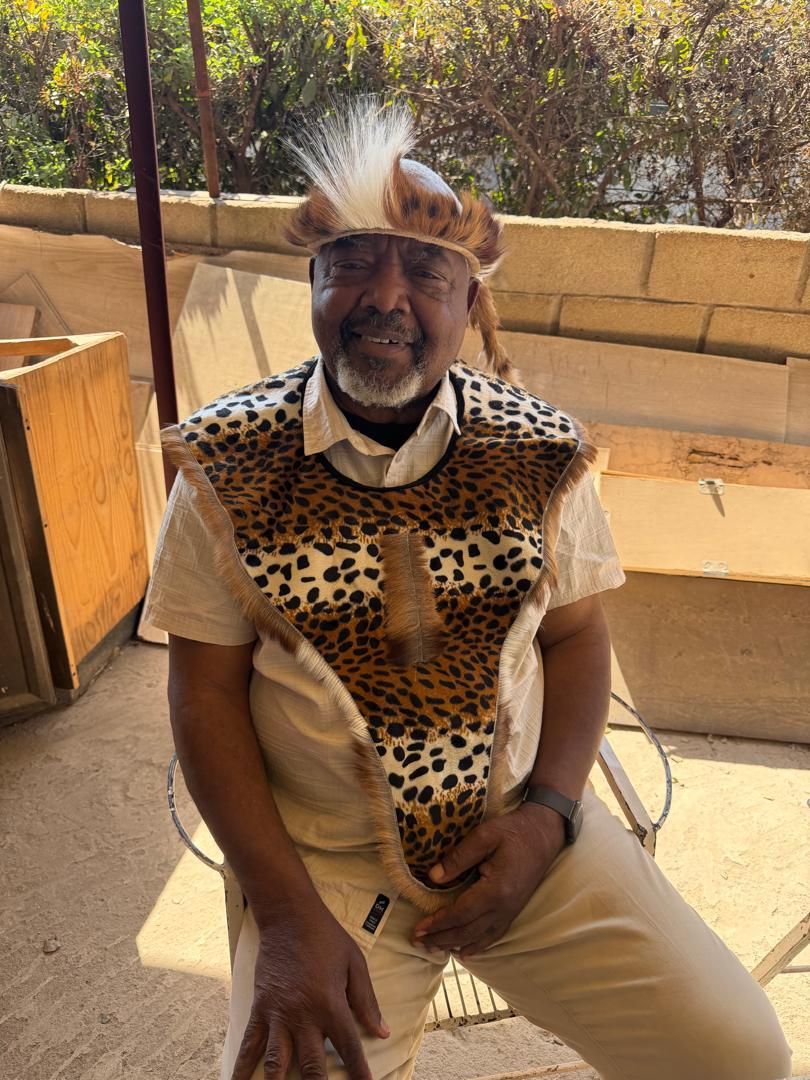
After completing his secondary education, he trained as a secondary school teacher of Mathematics and Technical Design, and upon qualifying in 1973, he was deployed to Gwanda High School, where he taught for two years before transferring to Njube High School in Bulawayo.
His time in the city, however, did not dull the anger that had been building against colonial repression, and he made the bold decision to cross the border and join the liberation struggle.
After guerrilla training, the movement recognised potential in him and reassigned him to study for an engineering degree in Hungary, all in preparation for a free Zimbabwe that no one could yet say exactly when it would come, but a future sustained by stubborn determination and selfless love.
When independence came, George and his fellow cadres returned home with a clear mission to help midwife the new nation and restore the dignity of its people, and he began his service as an engineer in the Housing Development Department of the Ministry of Local Government and National Housing.
He later moved to Kwekwe Municipality and then to Gweru Municipality, where, in both cases, he became the first black town engineer, and in time he joined Bulawayo City Council as deputy town engineer before rising to city engineer.
It was during this period that his party asked him to contest the Bulawayo Executive Mayoral post, a move that required him to resign from public service and forfeit a substantial portion of his pension benefits.
When asked how he felt after losing that election, the elderly gentleman laughed and said, “When you go into an election, expect either to win or to lose. After all, it was the Party which had asked me to stand, and I couldn’t turn them down.”
A long spell of unemployment followed, though he remained engaged as a board member for several parastatals including the National Railways of Zimbabwe, Zimbabwe Iron and Steel Company, and the Zimbabwe National Water Authority, and also served as First Secretary of the Bulawayo Zambezi Water Authority.
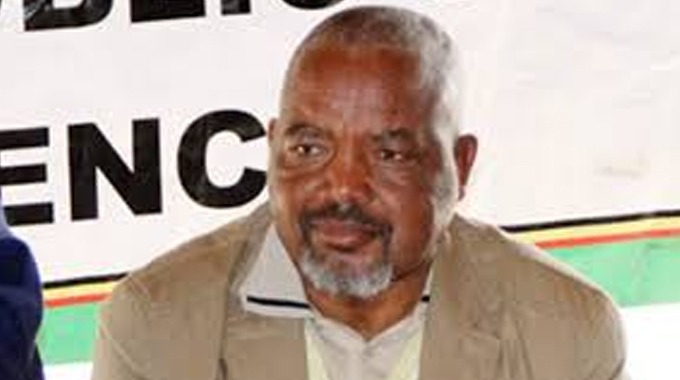
His expertise later saw him appointed Permanent Secretary in several Government ministries, including Transport and Communications, Local Government and Public Works, Public Works and National Housing, and finally Transport and Infrastructure Development.
When he left public service, he was not entitled to benefits because of that earlier resignation, but true to character, he was not easily deterred, and he pooled together his savings and proceeds from a West Nicholson farm he had worked for nearly 20 years to look for an investment.
He settled on building a lodge just outside Gwanda town, and construction, which began in 2019, was halted for the whole of 2021 after 130 roofing sheets were stolen, while Covid-19 made matters even more difficult.
Today Singwazi Lodge stands majestically completed, named after his totem “Singwazi,” which is isiSotho for ingoni, and it is conveniently located on the Bulawayo-Beitbridge highway, tucked away from town noise yet close enough for comfort.
The complex boasts 150 en-suite rooms and a magnificent conference centre, and it draws corporate clients for meetings and workshops, while from 10 to 18 September it will be fully booked by athletes and officials attending an inter-ministerial sports function in the mining town.
The lodge also hosts weddings and parties, and provides a restful stop-over for night travellers, something Mlilo is passionate about because he is concerned about fatigue-related accidents that regularly occur on the highway.
The centre operates with a staff complement of five and sources its foodstuffs from the West Nicholson farm, which employs nine workers, and Mlilo serves as managing director while his young niece, a recent human resources graduate from Midlands State University, manages the day-to-day operations.
Eng Mlilo has clear advice for aspiring entrepreneurs, particularly the youth, and he said, “Very often people settle for the wrong type of business choice. They go for the easiest of things, which is often what most people are doing, like you see five bottle stores in a small township. The competition will obviously be stiff and profits low. Take up the challenge and do what no one else is doing, but which will draw many customers. There is a need to think outside the box. And remember, no pain, no gain.”
At the close of our conversation, Mlilo revealed that he owns a strategic piece of land next to the Garikai/Hlalani Kuhle high-density suburb in Gwanda, and he is seeking a funding partner to build a large hostel complex to accommodate female students from the nursing school, J.M. Poly, Gwanda State University, and the Gwanda satellite of the planned Matopo University. He adds, “As society, we have a collective responsibility to look after the vulnerable among us, and the girl child is one such group.”
A Rotarian and supporter of church building projects for the Brethren in Christ Church, Eng Mlilo embodies the same stubborn determination and selfless love that has carried him from a displaced village to boardrooms, and now to hospitality, and with that spirit, the hostel dream may well be the next bridge he builds for his community.