Chronicle Editor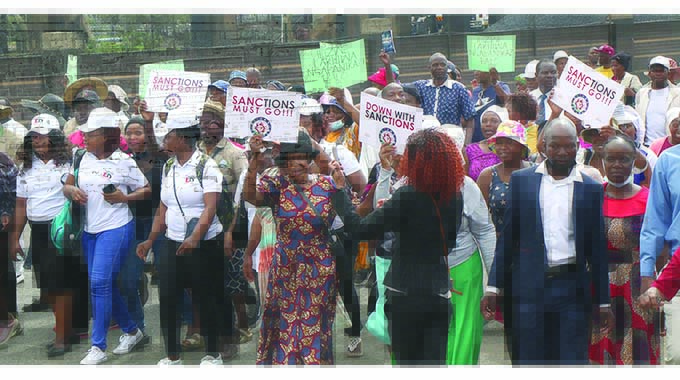
Livingstone Kazizi
Since the final stages of the Cold War, the use of sanctions as a “soft approach” in international diplomacy gained preeminence among states that seek to influence the perception and behaviour of other states. In recent times, the use of sanctions as a coercive diplomatic tool (soft approach) has been under the spotlight with critics contending that such unilateral imposition of sanctions outside the dictates of the United Nations Security Council (UNSC) is a violation of international law.
Fortified arguments have been proffered from various academic and political quarters that the 21st century sanctions imposed on Zimbabwe by the West, particularly the United States of America (US) and the European Union (EU) are illegal and constitute a gross violation of human rights (Ibid).
On the other hand, the West alleges that the sanctions are meant to coerce Zimbabwe to respect human rights, promote democracy and good governance.
In 2001, the United States enacted the Zimbabwe Democracy and Economic Recovery Act (ZIDERA) and imposed “targeted” sanctions against selected Zimbabwean officials. Similarly, in 2002, the European Union (EU) imposed sanctions that it officially referred to as restrictive measures against the late former President Robert Mugabe and some government officials.
Since independence, Zimbabwe received considerable amounts of funding and technical assistance meant to promote development from the Western financiers. However, most Western financiers and Bretton Woods Institutions, the World Bank in particular, suspended aid to Zimbabwe in 2001 following the latter’s implementation of the Fast Track Land Reform Programme(FTLRP), which was deemed as “gross violation of human rights” by the West. The FTLRP was meant to redress the land ownership imbalance between the minority whites who owned more than 90 percent of agricultural land and the majority black people who were largely concentrated in the poor,
infertile and tsetse fly infested areas of the country.
Multilateral Financial Institutions (MFI) imposed sanctions on Zimbabwe in the following manner: Suspension of Balance of Payments Support; Suspension of technical assistance; Suspension of voting and related rights by IMF; and declaration of ineligibility to access Fund resources. Effective 2 October2000, the World Bank placed all IBRD loans and IDA credits to, or guaranteed by, Zimbabwe in non-accrual status.
Meanwhile, the existing sanctions instalment against Zimbabwe began in December 2001, when the United States promulgated the Zimbabwe Democracy and Economic Recovery Act (ZIDERA). Through this Act, the US government imposed economic sanctions on selected government officials, as well as ZANU-PF party officials. Coupled with this, the Act opposed the issuance of development aid; the extension of loans or debt cancellations from Multilateral Financial Institutions (MFIs) to Zimbabwe.
ZIDERA was passed by the United States Congress “to provide for a transition to democracy and to promote economic recovery in Zimbabwe”. The U.S. Congress resolved that the Government of Zimbabwe was unable to participate in programmes created by the International Bank for Reconstruction and Development (World Bank) and International Monetary Fund Program (IMF) to assist in the transformation and resuscitation of Zimbabwe’s economy. This exclusion was put forward because they accused the Government of allegedly being involved in “economic mismanagement, undemocratic practices, and the costly deployment of troops to the Democratic Republic of the Congo.”
On February 18, 2002, the European Union (EU) initiated sanctions it referred to as ‘restrictive measures’ against former President Mugabe and other senior government officials following the expulsion of its Head of Election Monitoring Mission, Pierre Schori. Schori was accused by the Zimbabwean government of meddling with Zimbabwean internal elections affairs. These punitive measures sought to bar selected state functionaries from travelling in and around Europe just as their private assets and bank accounts were equally frozen.
Zimbabwe has been branded with a negative reputation of governance in the international arena and this follows the implementation of the Fast Track Land Reform Programme (FTLRP). The World Bank (WB) for instance, called for governance and liberal reforms as conditionality for development aid. It is also worth noting that the negative branding of Zimbabwe has been largely the works of the United Kingdom and its allies as part of the British global “demonisation strategy” to justify regime change in Zimbabwe.
The US and EU sanctions on Zimbabwe have had devastating effects on Zimbabwean citizens who traditionally have been dependent largely on agricultural produce for survival. Several key organisations in Zimbabwe with direct influence to the agricultural sector were placed under sanctions, while other financial service providers were slapped with huge fines.
Sanctions made it highly difficult for farmers to access agricultural lines of credit. The sanctions also ruined the country’s investment attractiveness. Sanctions also resulted in lack of development, rehabilitation, modernisation and deterioration of production and marketing infrastructure, consequently reducing productivity and access to markets.
The sanctions affected the livelihoods of ordinary people owing to lower agricultural yields. Sanctions have violated fundamental human rights by perpetuating poverty in Zimbabwe. The sanctions are being viewed as economic sanctions by the ordinary people who have largely developed animosity against the West.
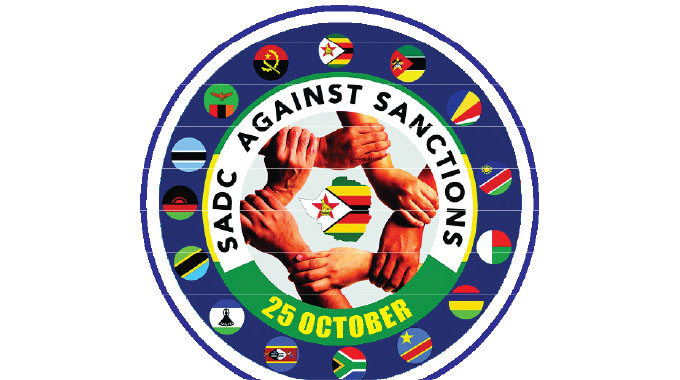
Apart from affecting Zimbabwe’s agricultural sector and the ordinary people, the sanctions affected the whole of the SADC region which traditionally depended on Zimbabwe for agricultural produce. This finding is synonymous with the Government position that the sanctions affected the region’s breadbasket. This explains why the SADC Heads of State in 2019, declared 25 October, the regional bloc’s Anti-Sanctions Day as the effects of the restrictions had a spillover effect into other countries in the region.
SADC has been calling for the unconditional removal of the US and EU sanctions imposed on Zimbabwe.
According to the African Union, on 26 October 2021, the Chairperson of the African Union Commission Moussa Faki Mahamat illuminated on the African Union’s call for the “immediate and unconditional removal of sanctions imposed against the Republic of Zimbabwe, and in support of the Southern African Development Community (SADC) commemoration of SADC Anti-Sanctions Day”.
Following the imposition of sanctions, the country’s market access for cotton, coffee, sugar, beef, and horticulture among other lucrative crops was negatively affected. The Ministry of Foreign Affairs and International Trade (MFAIT) website states that the EU and US sanctions affected major markets of key agricultural produce which are the country’s key foreign currency earners.
The EU and US sanctions had serious negative effects on agricultural labour. The continuous decline in Zimbabwe’s long-term capital inflows since the inception of the EU and US sanctions, affected the country’s employment levels as well as its ability to supply basic goods and services to inhabitants, this resulted in the deterioration of living standards. This has been a push factor for the youthful labour force and skilled labour. The prolonged depressed state of the economy resulted in large-scale emigration of youthful and skilled labour force.
Over the past decade, Zimbabwe has experienced high levels of migration. An Al Jazeera’s programme titled “People and Power” broadcasted in August 2007 referred to the Zimbabwean migration trends as “Zimbabwe’s exodus”. It further said migration became a factor that threatens service delivery in almost every sector of the Zimbabwean economy.
Sanctions thus induced migration, which negatively affected the health and manufacturing sectors of the Zimbabwean economy. Conclusions can be drawn that indeed the sanctions affected the country’s lucrative labour force.
The efficacy of sanctions has been a subject of academic research for quite a long time. The effectiveness of sanctions has been extensively debated in the past two decades but scholars have failed to agree on several issues. This study concurs with findings by Grebe (2010) that the efficacy of sanctions should be discussed in the context of “sanction effects” and “sanction success”.
Instead of influencing a change in behaviour of the targeted politicians and institutions, the US and EU sanctions have been affecting ordinary people in Zimbabwe.



 Online Reporter