admin
admin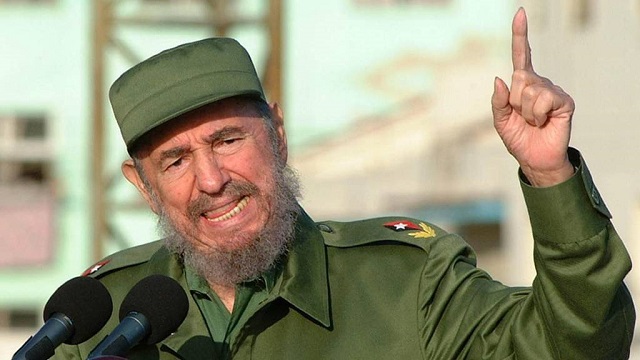
It’s late in the afternoon on Thursday and there I am; relaxed at the Indaba Book Café. It was just one of those hectic days –when one just needs to flee from the indiscreet, meddling and unpleasant crowd and be with themselves. The Indaba Book Café is always one tranquil sanctuary for such days when one seeks such personal moments. So, last Thursday was just one of those thought-wracking days.
There, one can always sit down to some refreshing teas, coffees or even snack on the wide range of sumptuous meals served at Indaba. However, I should confess, a greater assortment of the meals served at Indaba are not decolonial to the African palate as what one can find at Dickies Restaurant and ko Sis Bee. But well it’s always good to intermittently explore the culinary arts of others. However, that day I was at Indaba for a drink, Wi-Fi and more time with myself as I had to brainstorm some logistical issues for the annual Back to Pan-Africanism Conference scheduled for the 22nd of December. At the end of this brainstorming and self-conversation session, there came trouble –Cde Dingilizwe Zvavanhu. Thank God; he came at a time when I was done having conversations with myself. As usual we exchanged revolutionary greetings, sad enough, I had to turn down his offer to get me a drink. I had to ask, “What brings you to the City of Kings Prof?”
“Some family business” he said. Cde Zvavanhu also told me that he would be driving to Masvingo on the following day for the Zanu-PF 16th Annual People’s Conference. Having shared his itinerary, we got down to the usual, we discussed at length how this year’s people’s conference will go a long way in making the revolutionary party transcend the polarised factional discourses. We went further to talk about a lot of issues regarding the state of the nation –the immediate economic challenges, rise and prospective demise of grand coalitions and a whole lot of contemporary issues affecting Zimbabwe’s political landscape. Before we could go far, Zvavanhu started talking about the first instalment of this series which he had read last Sunday. Then I knew it was time for me to get some critical scourging from the good Prof. Cde Zvavanhu argued that the article was half baked because it only recollected the legacy of Fanon and omitted the fact that the world was also mourning the late, Cde Fidel Castro who left the world on the 25th of November, 2016. “How could you forget Castro? I was expecting that you were going to juxtapose Fanon with Castro mfanami”, yelled Cde Zvavanhu. Apart from the Fidel Castro aspect missing in that article I was impressed by how Prof Zvavanhu interconnected the current post-colonial African experience with Fanon’s prophecy.
A leaf from Havana
Therefore, as I resume from last week’s submission I think it is not only courteous, but it is prudent for me to briefly reflect on the revolutionary path of Commander Fidel Castro of Cuba and attempt finding the Fanon school of thought in Castro’s revolutionary perspectives:
Revolution means to have a sense of history; it is changing everything that must be changed; it is full equality and freedom; it is being treated and treating others like human beings; it is achieving emancipation by ourselves and through our own efforts; it is challenging powerful dominant forces from within and without the social and national milieu; it is defending the values in which we believe at the cost of any sacrifice.
These remarks substantiate the degree of Castro’s undoubtable revolutionary character. According to Castro –the decolonial bonfire the revolution meant conceptualising history as a medium for bringing absolute transformation of the oppressed global societies. In Fanon’s decolonial mantra, a revolution entailed replacing that which is colonially perceived as “order” with a new liberation oriented “order” by the oppressed.
This is better explained as the substitution of an old humanity with a new humanity. In this case, history becomes the unifying force of the oppressed to create a liberated future characterised by equality, freedom and rehumanisation of the dehumanised.
Furthermore, the success of this revolution involves instilling new values defined by the oppressed to project their objectives for taking up arms. Therefore, the revisitation of history will result in confronting class divides founded on a shameful past set by the oppressor. This is clearly brought out in Fanon’s book, The Wretched of the Earth as it provides critical themes ranging from racial hierarchy construction/deconstruction, colonialism/decolonisation, liberation memories, colonial/post-colonial maxims, nationalism and violence –the plethora of ways in which violence as a liberation tool creates and modifies the correlation between coloniser and the colonised.
On the other hand, it is clear that Fanon’s philosophy resonates with that of other conventional political luminaries like Castro though he later evolved to being more of a literary combatant. In as much as his philosophy cascaded from the experience of the people of Algeria to the rest of the developing world, the same can be identified with Castro’s philanthropy with the rest of the world’s oppressed.
The millions of “global-citizens/internationalists” who mourned Commander Castro are living evidence of the magnitude of his influence in marshalling freedom and equality in the world. Just like the memory of Fanon, Castro’s legacy proves the existence of an unfailing global anti-establishment order. The two represent a global order of epistemic disobedience as their lives were covenant symbols of decoloniality.
Face to face with imperial hegemony
Castro –the soldier, just like Fanon was born on the 13th of August, 1926. Together with other like-minded “guerillas” like Che Guevara committed their youthful energy to fight the US-sponsored Cuban regime under Fulgencio Batista in 1959. At the immediate capture of power, Castro nationalised all US-owned factories and plantations.
The reciprocal grand plan launched by America was a brutal assault to Cuba through economic sanctions. At that time, Fanon proclaimed that the oppressed of the world were supposed to capture political and economic power for their cause for freedom to fully actualise. In 1961, the CIA financed the training of Cuban exiles.
This anti-Castro project was followed by their unsuccessful invasion of Cuba in a bid to overthrow militant and unwavering Castro. This goes on to indicate why Cuba and Zimbabwe share a similar anti-West philosophy. Just like Cuba, Zimbabwe faced economic sanctions after nationalising the land which was historically owned by the colonialists. On the other hand, the West has continued to finance anti-Mugabe mentorship fellowships and civil democracy participation spearheaded by some regime change Non-Governmental Organisations (NGOs) entities.
It is this hatred of absolute freedom of the oppressed by the West which has seen countries like Cuba and Zimbabwe establishing some seemingly “radical” bilateral ties. Since the dawn of Pan-African consciousness in Africa illuminated by the freedom of Ghana in 1957, the capital of Cuba became a sanctuary for African nationalism. Cuba was a friend of many African countries during the troubled times of the continent’s fight with colonialism. Cuba is famous for parcelling out aid to bereaved aspirations of liberation across the continent.
After our own independence in 1980, a countless number of students from Zimbabwe went to train in Cuba as teachers. As it stands, there are numerous Cuban doctors in Zimbabwe. Cuba has also continued to provide training for our medical practitioners and many of students in various science disciplines. It is also key to highlight that Cuba’s relations with Zimbabwe date back to the days of the liberation struggle. In 1978, President Mugabe had visited Cuba to mobilise help for the continuity of our revolution. As a result, Cde Castro commissioned an office of the Cuban Ambassador to Zanu in Maputo.
This assisted Cuba in creating and continuing its contact with Zimbabwe’s liberation struggle. Therefore there is no way we can forget icons like Castro and Fanon. May they Rest In Power.
Richard Runyararo Mahomva is an independent academic researcher, Founder of Leaders for Africa Network-LAN. Convener of the Back to Pan-Africanism Conference and the Reading Pan-Africa Symposium (REPS) and can be contacted on [email protected] <mailto:[email protected]>.


 Bongani Ndlovu