


 malvernmugadzikwa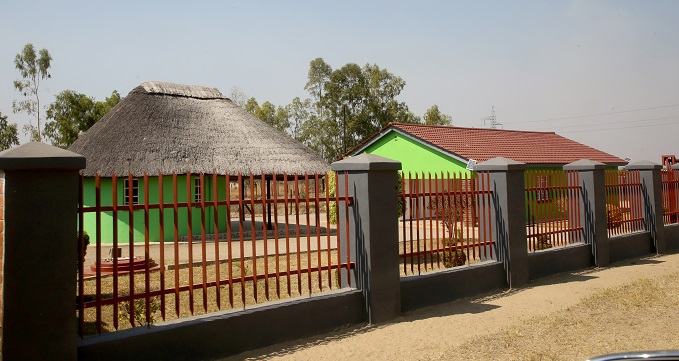
Veronica Gwaze
DEEP in the rural Juru area of Goromonzi, a striking modern home stands out.
With the property brightly painted and having a perimeter security fence, it is hard to miss it when passing by the main road leading to Juru Growth Point, also known as KwaBhora. This attractive home boasts modern amenities, including security features, a borehole, multiple solar panels and a satellite dish that is neatly arranged on the roof.
The overall appearance of the homestead is a bold statement about its owner, Lizzy Mugova, and the emerging trend of creating “little paradises” in rural areas.

A mother of four, Mugova lived in Kuwadzana, Harare, for 15 years before moving to Juru, where she owned a residential stand.
“As my family grew, I felt the need to leave our three-room rented home for a more spacious place where my children could play freely,” she explained.

“Here, we built a four-bedroom tiled house with a fitted kitchen and built-in wardrobes. I am happy because my children can play comfortably and I have plenty of space for my projects.”
The spacious home features four bedrooms, with the main one having an en-suite facility; separate toilets; a combined living and dining area; and a kitchen.
The home’s design, Mugova explained, was her husband’s idea, aimed at providing their children with the same comfort they enjoyed in Harare.

“We are still putting the finishing touches; as you can see, the kitchen is under construction. We did not want our children to feel a drastic change when we moved, so we tried to create a space as similar to an urban home as possible,” she said.
Improvement
A drive through Domboshava, Bindura, Nyabira, Seke, Mhondoro and other areas around Harare reveals a growing trend of modern, solar-powered homes equipped with boreholes, flush toilets and running water.
Most of these properties are being built by local young people and in some instances residents living abroad who plan to use them as retirement homes.
One might assume the construction of such modern homes is being undertaken by established companies. However, even local individuals in rural areas have developed the skills to erect such sophisticated buildings.
“We have learnt some of the new designs through experience over the years, while, for others, we research online,” said a Goromonzi builder, who preferred to be known as Lincoln.
Energy efficiency
In Bindura’s Makumbe village, the Mujaho homestead is a clear example of modern rural living.
A spacious house surrounded by a neat precast wall and sliding gate, complete with a manicured lawn and flowerbeds, catches the eye of every passer-by.
A diaspora couple built the impressive five-bedroom home. The caretakers on the property also run poultry and piggery projects, and tend the garden.
“We have a solar-powered borehole, so running water is always available. We also have proper lighting, a fridge and even use the stove sometimes, making life quite comfortable,” said Ranganai Chitake, one of the caretakers.
Solar-powered homes have become commonplace in many rural areas.
Most homes are equipped with satellite dishes, offering a wide range of channels just like in urban areas. Additionally, many families have adopted gas cooking.
“I live alone but my children installed solar panels, a satellite dish and a gas stove for me, so I enjoy a lifestyle comparable to that of someone living in the city,” said Viola Wasarirevhu from Chirimuuta village in Musana.
Trade opportunities
The spacious communal stands have been praised for enabling residents to undertake various projects.
Many homeowners, particularly in Domboshava and Goromonzi, have installed boreholes on their properties, which have proven invaluable for horticulture. Solar power allows for convenient irrigation of crops using running water.
Additionally, poultry and pig farming have become popular ventures.

In Mhondoro, Village 6, Terence Maphosa, affectionately known as Terry, has transformed his rural home into a scenic retreat, featuring a restaurant that attracts visitors from far and wide.
In the area, known as “KwaTerry”, Maphosa has established a reputation for sustainable agriculture and village tourism.
He is into organic vegetable production, poultry farming, goat and cattle breeding, and aquaculture.
“Having grown up here, I realised the potential of our large land and decided to explore different projects. I am delighted with the results,” said Maphosa.
“We enjoy a lifestyle comparable to that of city dwellers, with a modern home that has solar power for our television, geyser and fridges. This allows us to do whatever we desire.”
The KwaTerry restaurant was established in 2022. The eatery, including other feeder operations, currently employs over 20 people.
“I have a grand vision for this place, but I am in no rush. I want to preserve our core values of providing a unique rural Zimbabwean experience without compromising tradition in our service. Currently, I am satisfied with our progress,” said Maphosa.
Flexible plans
Construction has become more affordable for many families, thanks to flexible contracts offered by building companies.
These contracts allow clients to purchase materials through layaway or credit plans.
Firms like Vakisa Builders Express, Sunset Bricks, African Builders, Gillfun Steel, Roofing Hub and Hallmark Roofing have made building more convenient for the public.
Gillfun Steel head of sales and operations Farai Karikoga explained that they offer three- to six-month layby plans for roofing materials.
“Some of our clients are locals, while others are based abroad. We often communicate online, receiving plans and providing quotes,” he said.
“Clients make online payments before we deliver materials or undertake the required work based on the payment made. We introduced layby services due to public demand and ensure full payment before delivery, whether in United States dollars or the local currency at the bank rate.”
However, layaway schemes have also made some clients vulnerable to fraudulent companies.
“People have lost money to fake dealers; we have handled several such cases. Our receipts have security features and payments are only accepted at our offices or through the bank,” added Karikoga.
House of Q-Tiles and IBR Roofing Materials general manager Spencer Muvadi said: “We have seen an increase in the number of clients building residential homes with tiled roofs and floors in rural areas.”
He added: “We initially considered offering laybys and credit options but determined they were not practical. Daily challenges often prevent customers from adhering to payment plans.
“Additionally, price fluctuations can occur, making it impossible to request additional payment from clients.”
Another company is offering credit services, primarily to civil servants.
“It is easier to follow up with clients who have a traceable salary. We charge per project stage and require full payment before proceeding to the next,” said Quality Moulders operations manager Tongai Kwaira.
Sabhuku deals
The growing trend of modern homes in rural areas has led to a surge in demand for residential and commercial stands across the country.
However, this development also brings challenges, including land disputes and increased vulnerability to crime.
Traditionally, local leaders allocated land to community members and their offspring on which to build homes. However, some leaders have recently been caught illegally selling land to desperate buyers under what are being called “Sabhuku deals”.
According to the law, communal land is State-owned and cannot be sold.
The Ministry of Lands, Agriculture, Fisheries, Water and Rural Development has warned traditional leaders against this practice, emphasising that the land is held in trust for the State.
“Any traditional leader caught selling State land will face prosecution and conviction. Several village heads have already been found guilty of this crime,” said Permanent Secretary Professor Obert Jiri.
“This land is preserved for local families, not for sale, and must be protected for future generations.”
Double allocation of land has also become a problem in some areas.
Recently, Casper Moyo and his wife Shyline were disheartened to discover that part of their property had been encroached upon by a neighbour.
The couple had purchased an 800-square-metre plot in Seke two years ago, only to realise the problem when they began construction on their property last year. Their attempts to resolve the matter have been to no avail.
“We eventually gave up the fight and feel cheated, but there is nothing we can do about it,” Moyo lamented.
In response to these escalating land disputes, the Zimbabwe Anti-Corruption Commission (Zacc) and the National Prosecuting Authority have launched a crackdown on traditional leaders involved in land sales.
“Village heads are primary culprits and we cannot tolerate these activities,” stated Zacc.
“Sustainable management of these resources is essential for future generations. We have also initiated anti-corruption awareness campaigns and are calling for stricter penalties for offenders.”
Hwedza village head Zvinowanda Pfumbidzai echoed these sentiments, advocating severe punishments for those found guilty of land irregularities.
“We have witnessed these issues first-hand and I am pleased the authorities are taking action. We must protect the land for the benefit of future generations,” he said.
Crime
With the enhanced lifestyle offered by these modern homes, a significant challenge has emerged as the families have become prime targets for criminals.
Some thieves even travel from urban areas to raid these elegant rural residences.
“We now require heightened security here as some criminals come all the way from Harare to steal from us,” said Letwin Banda from Seke.
“To stay safe, someone needs to be at home at all times. Items like solar panels, television sets and taps are frequently stolen.”



 Bongani Ndlovu
 Online Reporter