


 Online Reporter
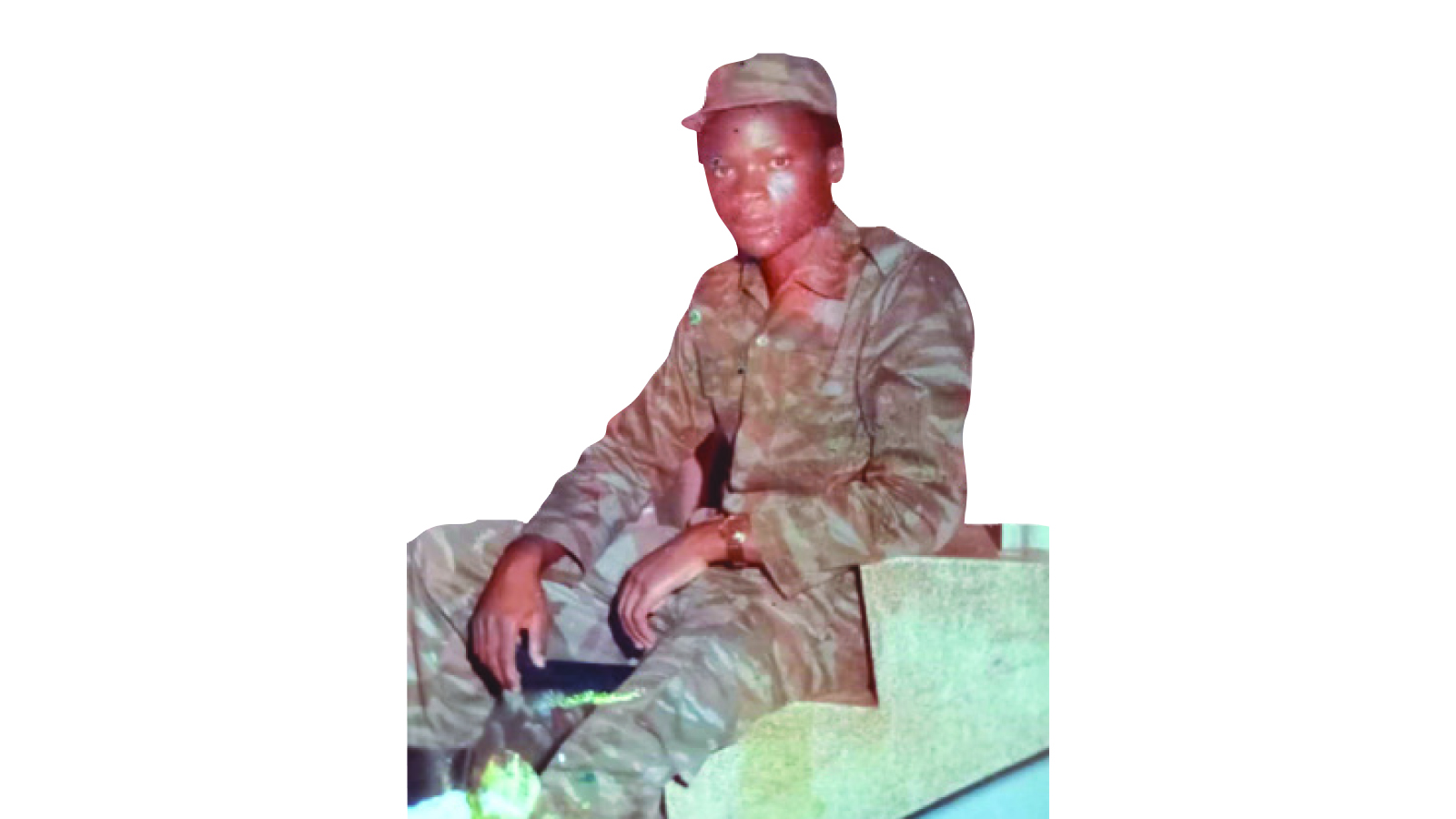
CDE CHARLES MAKHUYA, who used the nom de guerre Njabulo Moyo during the liberation struggle, concludes his account by giving our Society Editor PRINCE MUSHAWEVATO an overview of military training in Angola, which formed a crucial part of the transition of the Zimbabwe People’s Revolutionary Army from a guerrilla unit to a regular fighting force. He also gives a brief account of his life after Zimbabwe’s independence.
*********************
Q: In the last instalment, you talked about the Zimbabwe People’s Revolutionary Army (ZIPRA) comrades training in Cuba and Angola. Can you briefly take us through what the training entailed?
A: I was trained in Angola, so I will basically focus on the training that was done there. While there (Angola), we had some comrades who would travel to Zambia and then to Zimbabwe to assess the situation and study the tactics of the enemy, including the fighters who would have been trained in Angola.
They would also access the enemy’s weapons. This was done from the time the first group was dispatched for training around 1977. The weapons used for training by the first group were not the same as those used by the second group because the Cubans, who were our instructors, changed them and the tactics.
More advanced weapons were introduced as they withdrew the older ones we had become accustomed to in the first training.
They often improved the system after learning from those who had come from the front that the enemy was improving their system with the help of the Israelis, who were supplying them with new weaponry.
So, this was the trend: New weapons were introduced for every group.
The Rhodesians appeared to gain confidence each time they advanced their ground and air attack systems, thus we had to counter them. We upgraded our systems by switching from ordinary guerrilla warfare to mechanised, motorised warfare, and the use of heavy artillery.
We introduced armoured carriers, tanks and heat-seeking missiles that were operated mainly by trainees from the third group; those who could read and write.
Q: You can carry on.
A: After training in Angola, recruits were transferred to Zambia to join the Mulungushi Brigade to boost the manpower of those already on the front. This was a strategic move.
Our leaders and trainers, like Brigadier-General Ambrose Mutinhiri (Retired) and the late Nikita Mangena, trained skilled guerrilla fighters who were all-rounders in terms of ideology and the use of explosives.
Guerrilla fighters could use anything they had to win a battle. However, guerrillas do not capture and defend territory; hence, there was a need for a force of regular fighters to defend liberated zones that had been neutralised by guerrilla fighters.
Take, for instance, our guerrilla fighters in Hurungwe would hit the enemy and liberate the area, which meant it had to be defended. This is where this advanced brigade/battalion came in, as a group of a thousand fighters or more.
We organised and advanced our strategy to match the enemy and we eventually surpassed them, courtesy of astute senior commanders and trainers.
General Mutinhiri always emphasised that the strategies were meant for us to minimise the number of casualties while at the same time defending all liberated zones.
Q: Do you have particular battles that you would single out as having produced favourable results because of your advanced training?
A: There are several of them, but what quickly comes to mind are the exploits of General Madliwa (Brigadier-General Khumalo — Retired)’s battalion in Kariba.
If they had not formed, trained and retrained guerrillas and advanced them to a regular force, creating that battalion which surprised the Rhodesians and South Africans, we would have had a different outcome from the battles there. That case alone will show you why it was necessary to advance from a guerrilla to a regular force.
The Rhodesians had crossed into Zambia, but they were repelled by Madliwa’s battalion. The enemy was shocked. They did not know about the existence of this mechanised battalion with heavy artillery, infantry, anti-air — you name it.
Q: As we conclude, can you briefly tell us about your life during and after independence?
A: After independence, I joined the army and served from 1981 to 1992. During that time, I worked closely with the current Commander of the Zimbabwe Defence Forces, Philip Valerio Sibanda, when he was still a brigadier at Four Brigade.
When he was redeployed, he left General Nyambuya in charge. While stationed in Masvingo, under PV Sibanda’s command, I had the privilege of reconnecting with comrades like Zondi, an MK (uMkhonto weSizwe) fighter whom I had trained with in Malanje, Angola. Zondi had a house in Masvingo and lived there with 15 of his colleagues. They operated a shop and frequently travelled to South Africa.



