Online Reporter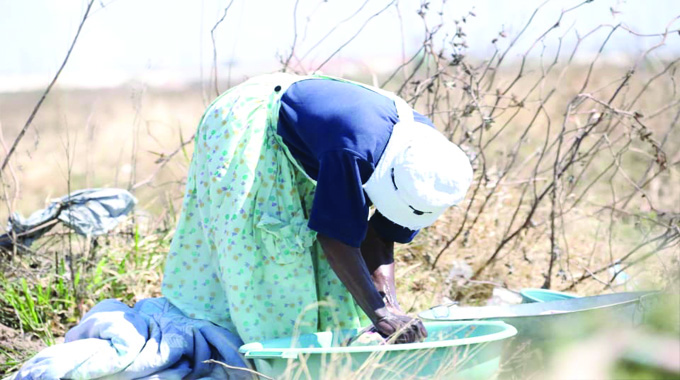
Raymond Jaravaza, Sunday News Reporter
SEPARATED by more than 60 kilometres but bound by the same daily struggle, women in Bulawayo’s Pelandaba West suburb and Mbembesi’s Nxingweni Village in Umguza District fight an endless battle for water.
In Bulawayo, a modern city with sprawling suburbs and running taps, water should be a given. Yet, for residents like Ms Buhlebenkosi Mhlanga, life revolves around a two-day water supply schedule.
Buckets, drums and dish basins are lined up in every corner of her yard, ready to capture the precious drops when taps sputter to life, usually in the dead of night.
“Sometimes water comes around midnight, and we are forced to wake up to do laundry or water our gardens. It feels like a race against time to make sure we have enough water for the week,” said Ms Mhlanga, balancing a bucket on one hip as she tended to her children’s clothes.
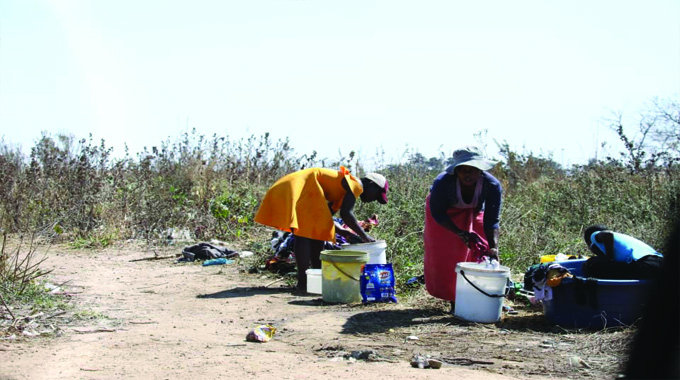
For many women in Pelandaba West, a burst underground pipe along Masiyephambili Drive has become a lifeline. What began as a city council fault two years ago has turned into a makeshift watering hole, where residents gather daily with buckets and wheelbarrows. On weekends, queues snake around the bushy roadside spot as women scrub laundry while cars speed past.
“By 6am on Saturday, you’ll already find a long queue here. It’s mostly women in the mornings. Men usually come at night in groups with pushcarts, but we can’t risk it because it’s too dangerous,” said Mrs Blessing Mutoko.
The danger is real. Just three months ago, the lifeless body of a Pumula East resident was found a few metres from the watering hole, worsening fears for women who fetch water under the cover of darkness.
Yet, 60 kilometres away in Mbembesi’s Nxingweni Village, Mrs Lydia Mdikane faces a different, but equally taxing reality. With no piped water and community boreholes few and far between, the dam is her family’s lifeline.
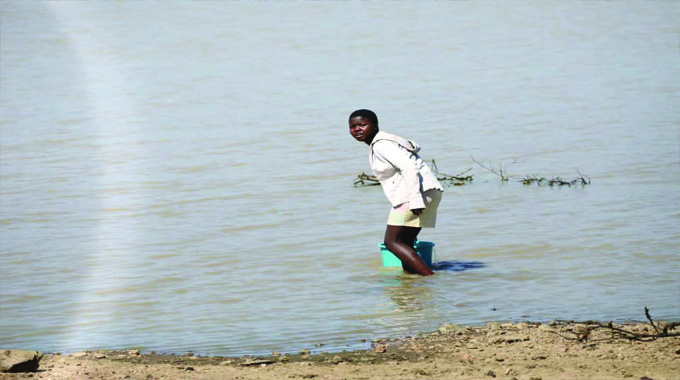
Every morning, she joins other women at Nxingweni Dam, children in tow, to fetch water. Buckets are lowered into the reservoir, balanced on heads and carried home under the scorching sun.
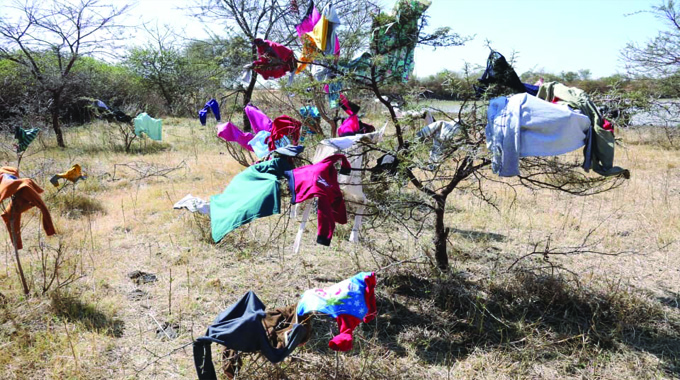
“The hardest part isn’t doing laundry here in the open. It’s making sure our children don’t drink this water straight from the dam,” she said softly, her hands red from scrubbing.
“We always boil it before drinking, but sometimes during the dry season, when neighbours’ wells run dry, this dam is all we have.”
Last week, a Zimpapers news crew caught up with 13-year-old Lomqhele Mabotha, who was fetching water from a reservoir in Nxingweni Dam to take back home.
After school, Lomqhele carries a 20-litre bucket from the dam to her home half-a-kilometre away. For some of her classmates, the journey is twice as long.
“We fetch water in the evening so that we can boil it overnight and use it to bathe before school,” Lomqhele explained, adjusting the bucket on her head.
Village head, Mr Lingo Masuku, said water shortages weigh heavily on women, who shoulder the daily burden of fetching and carrying water.
“Those with donkeys or scotch carts are better off, but a majority relies on their own strength, carrying buckets on their heads,” he said.
Mr Masuku said the villagers of Nxingweni will protect the new boreholes with their lives because they understand their purpose in solving their water challenges.
Back in Pelandaba West, residents’ chairperson, Mr Patson Phiri, admits the burst pipe is far from ideal but says desperation leaves people with little choice.
“It’s unsafe, yes, but water is life. I always warn women not to go there alone. Criminals are quick to take advantage of the bushy area,” he said.
While villagers in Nxingweni pin their hopes on more community boreholes, Bulawayo looks to the proposed Bopoma Glassblock Dam in Matabeleland South Province, a US$100 million project touted as the city’s long-term solution. Once completed, it will hold 130 million cubic metres of water.
Estimated to cost US$100 million, the dam will be developed through a public-private partnership (PPP). But until then, women in both the city and the village will continue carrying the burden of water, quite literally, on their shoulders.