admin
admin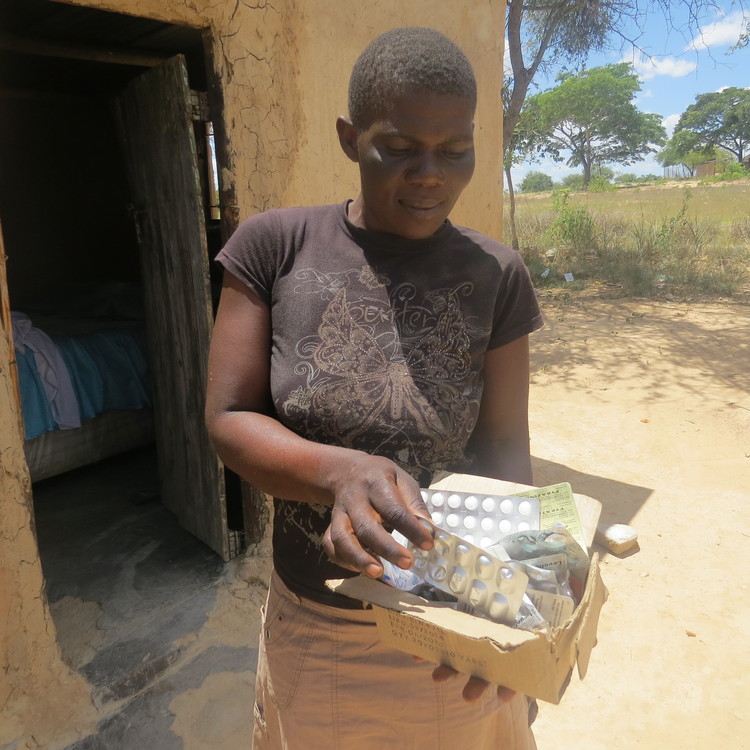
Sharon Kavhu recently in GUTU
“HER husband abandoned her at Gutu District hospital in 2014. We never thought that she was going to be get back on her feet again because her sickness was life-threatening. “She had become so thin that her jawbone seemed attached to her facial skin,” said 67 year-old Ambuya Evelyn Tavirima, who looked after her niece, Mrs Cecilia Musekiwa, during her time of illness.
“Cecilia wakapona napaburi retsono mwana uyu. Up to now I do not understand how she survived such a deadly illness.
What happened to her convinced me that medication works and our lives are in God’s hands,” said Ambuya Tavarima.

Mrs Musekiwa (38) of Tambira Village in Gutu District, Masvingo, is a mother-of-two.
She contracted tuberculosis in March 2014 while caring for her husband who had pulmonary TB.
Mrs Musekiwa was initiated on a TB treatment course but just four months later she was diagnosed with the multi-drug resistant TB.
“While I was still on TB treatment, I fell seriously ill that my husband and his relatives thought I was going to die. My husband and sister-in-law took me back to Chinhoyi Hospital where I was previously diagnosed with TB,” said Mrs Musekiwa.
“I was diagnosed with MDR-TB and my case marked the third MDR-TB matter to be diagnosed at Chinhoyi Hospital in July, 2014.
“During the same period, I tested HIV positive and was initiated on anti-retroviral treatment.
“However, before I even started taking my medication, my husband and mother-in-law took me to Gutu District Hospital where they deserted me.
“Surprisingly, my husband, whom I had been taking care of while he was sick, actually phoned my brothers and told them that he couldn’t tolerate my illness.
“He told my brothers to come and get me at the hospital.”
She said her CD4 count had gone down to 80 and this was attributed to stress following the abandonment.
At the district hospital, she was initiated on ART and started her 24-month MDR-TB course which she is yet to complete – there are just five months to go.
In the first eight months of treatment, she got injections every day while taking a combination of Tenofovi disoproxil, Fumarate, Lamivudine and Ephevirenz as well as Cotrimoxazole in the morning.
“For the past 19 months after I was diagnosed of MDR-TB and tested HIV positive, I have been taking 27-and-a-half pills. In many cases, my chest gets heavy after taking the pills because they take too long to go down to my stomach, no matter how many litres of water I drink to help them go down,” said Mrs Musekiwa.
Before 10am, she takes four-and-a-half tablets of Pyrazinamide, three of Patetha, eight of Ethambutol dihydrochloride, six of Pyridoxine, two of Lenoflox and two of Cotrimoxazole.
In the evening, she takes a pill of Lenoflox and one of Pyrazinamide.
Mrs Musekiwa said, “Although the treatment for MDR-TB is long and painful, there was never a day that I defaulted on taking my pills.
My wish is to be well again and be on my feet, so that I will be able to fend for my children.
“My first medication for the day is taken after a meal in the morning because the pills require food in the body for them to work effectively and to avoid complications.
“However, access to food is one of the major challenges that l am struggling with because I am not at work these days.
“Doctors instructed me to avoid doing heavy tasks because my chest is still recovering.
“Therefore, I and my two children are surviving on munyevhe and sadza if mealie-meal is available. Our fields did not give us any yields due to lack of rainfall.”
She sometimes gets milk from neighbours.
Before she fell sick, Mrs Musekiwa was a cross-border trader and her husband a truck driver.
The two helped each other in providing for their children’s school fees, rentals and putting food on the table.
Medical experts say people with either TB or MDR-TB must eat healthy foods for them to recover. Unfortunately, Mrs Musekiwa is struggling to get a balanced diet.
In the past 19 months, she has been having skin infections and her skin has darkened.
She experiences side pains and her ankles are always weak.
The director of the HIV, Aids and TB unit in Health and Child Care Ministry, Dr Charles Sandy, says cases of MDR-TB and HIV infection are common.
“Patients with a combination of MDR-TB and HIV infection must strictly adhere to treatment. If one defaults on any one of the two treatment regimes, chances of that person’s immune system resisting the drugs becomes very high,” says Dr Sandy.
He warns that MDR-TB can develop into XDR-TB, a form of tuberculosis that presently cannot be treated. Other serious complications may also arise.
Dr Sandy says MDR-TB and HIV patients should eat vegetables and fruits.
“We have a programme in which those patients on MDR-TB treatment receive US$25 every month.
“The unfortunate part is that some of the patients do not even have cellphones and the money is distributed via the phone.”
The Health Ministry and World Health Organisation started a National TB Drug Resistant Survey in 2015 and it is expected to be completed late this year.



 Online Reporter