Online Reporter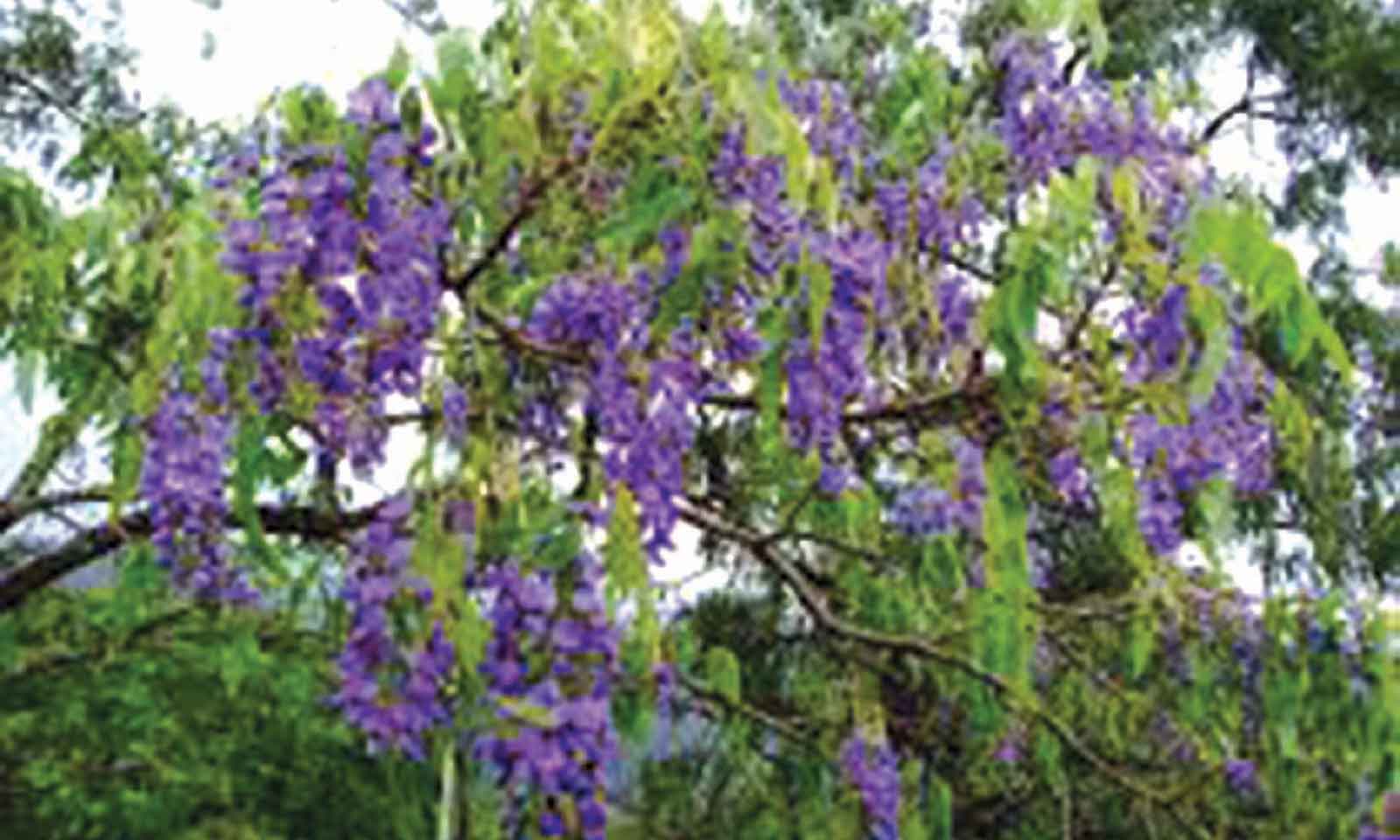
Andrew Mangwarara
EVERY garden needs a good tree, and that tree must be native to make sure it is sustainable and environmentally friendly.
We feature a tree commonly known as tree wisteria.
Botanically, it is called Bolusanthus speciosa.
It is a native of Central and Southern Africa.
Given an opportunity, it could replace the exotic jacaranda.
Although it is deciduous for a short while, it is nevertheless an attractive tree.
This small to medium-size tree can be multi-stemmed or trained to a single stem.
Its bark is also deeply fissured, making it attractive.
Tree wisteria flowers from January to August, making it a great specimen for your garden.
Its mauve-coloured flowers offer a unique competition to other purple-flowering species.
Bolusanthus can be grown in a pot, making it useful for patios or any space you want to limit it to. Since it is a small tree, it is particularly useful in small gardens.
To germinate the seed, soak overnight and plant in river sand, covering lightly not more than twice the size of the seed.
Bolusanthus can survive periods of drought and medium frost situations.
Other uses for the tree include carpentry for the hardwood.
Its roots, as well as inner bark, are also used to treat stomach problems.
When it comes to attractive and versatile trees, then the tree wisteria takes the trophy among the top garden trees.
It is important to note that due to its high-quality wood, it is a protected tree in neighbouring South Africa.
If you would like to be featured in our green-up campaign, contact us on: [email protected] or [email protected]