

 Online Reporter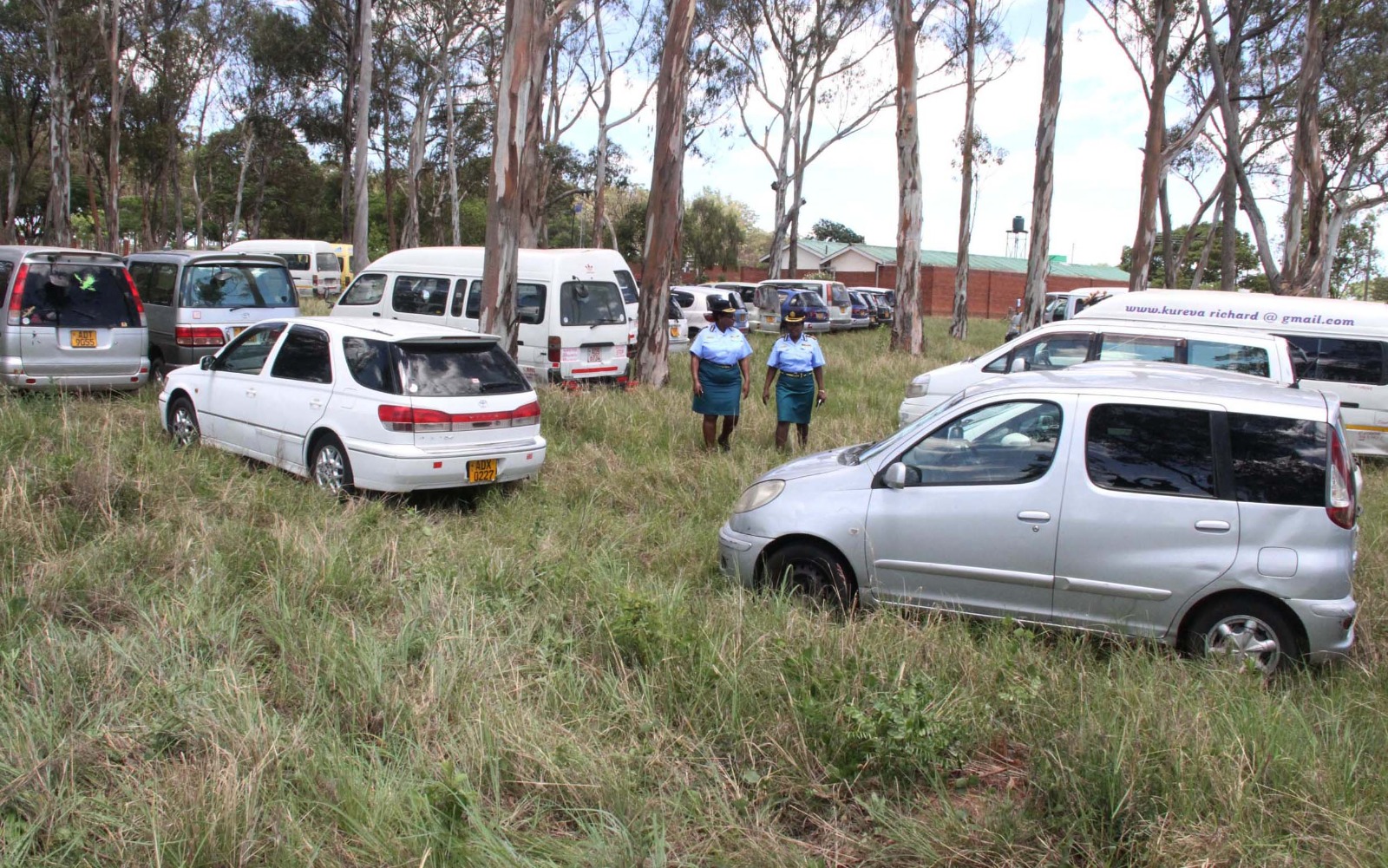
Theseus Shambare
Features Writer
AT the Vehicle Inspectorate Department (VID) depot in Eastlea, Harare, a ghost truck sits frozen in time.
Its cargo — a full load of gumtree logs — has long lost value.
The timber is brittle and worthless, eaten away by decades of sun and rain.
Its tyres have sunk into the soil, rust has chewed its steel and weeds creep beneath its body.
By law, an impounded vehicle in Zimbabwe attracts a daily storage fee.
At just US$10 per day, this truck might have accumulated over US$73 000 in “fees” across 20 years, several times its original value.
Some sources claim fees were set as high as US$40 per night.
This truck is one among many.
Across VID depots nationwide, hundreds of impounded vehicles; buses, haulage trucks, and cars, rot into scrap, while on paper continuing to generate bills that will never be recovered.
A legal grey zone
The Road Motor Transportation Act empowers VID to suspend a vehicle’s certificate of fitness if it fails safety standards, with non-compliance attracting fines or imprisonment.
The Road Motor Transportation Act (Chapter 13:11) allows police to detain vehicles temporarily — for example, if a driver cannot produce a valid licence — but only for 24 hours.
Neither VID nor police are permitted to impound vehicles indefinitely or demand daily storage fees for unpaid fines.
This was clarified in the 2018 Supreme Court case of Tafadzwa Gambiza versus VID.
The court found VID had acted beyond its mandate when it detained Gambiza’s vehicle for non-safety issues, including worn out tyres.
Justice Nicholas Mathonsi ruled that VID had unlawfully assumed the role of police, prosecutor and judge.
He noted: “The respondent acted outside its statutory powers by detaining the vehicle and purporting to impose penalties which the law does not provide for.”
At the time, VID was demanding over US$6 000 in storage fees, which later escalated to US$16 000 — sums equivalent to or above the vehicle’s value.
The judgment set a precedent that detention cannot be a revenue-generating measure.
The cost to the economy
Despite the ruling, truckers say impoundments beyond legality continue.
Economist Dr Prosper Chitambara said every parked truck represents lost productivity.
“A single heavy truck can transport goods worth thousands of dollars each day. If hundreds of trucks are left to rot, the economy loses billions annually in potential freight revenue. That loss trickles down to farmers, industries and consumers.”
For transporters, the pain is immediate.
One truck off the road can collapse a small business, cut jobs and disrupt supply chains.
Mr Rutendo Sande, chairperson of the Tobacco Transporters Trust of Zimbabwe, said impoundment threats have become a tool for extortion.
“Charging exorbitant storage fees is not fair for a trucker who is complying with authorities,” he said.
Long-haul drivers echo this.
Tawanda, whose company lost two trucks in Masvingo, said: “Once your truck is impounded, it is no longer about the law. It is about who you know, who you pay and how fast. If you follow procedure, the storage fees pile up until you cannot pay. But if you pay someone quietly, you can get your truck out overnight.”
Government’s stance
Efforts to contact VID over the past two months were fruitless.
Only the Ministry of Transport and Infrastructural Development responded.
Minister Felix Mhona acknowledged public frustration but stressed that Government policy is clear.
“Where vehicles overstay at VID depots due to storage fees, the law provides for disposal through transparent auctions. Corruption is not tolerated in any form, and we urge operators to report such cases to the Zimbabwe Republic Police,” he said.
He added that reforms are underway to digitise processes, reduce bureaucracy and align VID’s operations with the national vision for efficiency and accountability.
“As Government, we are determined to ensure transport operators work in a fair environment.
“The sector is critical to agriculture, mining and trade, and we want every truck on the road — not wasting away in a yard.”
The environmental toll
Beyond economics, the abandoned vehicles are an environmental hazard.
Old fuel tanks risk leaking into the soil, tyres rot into toxic pools and scrap metal piles up without recycling plans.
Environmental advocate Samantha Chirwa said, “Every rotting vehicle in VID yards is an environmental hazard. Zimbabwe lacks a national plan for scrapping and recycling vehicles, meaning toxic fluids seep into the ground while recyclable steel goes to waste.”
Globally, old vehicles are recycled into new steel, saving energy and reducing mining’s footprint.
In Zimbabwe, however, VID yards resemble unmanaged scrapyards.
Human impact
The toll on livelihoods is stark.
Simba Mujoko, a driver from Chitungwiza, recalls when his employer’s truck was impounded.
“It was loaded with tomatoes from Mutoko. By the time the paperwork was cleared, the load had rotted. The company lost money, I lost my job and the farmers were never paid.”
The Zimbabwe Human Rights Commission chairperson, Ms Fungayi Jessie Majome, described the matter as a rights issue.
“Transport is not just economic — it is a human rights issue. VID yards filled with abandoned trucks are a symptom of a broken system. Every delay affects human lives.”
A call for reform
For many stakeholders, the issue is not only about fees but about inefficiency.
The accumulated “debts” from abandoned trucks are unrecoverable.
Foreign trucks often vanish without paying duties, and missed auctions erode resale value.
A truck worth US$15 000 after six months can become scrap after a decade.
Meanwhile, local firms are forced to import older vehicles, worsening the trade deficit and flooding the country with high-emission trucks.
Stakeholders are calling for time-bound impoundments, digital tracking of fines, transparent auctions and partnerships for recycling scrap metal.
Some want a national inquiry into the human, economic and environmental costs of current practices.
Back at Eastlea, the forgotten gum-log truck continues its silent vigil.
Each night, another fee is added to its invisible bill. Each day, its rusting body sinks deeper into the earth.
It is more than a truck.
It is a monument to inefficiency, a tombstone for lost livelihoods, and a quiet drain on the nation’s coffers.
Unless systemic reforms take root, Zimbabwe’s VID yards will remain graveyards of wheels — where vehicles and the dreams they once carried go to die.



 Online Reporter
Massive food for thought for the powers that be.