Chronicle Editor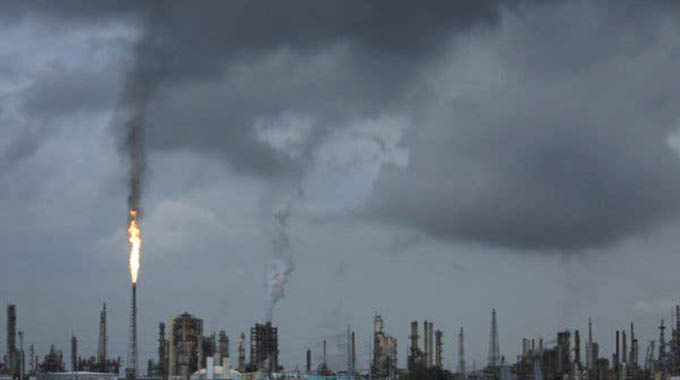
Cuthbert Mavheko
Since time immemorial, the human race has remained remarkably resilient and steadfast in the face of the myriad of problems bedeviling the world.
However, of all problems facing humanity today, nothing terrifies the world more than the threat posed by environmental degradation.
The inspired Word of God, in Revelation 11:18 foretold, millennia ago, a time when mankind would destroy the earth. Many are now wondering if we are not living in that time.
While addressing high-level dignitaries at a summit on climate change held in Madrid, Spain recently, UN secretary general Mr Antonio Gueterres warned that human activities had pushed the earth beyond its natural cycles, thereby drawing mankind perilously close to an environmental Armageddon.
Those who meticulously follow developments on the environmental landscape through the lenses of objectivity will, no doubt, concur with me that world leaders have, for donkey years, voiced their concern over the state of the world environment and have pledged to put in place measures to defuse the ticking time bomb of environmental degradation, which threatens to blast the human race out of existence.
Sadly they have failed to live their talk.
What is even more depressing is that some leaders from industrialised countries like US President Donald Trump, for example, do not take the matter of climate change seriously despite the fact that it is industrialised nations like the USA, which are doing the most damage to the environment.
According to a recent UN report 78 percent of the tonnes of toxic carbon monoxide and hydrocarbon emissions, which are destroying the ozone layer in the upper atmosphere and causing calamitous changes in weather patterns around the world come from industrialised nations.
On an almost daily basis, we hear or read about devastating cyclones, typhoons, hurricanes and tropical storms that are battering many regions and leaving in their wake a trail of death and destruction.
It’s not that environmental problems are a new phenomenon. They have been around for a very long time, but no one took them seriously. Governments all over the world have apparently been preoccupied with the immediate needs of their people — stabilising their economies and feeding their citizens. Alas, this has caused them to adopt a lackadaisical approach in dealing with issues pertaining to the environment.
I must, however, point out that solving environmental problems is not easy. It demands willpower, time and astronomic sums of money to pull a tight rein on pollution, deforestation, ozone depletion, wildlife extinction and many other environmental problems that we face today.
Prominent people in many fields are warning the world that time is running out —that nations must act now to avert a looming environmental catastrophe.
In respect of this, Mr U Thant, former Secretary General of the UN once said: “In future environmental problems will have reached such staggering proportions that they will be beyond our capacity to control. Unless we act now, planet earth will soon be rendered desolate and uninhabitable.”
Former Prime Minister of New Zealand Geoffrey Palmer echoed similar sentiments, saying: “The scourge of pollution will destroy us unless we are willing to put principle before expediency. If we do not take immediate action to halt environmental pollution, we will have no future. In fact, there is not much time left to save our planet.”
Environmental problems that we face today were actually fuelled by the Industrial Revolution of Europe and North America. Europeans and Americans deforested vast areas of their continents centuries ago, using timber to construct buildings, to heat homes, cook and kindle the first flames of the Industrial Revolution in the 18th century.
At first, wood and hydro-power were the major sources of energy. However, the increased demand for fuel to power the turbines of industry led to the scarcity of wood as a result of deforestation. Faced with a scenario where wood, the primary source of fuel, was becoming ever scarcer, manufacturers resorted to the use of coal as an alternative source of energy.
They began to build their factories close together near coal mines, thus creating new urban centres.
The population in the new urban centres ballooned as people from the countryside descended on the towns in droves to take up jobs in industry. The majority of them were former peasant farmers, who hoped their standards of living would improve by working in the factories.
Within a short time, towns and cities were teeming with more people than they were equipped to handle. The population of Manchester in England, for instance, grew from 9 000 at the beginning of the 18th century to 70 000 in the second half of that century. That of Glasgow in Scotland, swelled from 12 000 to 84 000 during the same period. This rapid urbanisation brought with it a host of problems and challenges.
For one, former country folk began to dispose of their garbage, including raw sewage, by dumping it haphazardly in the streets or near drinking water sources. This led to the outbreak of diseases.
Smith Hart, a journalist of the time, in an article titled ‘The New Yorkers’ described post-colonial conditions in New York this way: “The wells from which drinking water was drawn were situated for the most part in the middle of extremely filthy streets.”
The same tragic situation prevailed in other industrialised nations, where conditions in the towns and cities were often not fit for human habitation, leading to disease epidemics.
In his Discourse on the Origins of Inequality published in the mid-18th century, the philosopher Jean-Jacques Rousseau attributed illness to the effects of an unhealthy environment. Sadly though, no one took him seriously as authorities viewed industrialisation solely through the lenses of business.
It was not until a cholera outbreak in the 19th century killed multitudes of people that researchers in the UK discovered that there was indeed an environmental link between sewage in drinking water and disease. They compiled their findings in a landmark environmental document titled: The Sanitary Conditions of the Laboring Population of Great Britain.
Leaders of industrialised nations were confounded by the shocking statistics contained in the report which, among other things, showed that eight people were dying from disease for each one who died from old age or violence. The report also said children under 5 years were dying at three times the rate of those in the countryside.
The use of coal as a source of energy in industrialised nations had serious negative ramifications on the environment. As smoke from the factories billowed out of chimneys daily, carbon dioxide levels in the atmosphere rose alarmingly.
According to some surveys, human activities of the past 100 years have raised carbon dioxide levels in the atmosphere from 270 parts per million to over 350.
The smoke and sulfur dioxide from burning coal became so concentrated that it killed scores of people in “killer fogs”. One such fog killed at least 4 000 people in London in 1952, forcing engineers to devise ways of decontaminating the polluted atmosphere.
This led to the formation of the International Association for the Prevention of Smoke at the dawn of the 20th century.
Parting point: While there have been notable improvements in air quality since then, air pollution remains a major problem as nations are discharging more toxic pollutants into the atmosphere than was the case in the 19th century, according to some reports.
λ Cuthbert Mavheko is a freelance journalist living in Bulawayo. Contact details: 0773 963 448.



 Online Reporter