

 admin
admin
Vaidah Mashangwa
At a recent workshop organised by Musasa Project in coordination with the Ministry of Women’s Affairs, Gender and Community Development, a local traditional leader, Chief Mtshana Khumalo said that one of the worst forms of domestic violence is when a man brings home a girlfriend in the presence of the wife and as if it is not enough, instruct the wife to sleep on the floor in the same bedroom.
These are some of the worst forms of domestic violence that some women endure on a day to day basis. Of course we should also bear in mind that there are married women nowadays who also bring boyfriends home during the absence of their husband. The recent story in the B-Metro of a cross-border trader who locked with a 16-year-old boy bears testimony to this anomaly.
We can, however, never run away from the fact that 95 percent of the victims of domestic violence are women. As gender-based service providers, we do not tire to preach the gospel of the importance of peaceful homes and communities.
What is disheartening is the fact that reported cases of gender-based violence are still high despite the numerous policies and laws that have been enacted by the Government of Zimbabwe through the Ministry of Women Affairs, Gender and Community Development such as the Domestic Violence Act (2007), the revised National Gender Policy (2013-17) and the establishment of the Anti-Domestic Violence Council.
The ministry also developed the Zimbabwe National Gender-based Violence Strategy 2012-2015 and consequently launched the 365 days and the 4Ps Campaign against Gender-based Violence. The 4Ps stand for prevention, protection, programmes and participation.
The Ministry of Women’s Affairs, Gender and Community Development developed the Zimbabwe National Gender-based Violence Strategy to enable the ministry itself, civil society gender-based violence stakeholders and development partners to work together in order to prevent and respond to gender-based violence through a multi-sectoral and coordinated effort.
Apart from that the ministry also translated the Domestic Violence Act into two vernacular languages, Shona and Ndebele, so that communities understand the legal language contained in the Act.
The 17 laws that enhance the status of women in Zimbabwe that were enacted from Independence up to date such as the Customary Marriage Act (1987), the Maintenance Amendment Act (1989), Wills and Inheritance Act have also been translated into vernacular. It is very important for every Zimbabwean citizen to be knowledgeable of these laws so that informed decisions in families are made.
The new Constitution is also founded on the values and principles of equality of all human beings including gender equality, hence the need to respect the fundamentals of human dignity and respect of one another.
On the 7 June 2013, Chronicle highlighted that from across the country 2 600 cases of domestic violence were reported between January and April 2013 with generally the same figure recorded in the same period in 2011. What then can be attributed to such high incidence of domestic violence?
The Sadc Protocol on Gender and Development compels member states to halve (50 percent) the incidence of gender-based violence by 2015. The Zimbabwe National Genderbased Violence Strategy (2012-2015) aims at reducing all forms of gender-based violence by 20 percent by 2015.
The achievement of this target therefore heavily relies on the attitudes and behaviour change of every individual in Zimbabwe towards gender-based violence. According to the Sadc Gender Protocol 2010 Barometer, it is high time gender-based violence strategies move away from information and awareness to creating knowledge, wisdom and behaviour change.
While the impact of gender-based violence and its penalties are known such as deaths, injury, divorce, separation, the spreading of HIV and so on, cases of domestic violence continue to rise. There is therefore need for individuals to act, act and act now to end gender-based violence.
It does not suffice to say that moral values are evading us at an alarming rate that we do not know what is good or bad for ourselves, our families and the community at large.
People continue to rape our daughters, men continue murdering our mothers and grandmothers. Destructive emotions continue to have a toll on our moral and emotional competences that we can use successfully for productive engagements.
Good behaviour requires us therefore to continually scan our thoughts regularly and strive to do the best unto others. Emotions such as hate, greed, jealousy, lust and so on are too powerful and can actually derail our ability to act morally.
It is important therefore to remember that one girl raped is one future generation destroyed. That life is shattered forever and recovery might be impossible. Sonkeni silomlandu.
It is unfortunate that for children, one third of all abuse and even neglect cases go unreported or undetected. For children, their perpetrators are often relatives, stepfathers, family friends or close neighbours.
Vaidah Mashangwa is the provincial development officer in the Ministry of Women Affairs, Gender and Community Development, Bulawayo Metropolitan Province. She can be contacted on 0772111592, 09-889224 or
email: [email protected]


 Online Reporter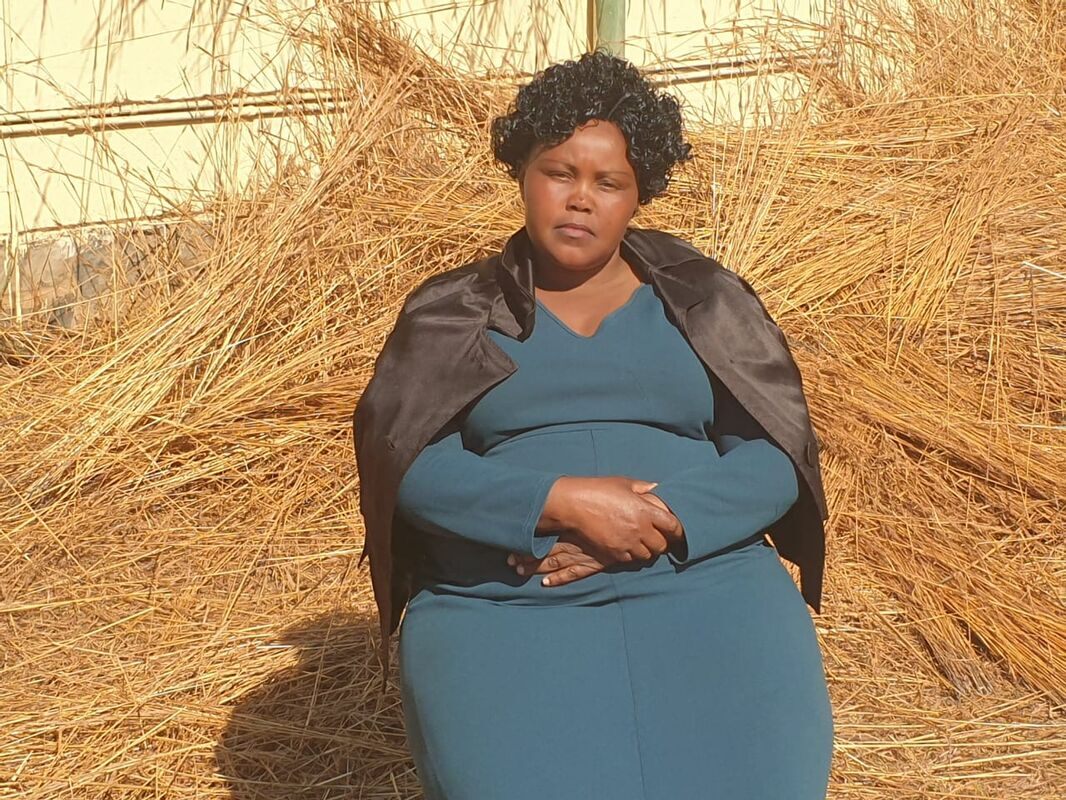
 derick.khumalo