

 admin
admin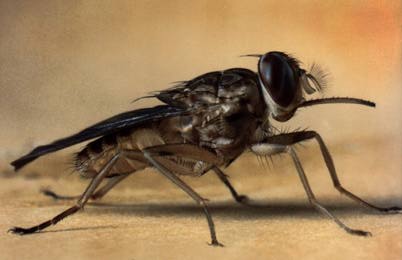

Kennedy Mavhumashava recently in Gokwe
With a small green and yellow bottle in one hand and a white net resembling one used by anglers to catch fish in the other, a man dashes towards a black and white boom gate as a car pulls up. The jovial man walks over to the driver, and they exchange greetings. He walks round the car looking closely at its body-work, the way a panel-beater does investigating possible imperfections on a job just done. After circling the vehicle, he uses the green and yellow bottle to spray on the underside of the cabin of the vehicle.
A female passenger sneezes hard and long, possibly after inhaling some of the sprayed substance.
“Some don’t like us spraying in their cars, others even react but there is nothing I can do. It is mandatory I do this. Sorry maam,” said the man as he lifts the boom gate, allowing the car to pass.
The boom barrier that sits at the point that divides Tshoda to the north and Nembudziya to the south is one of the tsetse fly checkpoints in the north-western zone of Gokwe North, Midlands Province’s remaining habitat for the blood-sucking vector.
He uses the hand net to trap tsetse flies off the bodies of vehicles in his obligatory physical inspection of every car that passes through Sumbe Tsetse Fly Control Gate. The aerosol is AVI – Stelspuit, a powerful chemical that kills tsetse flies and many other flying and crawling insects such as bees, ordinary flies, spiders and cockroaches.
Here, like across the Sanyati River in Hurungwe in Mashonaland West, the battle to eradicate the disease-causing insect is far from won. Whereas prevention and curative strategies and enhanced grassroots awareness have markedly reduced the insect’s impact on humans and livestock, the vector is still there.
In Gokwe North the tsetse fly belt covers Mashame, Nyamatsito, Tenda, Dekete, Kafushaire, Nyamasaka (also known as Tshoda), Chitsa and Gandavaroyi areas. It is a densely vegetated zone where elephants, hyenas, lions and other wildlife live side by side with people.
“Every time elephants pass through, we know we have a problem because they bring tsetse flies with them,” said Mr Jabulani Majira (46) of Misi Village, 50km north of Nembudziya Growth Point.
“When that happens, we have to inject our cattle with drugs. In the past, tsetse fly control teams worked regularly here. Now we don’t see them, so every cattle owner has to have a ready supply of the drugs. We buy them from a shop at Chitsa Business Centre.”
Tsetse fly is a problem in the Zambezi Valley where it bites cattle and humans to cause nagana and sleeping sickness respectively. It is bigger than the ordinary fly, light brown in colour and exclusively lives on blood. Tsetse flies also have a long proboscis, which extends directly forward and is attached by a distinct bulb to the bottom of their head. Most tsetse flies are very tough physically. This distinguishes them from other flies like houseflies which can be easily killed with a fly-swatter.
It only mates and reproduces after it has sucked blood. The pest spawns an average of 18 young ones and has a life expectancy of three months.
Sleeping sickness, also known as human trypanosomiasis, is a wasting disease which causes the inflammation of the brain, with the patient eventually drifting into a coma and death if there is no medical intervention.
Defining characteristics of nagana or animal trypanosomiasis are loss of weight and development of bottle jaw (a swelling on the neck). Also, the tails of sick animals just fall off.
The commonest tsetse fly species found in Zimbabwe are glossina palpalis and glossina morsitans. They occupy an estimated seven percent of the country’s land area which covers the larger part of the Zambezi drainage from Kariba down to Gokwe North and westward to the eastern side of Binga district.
Mr Majira lost all his nine head of cattle in 2009. He is now rebuilding his herd.
“Now,” he said, “we have six. Since 2009 when we started using berenil much more regularly we have not had any losses. I have a neighbour who lost 18 cattle around the time I lost mine. Elephants often pass through here, probably from Chirisa Game Park, going and coming from Sanyati River where they drink.”
Until fairly recently, Gokwe North and South were largely uninhabited as people were afraid of the tsetse fly. The first significant settlements occurred in the 1950s to the 1960s. Some were voluntary, but others were forced as successive colonial regimes uprooted blacks from better soils elsewhere to amass farms and dumped them in Gokwe.
In Gokwe South the tsetse has been largely eliminated but in the north it still poses danger.
Head of Chaka Village, Mr David Chaka (64) remembers when his father moved from Chief Charumbira’s area in Masvingo in 1949 to Tshoda, colonial authorities did not allow them to rear cattle, but donkeys that tolerate tsetse flies.
“People started bringing cattle after Independence,” he recalls.
“I have 12 but in the 1990s, I lost five and the signs were consistent with nagana. I buy injections and a satchet of berenil, which is enough for 10 animals. I used to inject them quite regularly, but I last did two years ago and we have not lost any.”
Fewer people are suffering from or dying of sleeping sickness in recent years compared to some 20 years ago in Gokwe, he said. He attributed this to improved access to medical facilities, enhanced community awareness and the broader success of Government efforts to eradicate the pest.
A nurse at Mashame Clinic, further west of Chaka Village said they have not handled a case of sleeping sickness in the past five years or so.
“I think in humans, we are doing very well since I have not come across any case of sleeping sickness. I see a problem in cattle. As for control measures, I sometimes see people setting up traps along the river (Gunguwe). I don’t know if they are meant to trap them or simply for research purposes.”
Setting traps to eliminate the flies is one of the ways used to control them. Others include removal of vegetation from infected lands, slaughter of wild animals and spraying of pesticides in forests.
Since Independence, tsetse fly control programmes were run under the Ministry of Agriculture’s Department of Veterinary Services. Recently, the Government set up an independent branch in charge of tsetse fly control. It is still setting itself up at the grassroots so veterinary officers are still working with communities on the ground.
A Department of Veterinary Services field officer said the flies are a continuing threat in Gokwe North. Their human impact, and on livestock has declined in recent years, he said but its presence has not been curtailed, hence the need for authorities and communities to strengthen preventive and treatment strategies.
“This means that the war against the fly remains, but against its impact, I can say it has to some extent, been won,” he said on condition he is not named.
“I say this because while the flies are still there, they don’t pose as much an impact as before because we and communities have learnt ways to prevent and control the diseases they cause.”
The Government provides a strong dipping chemical called decatix which kills the tsetse fly as well as ticks. There is also samorin, a drug which has a prophylactic (or preventive) and treatment function. Berenil treats.
At the onset of winter yearly, veterinary officers conduct trypanosomiasis inspections during which they raise awareness on the pest, conduct tests and treat infected animals.
“We move around with equipment such as microscopes which we use to assess blood samples for trypanosomiasis right on the field,” he said.
“Sometimes we use clinical signs which are clear that an animal has nagana even without you taking a blood sample.”
The yearly trypanosomiasis inspection had not been conducted when Chronicle visited Gokwe North at the end of last month.
The veterinary officers also work with communities in setting up traps but some are vandalised said the officer.
“We use blue or black fabric and spray it with a chemical that smells like a cow but kills the tsetse fly when it gets attracted to the trap and gets in contact with it,” he said.
There are many types of tsetse fly traps but Zimbabwe mainly uses the locally-invented Epsilon trap. The traps can kill by channeling the flies into a collection chamber or by exposing the flies to insecticide sprayed on the cloth. Tsetse flies are also attracted to large dark colours like the hides of cows and buffaloes which is why blue and black pieces of cloth are used.
Attractants used are those that tsetse flies use to find food, like carbon dioxide, octenol, and acetone —which are given off in animals’ breath and distributed downwind in an odour plume. Synthetic or man made versions of these chemicals can create artificial odour plumes. A far much cheaper approach is to place cattle urine in a half gourd near the trap.
Ms Ruth Mapungwana runs a store at Chitsa Business Centre where she sells groceries as well as berenil and samorin.
“Supply is up and down. Now we don’t have both. Sometimes people import them from Zambia. The Government does not provide tsetse drugs only those for foot and mouth and anthrax,” she said.
Ms Mapungwana, and others from Gokwe North’s Ward One, were trained by World Vision to be able to sell anti-tsetse drugs and teach cattle owners on how they are administered.
“In the past, we used to use soot (fine black particles produced by incomplete combustion of wood and collect on the underside of thatched kitchen huts) on our animals to prevent tsetse bites, but now, people can buy the drugs which cost an average of $1 per satchet which is enough for 10-15 animals. But I can tell you with confidence that generally everyone in this area knows how to protect their animals,” she said.
Indeed grassroots awareness is high said Mr Majira.
“It appears authorities have failed to eradicate it,” he said, “so treatment is the only way. People now know what to do. Drugs are available in the shops and we know how to inject our animals. So anyone who loses cattle these days we laugh at them. We say, ‘He is reckless, he can’t be losing cattle when drugs are available.’”


 Online Reporter
 derick.khumalo