Online Reporter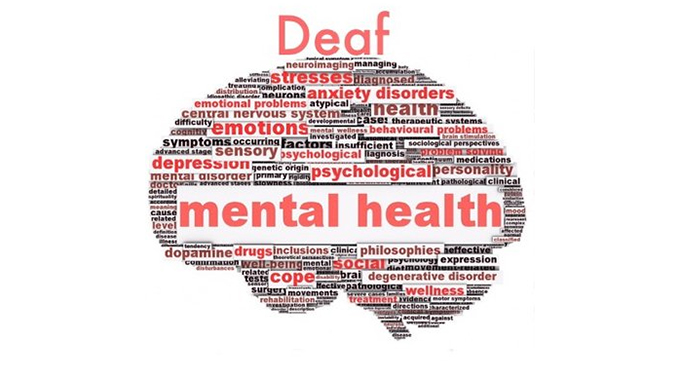
Disability Issues-Dr Christine Peta
SEPTEMBER is Deaf Awareness Month.
It commemorates over half a century of advocacy for the rights, language and culture of the deaf community.
This article focuses on the intersection of deafness and mental health — a critical yet often overlooked area of concern.
Being deaf can lead to additional challenges of a mental, emotional or social nature, largely due to the marginalisation of deaf individuals in society.
These challenges are not inherent to deafness itself but rather stem from systemic barriers and social exclusion.
Among the most common mental health issues affecting deaf persons are depression, anxiety, aggression, conduct disorder, insomnia, oppositional defiant disorder and delinquency.
While some studies examine the relationship between medical practice, deafness and mental health, they often overlook the vital role played by rehabilitation professionals.
Although medical interventions are part of rehabilitation, the concept of therapy extends far beyond clinical care.
It encompasses vocational training, job placement, counselling and the promotion of access to mainstream physical and social environments.
A purely medical approach that ignores the broader community context risks confining the problem to the individual and their perceived limitations, while neglecting the environmental factors that influence the mental health and well-being of deaf persons.A study conducted in Denmark revealed that more than half of deaf individuals are more likely to experience mental health problems.
The causes of deafness and associated mental health challenges may be congenital, perinatal, postnatal or unknown. In some cases, congenital disabilities such as cerebral palsy and intellectual disability coexist with hearing impairment and mental health conditions.
Deafness alone can lead to mental health struggles due to the frustration experienced when hearing family members, community members and medical or rehabilitation professionals are unwilling or unable to communicate using sign language or other accessible modes of communication.
Certified sign language interpreters are often scarce. As a result, deaf individuals — especially those who rely on sign language — may struggle to navigate daily life in mainstream society or access rehabilitation services, leading to increased mental health challenges.
Stigma and discrimination further compound these issues, contributing to feelings of depression, irritability, anxiety, insomnia and inferiority.
Societal gender role expectations can also affect mental health.
For example, some deaf men may face psychological distress due to difficulties in fulfilling the breadwinner role, often hindered by limited educational and employment opportunities common among persons with disabilities.
Regardless of the cause, the goal of rehabilitation is to empower persons with disabilities to assume the life roles they would have taken on if not disabled.
Rehabilitation strategies include both professional services and family- or community-based approaches. However, in some African contexts, professional care may be viewed as less appropriate than traditional community support.
Unlike the individualistic cultures of the Global North, many African societies are rooted in communalism, where kinship relations encourage people to care for one another.
Still, there is a widespread belief that professional staff can offer superior rehabilitation services. These professionals are seen as specialists who operate within institutions equipped with facilities for special education and vocational training — resources that may be lacking in rural and even some urban areas.
Conversely, traditional African beliefs often associate disability with spirits, witchcraft or the breaking of taboos. This can lead families to place relatives with disabilities in residential institutions to escape the stigma, even if only temporarily.
Dr Christine Peta is a disability, public health, policy, international development and research expert. She can be contacted on: developafrica2020 @gmail.com