Andrew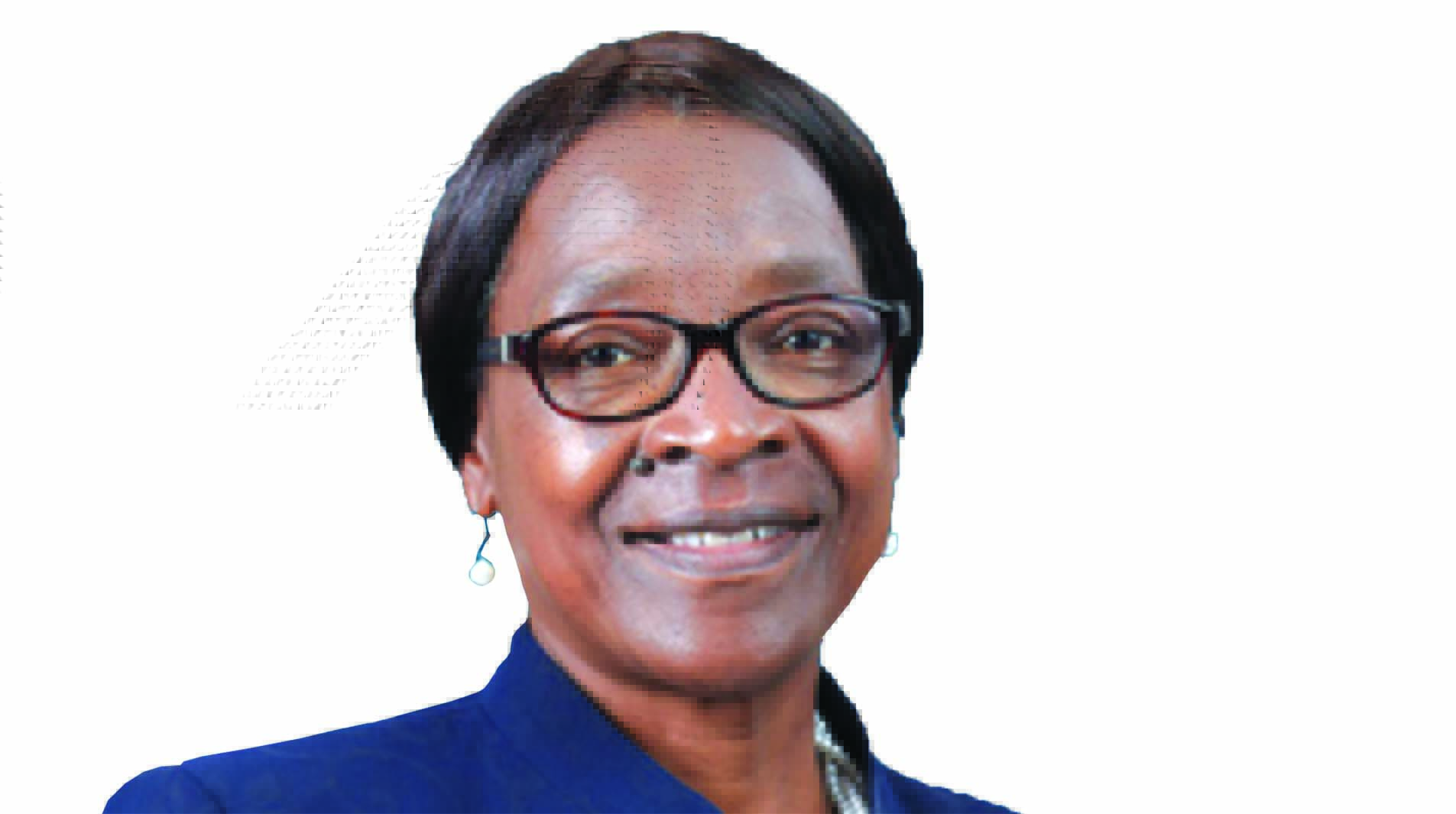
In this week’s edition of the Women in Leadership series, Dr Moreen Mudenda (MM), an industrial and organisational psychologist and change management consultant, speaks to Mrs Caroline Sandura (CS), the non-executive chairperson of the Zimbabwe Stock Exchange.
**********
MM: Reflecting back, how has your upbringing influenced this leadership journey?
CS: I was strongly influenced by my mother, who was an entrepreneur and a good logistics businesswoman. She highly valued education, especially for the girl, although she gave my brothers equal opportunities. I was given an education opportunity by my elder sister, who lived in England, to complete my A-levels over there. During high school, my leadership journey began when I was made a prefect and then head girl.
MM: How would you describe your leadership style?
CS: I am guided by my philosophy, which is a belief in equal opportunity for all and respect for all individuals. I also believe that women are equal and lead better than men. I am also quite astute and have used that to effectively manoeuvre my career path.
As a leader, I am also empathetic. I am a good listener, emotionally stable and approachable. Additionally, I am guided by my faith.
MM: How have you pushed through the failures in your leadership experience?
CS: I utilise research findings to find solutions.
MM: Kindly, give us details about your educational background and career trajectory up to this position.
CS: I was attracted to pursue the law profession because, from a young age, I had good public speaking skills and I was drawn to advocacy.
I have an Honours degree with double majors in Law and Politics from Keele University, Staffordshire (UK). After completing my first degree at Keele University, I registered at the prestigious Inns of Court School of Law in London and joined one of the four law schools — the Gray’s Inn.
Upon completion of the studies, I was admitted to practice as a barrister at Law of England and Wales.
After Zimbabwe attained Independence in 1980, I returned home and took the position of legal adviser at the Posts and Telecommunications Corporation, which evolved into TelOne. I held this role at TelOne and became the company secretary until I retired. During my tenure at TelOne, I sat and chaired various boards and committees locally and internationally.
MM: What new direction have you steered ZSE towards?
CS: Corporate governance is one of my passions and strengths and that is what I strove to instil at the ZSE. Another fundamental goal was to make the ZSE accessible to a broader range of people and make it less exclusive.
In this respect, we came up with diverse products to enable everyone to use the stock exchange as a platform to raise money.
MM: What are the critical issues in terms of governance does any board need to provide oversight for?
CS: They must observe the requirements of good corporate governance as a cornerstone of the company’s purpose. The board must be able to ensure that the company is operating fully in terms of its constitution. The board must also ensure that the company’s performance is up to scratch, for example, that financial statements are produced annually and that there is an annual general meeting.
Statistics in the 2022 Deloitte Global Boardroom report show that, although progress has been made, there are still few women who sit on boards, and fewer still are board chairpersons. Why is that so?
There are still chauvinistic tendencies that women’s brains are inferior and that we have less stamina than men, yet it is the opposite. We need to break the barriers to reverse those statistics.
MM: What can organisations in Zimbabwe practically do to break down some of these glass ceiling barriers for more women to sit on boards?
CS: Through the empowerment of a generation of smart women by strategically opening up career paths of women. We need to train women as leaders and place them in positions based on competence and not on quotas.
MM: What are some of the key life lessons learnt to impart to young women aspiring for management and leadership positions?
CS: They must be disciplined, have the tenacity and not to look back. Additionally, they must develop analytical, research, communication, technological, financial management and time management skills.
You must have a stable personality, be principled and focused so that, when you want to do something, you follow it through. You should not be afraid to tell people your viewpoints.
MM: How may business and universities enhance their collaboration to adequately prepare the next generation of leaders?
CS: Organisations must create more internship opportunities to accommodate the growing number of student graduates. Organisations should also sponsor performance awards for talented students, especially for one or two girl students.
MM: What are you most proud of?
CS: Professionally, my advocacy work, because that has opened a lot of doors for me. Any topic I speak on is well-researched and I have the proven ability to convince key stakeholders to provide solutions to problems.
Secondly, imparting good leadership values to develop future leaders and making sure that the community benefits at large. Personally, I am a mother of two children. I am proud of the values I instilled in them as a God-fearing woman, who is well-behaved and capable of going out and help the community.
MM: What do you want your leadership legacy to be?
CS: Success in achieving my goals and people should make reference to my exemplary leadership path.
Feedback: Dr Moreen Mudenda, Cell: +(263) 7752 888 57



 Online Reporter