admin
admin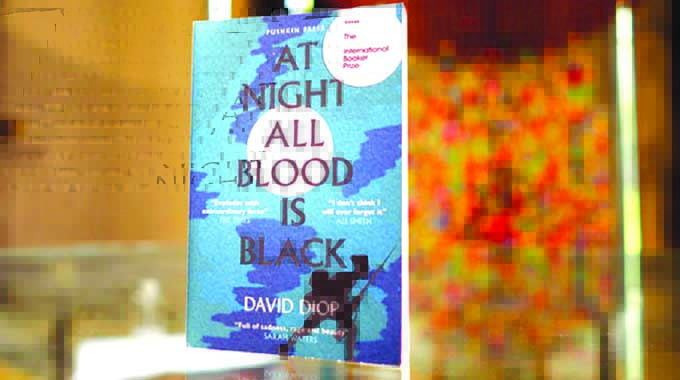
PARIS. – Some of the world’s biggest literary awards, including the Nobel, Booker and Goncourt, have gone to Africans this year in a sign of the continent’s emergence as a major force in publishing and a region with a direct line to the pressing questions of our time.
“We are witnessing a reawakening of interest in Africa among the European literary world,” said Xavier Garnier, who teaches African literature at the Sorbonne in Paris.
He described the string of awards for Africans as “striking”.
They include Tanzania’s Abdulrazak Gurnah becoming a Nobel laureate, South Africa’s Damon Galgut winning Britain’s Booker Prize and 31-year-old Senegalese Mohamed Mbougar Sarr becoming the first writer from sub-Saharan Africa to win France’s top literary award, the Prix Goncourt.
That’s not all: Senegalese writers won this year’s International Booker (David Diop) and Prix Neustadt (Boubacar Boris Diop) while Portugal’s Prix Camoes went to Paulina Chiziane of Mozambique.
These are not token gestures by prize committees trying to look relevant, experts say.
Rather, as Garnier put it, they reflect the Western industry finally recognising a booming literary scene that “no longer really needs recognition.”
Publishing houses have sprouted across Africa in recent years, along with literary reviews, festivals and regional prizes.
“There’s a huge reading public for African writers, and that’s been underlined during the pandemic when we’ve seen the scale of the community as it shifted online,” said Madhu Krishnan, who teaches African literature at Britain’s Bristol University.
“People don’t come out of nowhere. We just don’t always see these smaller worlds from Europe.”
African literature had a previous heyday in the 1950s and 1960s, though it was tied up with politics and decolonisation, embodied by figures like Senegal’s poet/president Leopold Sedar Senghor.
Today, the themes are much broader and writers less concerned with how they are viewed by outsiders.
“We’re seeing more experimentation, ecologically engaged texts, African futurism,” said Krishnan. “There’s a lot more variety – a lot more that isn’t concerned with explaining itself to a Western audience.” — AFP.



 Online Reporter