admin
admina resolution at the fifth ioint annual meetings of the African Union Conference of Ministers of Economy and Finance and Economic Commission for Africa (Conference of African Ministers of Finance Planning and Economic Development) in Ethiopia last month.
Said Dr Sibanda: “The meeting recognised that remittances when properly harnessed will have significant effect in accelerating the socio-economic development of the continent.
“However, it was noted that there still exists a gap as to how remittances can be properly harnessed and leveraged for socio-economic development.
“In order to address this gap and leverage these remittances, it was recommended that an Africa Institute for Remittances be established to help African countries realise this vision,” he said.
According to data from the African Development Bank, Africa gets at least US$40 billion a year in Diaspora remittances, a figure that outstrips aid flows. The Diaspora is therefore playing a critical role in shaping the continent’s socio-economic landscape.
Unlike development aid, remittances are typically spent directly by the families of migrants, making it an efficient way to raise the overall income and well-being of the poor. However ,Dr Sibanda is also of the opinion that remittances can function as investment capital for infrastructure projects within the respective countries.
He, however, conjectured that there is need for national policies to be conducive to the needs of the Diaspora community.
“I have spoken to a number of Zimbabweans in the Diaspora and they want to be allowed dual citizenship. These are basically policy issues and should be addressed as such,” said Dr Sibanda.
He estimates that nearly three million Zimbabweans live in the Diaspora.
Last year the Ministry of Economic Planning set up the “Migration and Development Unit”, which was aimed at tapping into Diaspora remittances. It is, however, unclear what benefits accrued to this unit following the issuance of the Diaspora bond by CBZ Bank.
The bank last year issued its three-year Economic Recovery Bond on the Cayman Stock Exchange, which were anticipated to generate money for infrastructure investment in the country.


Online Reporter
- Herald
- September 24, 2026
- 7 views
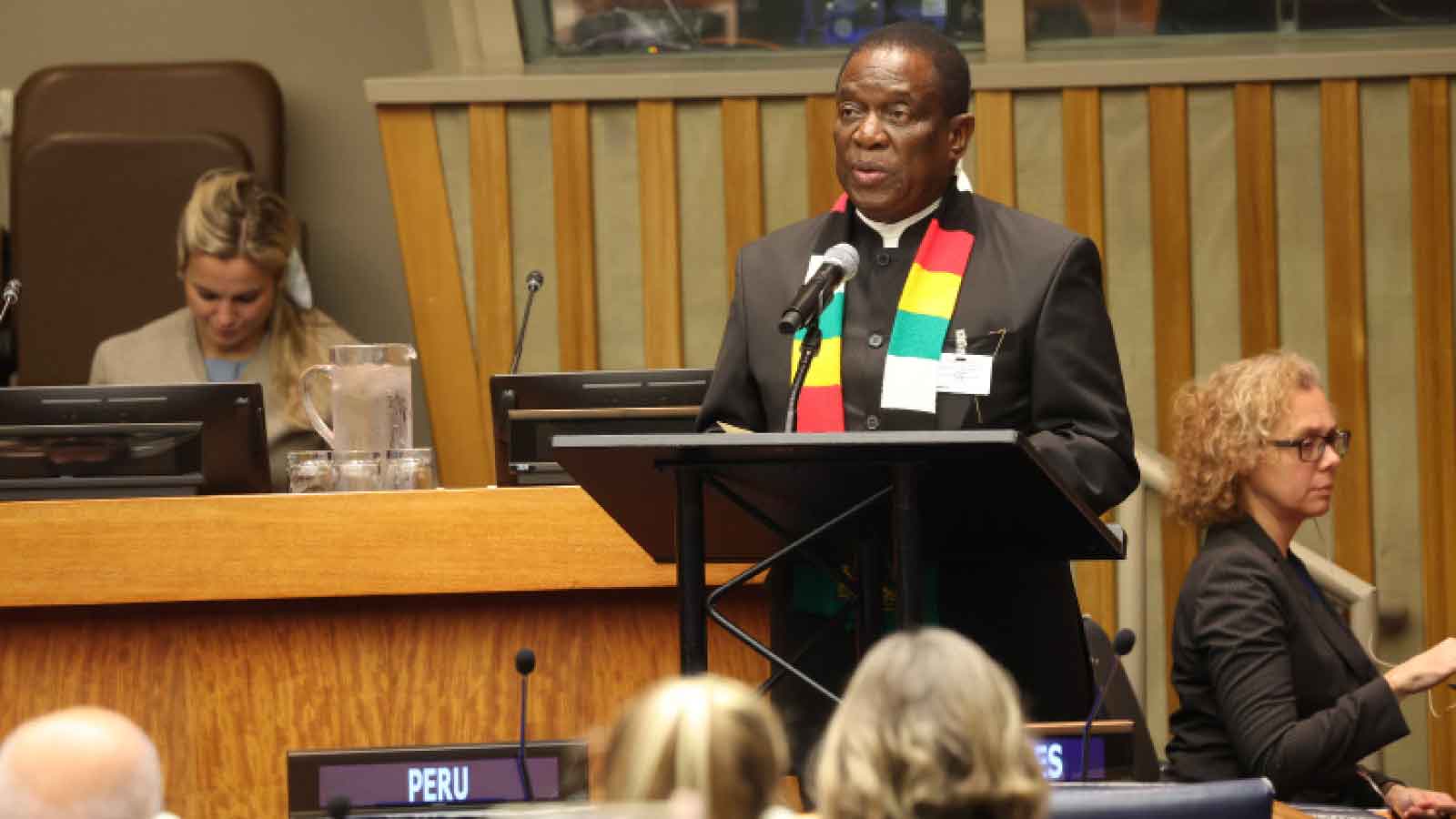
‘No to global inequalities’ . . . Development a basic human right for all, says President
Wallace Ruzvidzo in NEW YORK, USA DEVELOPMENT acquires its fullest meaning when every person and nation has a genuine opportunity to shape their course and share the benefits, President Mnangagwa…