Chronicle Editor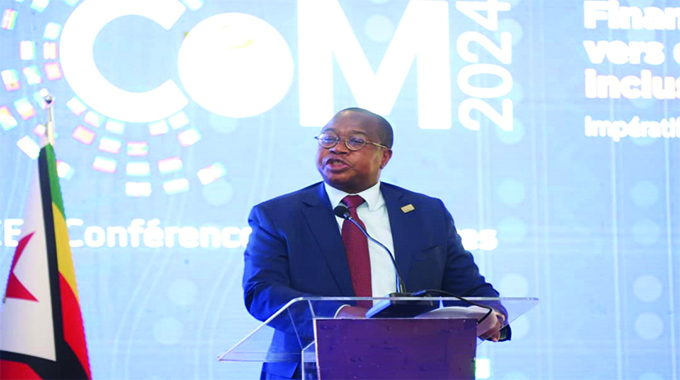
Leonard Ncube in Victoria Falls
AFRICA requires almost US$2 trillion by 2030 to close financial gaps on the continent’s development agenda and achieve the Sustainable Development Goals (SDGs).
This emerged at the ongoing 56th United Nations Economic Commission for Africa (Uneca) Conference of Finance Ministers, Planning and Economic Development, which ends here today.
In his address, Finance, Economic Development and Investment Promotion Minister, Professor Mthuli Ncube, who chairs the Uneca Conference of Finance Ministers on behalf of Zimbabwe, said the continent continues to experience relatively low growth rates, which were not commensurate with its growth potential.
He said it was worrying that poverty and unemployment rates continue to rise in Africa despite the continent being endowed with vast minerals, which are failing to drive development.
“Africa’s economic growth remains on a positive growth trajectory with net exports, private consumption and gross fixed investment underpinning growth of the continent in the short-to-medium term,” said Prof Ncube.
“Furthermore, the public debt burden in Africa has worsened during the past decade, while Africa requires an additional US$1,6 trillion by 2030 to achieve the Sustainable Development Goals, thereby, posing finance gap towards development agendas for the continent, including climate change financing.”
Most countries are still far from meeting SDG targets hence Prof Ncube said the primary objective of this conference was to promote the economic and social development of the African member states, foster intra-regional integration and promote international cooperation for Africa’s development.
He said the conference had discussed multiple crises that Africa is grappling with, such as limited fiscal and monetary policy space worsening public debt crises, economic fragility, conflict, food insecurity and the negative impacts of climate change impeding the fulfillment of the 2030 Agenda for Sustainable Development and the African Union (AU) Agenda 2063: The Africa We Want.
“During the past five days of the conference, economic experts, technocrats and government officials shared ideas, experiences and policy suggestions that will guide the continent to collectively address the challenges and opportunities that lie ahead, as we transition to inclusive green economies,” said Prof Ncube.
In view of those challenges, Prof Ncube said the Uneca Committee of Experts had recommended for domestic resources mobilisation as a crucial source of finance for development in Africa, establishment of the single African Air Transport Market to promote movement of people and goods across Africa, and the implementation of the African Continental Free Trade Area agreement to stimulate manufacturing and increase intra-African trade.
This also includes accelerating the operationalisation of African financial institutions, developing a portfolio of bankable projects to enhance financing possibilities, developing capacities related to carbon markets, green and blue bonds and biodiversity credits as sources of finance; and having a strong African voice in calling for high integrity carbon markets that are globally aligned and transparent.
Prof Ncube said areas earmarked for achieving the SDGs by the Economic Commission for Africa (ECA) include digital connectivity, food security, employment creation, energy access and affordability, social protection and climate change.
He said the African Development Agenda can be achieved with the ECA supporting its members in implementing structural reforms to revive growth and political commitment at the regional, sub regional and national levels in implementing regional integration.
“The resource mobilisation and economic strategies emanating from this conference will help us further strengthen our polices, minimise the negative impacts of climate change and drive the development of Africa as we move towards the 2030 Agenda for Sustainable Development and Agenda 2063,” said Prof Ncube.
Meanwhile, in his welcome remarks, Matabeleland North Provincial Affairs and Devolution Affairs Minister, Richard Moyo said the conference has put Matabeleland North on the world map as a tourism destination.
He said hopes were high in the province for such conferences to help proffer long lasting solutions to the problem of climate change, which is equally affecting the tourism sector and wildlife habitat in Matabeleland North.



 Online Reporter