

 admin
admin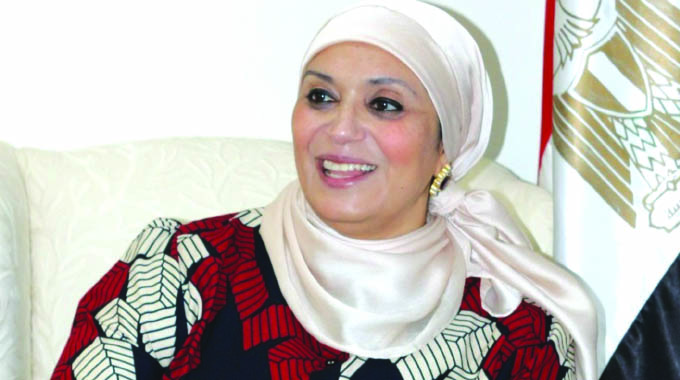
Egypt’s 1952 revolution signalled the full liberation of the country when the Suez Canal was restored to its territory.
But the principles of the 1952 revolution ignited the enthusiasm of the Egyptians to export the idea of liberation to other parts of the continent.
Egypt played a crucial role in helping other African countries fight and win against colonialism and imperialism. Zimpapers Politics Hub’s Gibson Nyikadzino (GN) had an interview with Egypt’s Ambassador to Zimbabwe, Salwa Mowafi (SM) on the latter’s July 23 National Day commemorations focusing on the two countries’ relations, Africa’s independence, among other issues. Below are excerpts:
***
GN: In what direction are the relations between Zimbabwe and Egypt going and what needs to be enhanced and clarified?
SM: We are always interconnected and interrelated on the regional level in the African Union and different organisations as well as the bilateral. Since I came here in Zimbabwe in October 2022, I was keen on doing something that makes everybody including the grassroots people, to feel it, to feel that there is a change; and this is what we succeeded in.
It is in terms of cooperation in the field of medicine. Egyptian medicine is already observed here in Zimbabwe’s hospitals. Major Egyptian construction companies are in the registration phase for their work and they are soon coming to Zimbabwe.
There is another one already here in Zimbabwe providing electric prepaid metres and transformers to ZESA. This company has already built a 40 megawatt solar power plant for Zimplats Holdings.
GN: In the framework of Zimbabwe-Egypt cooperation, are there any exchange programmes for Zimbabweans to go and learn about this expertise for the benefit of the country?
SM: Yes, of course. Last year, for example, we presented 105 training opportunities for Zimbabwe and the people participated in these training courses in Egypt. The training courses ranged from health, climate change, decision making, VIP protection and military assistance.
Egypt presents every year specialised university scholarships for Zimbabweans to study in Egypt. This happens every year and we are keen to do more. We believe that it is by education that we build a better generation for Africa. Zimbabwe and Egypt share historical ties.
GN: Some of Zimbabwe’s liberation fighters were trained in Egypt and President Nasser’s influence was key in shaping the idea of resistance. Regarding people to people cooperation, what initiatives exist in that regard?
SM: We are very proud that many of Zimbabwe’s liberation heroes were trained in Egypt at the time of President Nasser. This is something that is a source of our pride for the cultural and people to people relations. We are witnessing even more tourism flow exchanges between Zimbabwe and Egypt, which is a perfect dream of any ambassador. This is what makes Africa.
GN: There are new cities being built in Egypt and Zimbabwe is also implementing massive infrastructural projects. What role can Egypt play in ensuring Zimbabwe succeeds in its projects?
SM: In Egypt, we witnessed something that was very harsh period starting from 2011 and 2012-2013 when we had two revolutions. The whole infrastructure in Egypt was decaying, deteriorating and everything went out of order. It is greatness that we are getting Egypt back again on track.
This was a miracle that in just eight years from the last revolution, Egypt had infrastructure. Here in Zimbabwe you have everything and you also have friends like us. The engagement of Egyptian construction companies here in Zimbabwe will assist a lot in sharing these experiences between the two countries.
And we can, of course, assist Zimbabwe in developing the new city, Mount Hampden and also assist in refurbishing the province of Harare. We can do that. We signed, in this regard, a Memorandum of Understanding ( MOU) last year.
GN: What do you think are the low-hanging fruits or opportunities which Zimbabwe can offer Egyptian companies in terms of investment?
SM: Zimbabwe is very attractive. I encourage the Egyptian companies to engage in pharmaceuticals, fertiliser production and the construction sector. After that, it is the retail industries, food industries, and packaging. As an Embassy we are managing working on that.
GN: As both Zimbabwe and Egypt look forward to the AU Agenda 2063. What are your perspectives on the progress to the full empowerment of women, the girl child and fighting poverty?
SM: My testimony is that as women we do not need empowerment because we are powerful in ourselves.
In our homes we make things happen. But we need to get more opportunities outside the home, and more equal opportunities in education, jobs and equal salaries.
If we continue to develop and develop, this will create more enlightened generations who will not commit the same problems that their ancestors did. If you keep building new schools, improving your curriculums, trying to make the message of equality among everybody to be in the media, then the future of Africa will be compatible.
These are our aspirations as identified by the African Union.
Combating poverty is important. Remember, we (Africans) are not poor, but we still have vulnerable communities among us hence the need to improve our lives. Succeeding in this is something that makes us all happy and satisfied, and we want to do more.
GN: What is your key message to the people of Zimbabwe and Egypt envisioning the success of the two countries’ bilateral relations?
SM: The message is that: Sometimes solutions are African. And African solutions are from your vein, coming from us. As Africans we have to trust each other a lot.
All of us go through difficulties and it is all over Africa.
We can face many difficulties and challenges but that is not the end. We have to be very confident in ourselves, in Africa.



 Online Reporter