Chronicle Editor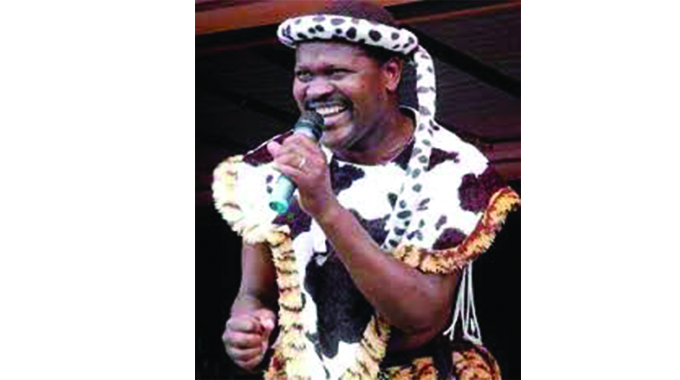
Angela Sibanda, Showbiz Reporter
Traced back to the history of ancient African states, poetry has always been a part of African culture.
Despite it not having a lot of audiences, poetry has managed to survive and still remains one of the many components that uphold Ubuntu and embrace African history.
Back in the day, poets played important roles such as introducing a King through ukuhaya (an act of shouting praises like someone’s surname and totem in a way that makes them look great in front of their subordinates).
An African poet used to dress in animal skin and carried a spear and shield during their performance.
Such performances were also used to cheer up or prepare warriors for war.
It was through poetry that people were able to trace their origins and identity with examples being totems like uZwide kaLanga and uMzilikazi kaMatshobana.
Long ago, people also adopted poetry as a social practice to express gratitude and make people feel appreciated.
In Zimbabwe, a few poets have emerged as great imbongi and these include the famous Albert Nyathi, who during his days, used to recite a poem before the late former president Robert Mugabe stood up to address the crowds during public celebrations like Independence Day.
Another poet who seems to be following in the footsteps of great African poets is Obert Dube, a Lupane-born poet who has earned the title “African poet” through his popularity across southern African countries.
Recently, at a gospel show held in Bulawayo to celebrate Everton Mlalazi’s birthday, Dube was tasked with the role of introducing the gospel artiste through a poem and left the audience asking for more.
Women like Sithandazile Dube and Mqemani Sibanda among others have also maintained their African pride through poetry.
Praise poetry has, unfortunately, over the years lost followers as poets have moved to commercialising their work and adopting classic poetry, which is modern poetry.
It is therefore now rare to find a poetry show where only indigenous poets are performing without acts from musicians or comedians.
Commenting on the relevance of poetry in modern society, Obert Dube said the old style of African poetry was slowly losing popularity because artistes were commercialising poetry in order to make a living.
“Poets in Africa were the only people who had voices to praise a king, blame him and even tell him how people felt about him.
Poetry history emerged from ukuhaya inkosi’.
Not everyone could talk to the king or about him but a poet had room to even condemn a king’s actions through a poem,” he said.
Dube said poets used to play a pivotal role in culture and language preservation.
He, however, said interaction with international audiences has seen poetry becoming more classic.
“Poetry has changed because poets are now commercial, they now do poetry for a living.
Long ago, during the kings’ era and during the liberation struggle, all poetry performances were for free.
Now, poetry has become a way of life where the market determines and detects content,” said Dube.
He said the so-called indigenous languages no longer have vibrant poets because poets are now reciting English poems for a living.
“You’ll hardly hear a Tonga or Nambya poet.
When a poet grows in the industry, he or she engages with international audiences and English automatically becomes the adopted language to accommodate everyone hence the indigenous language just dies,” Dube said.
Mqemani Sibanda said the shift to classic poetry has put a number of poets on the map but killed the aspect of embracing Ubuntu along the way.
“Now you find a poet sitting on a chair in a bar and reading out a poem.
That’s a definition of classic poetry which is normally appreciated and understood by white people and the educated.
Our poetry is praised by Africans and that’s why when you praise someone using their totem today, it always lightens up their mood and makes them feel appreciated and recognised,” said Sibanda.
She, however, said with technology, Ubuntu and Africanism is slowly fading because a few people still relate to those old types of poems.
“Due to the economic struggles that we face, poets are now focusing on genres that bring food to the table.
We move with time and it’s unfortunate that along the way, we lose our pride as a people,” she said.
Over the years, poetry has also lost its audience to hip-hop as many poets have found comfort and fame in rapping.
Most rappers today evidently started as poets and lyrics in most hip-hop songs are somehow poetic.
However, despite the various changes that have affected traditional poetry, it still remains an independent art.


 Online Reporter